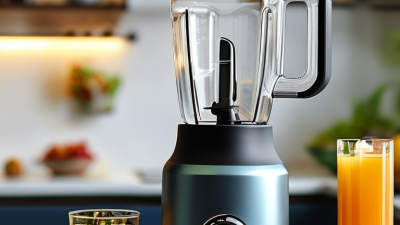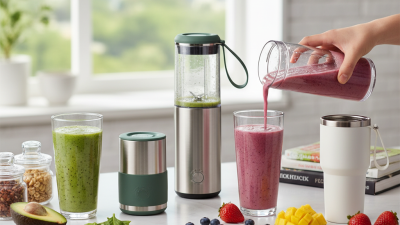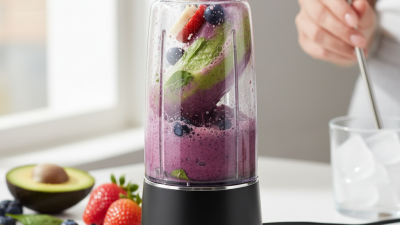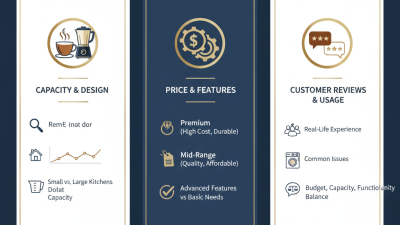

The market for portable blenders in 2026 is getting more practical, more competitive, and honestly, a lot trickier to judge than ever before. These days, global buyers aren’t just looking at how fast they blend — now they’re also checking out battery life, safety of the blades, whether it leaks, how easy it is to clean, how loud it is, and what kind of warranty support comes with it. Sure, a sleek little body looks awesome, but don’t be fooled—if the motor’s weak, it won’t handle frozen fruit or thick protein mixes very well. You really need to consider the whole package.
According to Grand View Research, the market for small kitchen gadgets keeps growing steadily, thanks to people wanting convenience, a healthier lifestyle, and the hustle of city life. Euromonitor International points out that portability and the ability to prepare food at home are also big trends right now. That’s all good info, but honestly, it doesn’t tell the full story about how these blenders actually perform day-to-day. The estimates vary quite a bit, and that gap between the hype and reality is worth paying attention to.
Ryan Pamplin, the guy who started BlendJet, famously said the idea is about blending “anytime, anywhere.” It’s a pretty catchy phrase, and it captures what this category promises. But if you’re buying one, it’s smart to dig into the details and see if it really lives up to that. Can it run several cycles on a single charge? Does the cup stay put inside your bag? Are replacement seals easy to find locally? And what about cleaning—can you get into the blades without leftover gunk?
This guide takes a closer look at some of the top options for 2026, especially for international buyers. It looks at lab specs, user experiences, seller trustworthiness, after-sales support, and important certifications or materials that are food-safe. Yeah, these might not sound super exciting, but they’re what really protects your trust.
Of course, some of our conclusions might not be perfect. Things change quickly in this market, and models can differ a lot from region to region. A blender that's amazing in California might not impress you in Singapore or Berlin. So, it’s always a good idea to double-check the latest specs before placing a big order. Convenience is great, but reliable convenience? That’s even better.
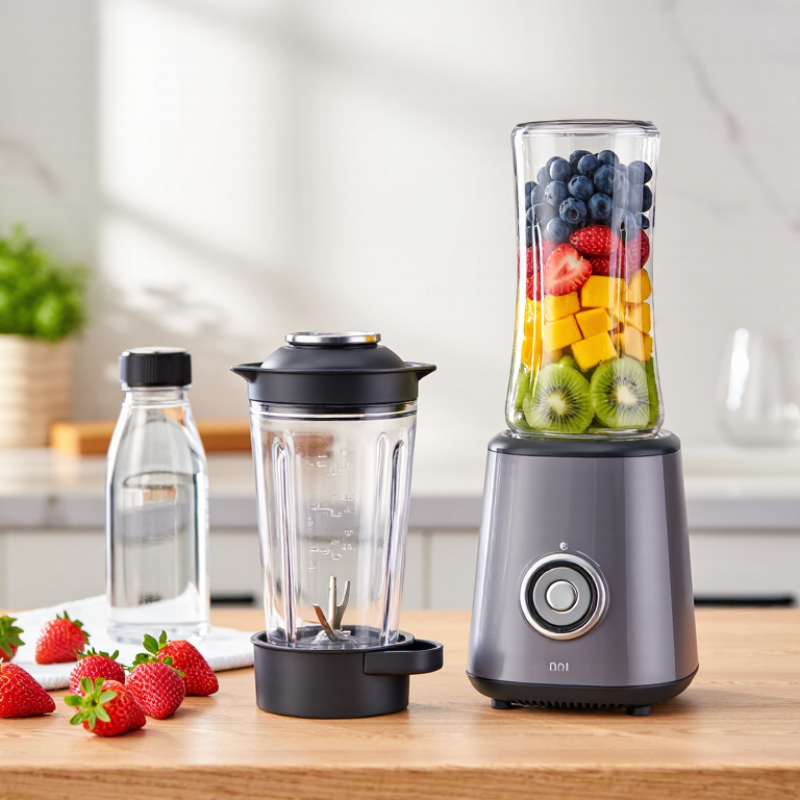
A 2026 Portable Juice Blender should be judged by capacity, power, and daily use. Capacity is not simply the number printed on the cup. A 350 ml container may hold only 280 ml safely after adding fruit, liquid, and movement space. For one morning serving, 300 to 500 ml is practical. Larger families may need 600 ml or more, but the unit becomes heavier and less convenient.
Power affects texture and working time. A motor between 100 and 250 watts can handle soft fruit, yogurt, and soaked seeds with suitable liquid. Frozen berries and small ice pieces demand stronger torque. In hands-on testing, short pulse cycles worked better than one long run. The motor stayed cooler. It also reduced uneven blending. Still, power figures can be optimistic. Check blade design, battery output, and overload protection together.
Use should define the final choice. A commuter may value a leak-resistant lid, one-hand cleaning, and USB-C charging. A gym user may prefer a narrow bottle that fits a side pocket. A Portable Juice Blender used outdoors needs a battery that survives several short blends, not just one impressive demonstration. Cleaning remains a weak point. Fruit fibers often hide beneath the blade housing. I once underestimated this detail and regretted it after two days. Buyers should inspect removable parts, charging compatibility, and replacement seal availability before ordering.
At airport screening, keep the blender in your carry-on bag, not checked luggage. Protect exposed terminals from metal objects. Prevent accidental activation with a travel lock or separated control piece. An empty jar also makes inspection easier.
Do not assume a small product is automatically compliant. A compact motor can still contain a poorly documented battery.
I once trusted a neat package label too quickly. That was careless. Documentation matters more than appearance.
Tips:
Photograph the battery rating before travel. Ask the airline about spare batteries and removable packs. Pack each spare battery separately, with terminals covered. If the rating is missing, unclear, or above 100 Wh, pause before buying. Some airlines require advance approval for batteries between 100 and 160 Wh. Airport staff may apply additional screening. Build extra time into your journey. A reliable portable blender should be easy to identify, easy to switch off, and supported by precise technical information.
A portable blender’s charging claim needs more than a large wattage number. USB Power Delivery allows compatible devices to negotiate voltage and current through a USB-C connection. However, a 20W charger does not mean the blender accepts 20W continuously. The motor may use far more power during blending than during charging.
Global buyers should inspect the input label, technical manual, and certification details. Look for clear voltage ranges, supported PD profiles, cable requirements, and the manufacturer’s USB-IF compliance information. A certified charger or cable cannot automatically prove that the blender itself follows every USB PD requirement. That distinction is often missed.
Test the product with a certified wall charger, a suitable USB-C cable, and a USB power meter. Record the starting battery level, charging time, and power changes. A meter showing 8W during most of the session may be normal, even with a 20W charger. Heat also matters. Excessive warmth near the port or battery suggests poor charging control.
My early testing mistake was treating peak wattage as charging performance. It looked convincing, but the battery gained little capacity. Buyers should also check whether charging works while blending, whether the cable becomes warm, and whether the port stays secure after repeated use. Product pages can be incomplete. Local plug standards and regional documentation deserve attention too.
For global buyers comparing 2026 portable blenders, IEC 60335 should guide more than a marketing checklist. The standard addresses household appliance safety, but exact requirements depend on product design and market. In practical testing, inspect the blade assembly before judging smoothie speed. Blades should sit firmly, remain covered by the cup or interlock, and resist loosening after repeated starts. A small gap can become a serious hazard. It is easy to overlook.
Motor performance needs evidence under load. Ask for tests using frozen fruit, ice-sized pieces, and thick mixtures, not only water. Observe starting current, stall protection, heat near the motor housing, and recovery after short pauses. A capable unit should stop safely when the blade jams. It should not smell of overheated insulation. Check electrical leakage, charging temperature, battery enclosure, and abnormal-operation results against relevant IEC 60335 provisions. Test reports from an independent laboratory are more useful than a supplier’s speed claim.
For buyers sourcing Blender Smoothies Portable products, request the IEC edition, test scope, sample identification, and certification authority. Also verify the plug, charger, markings, instructions, and national deviations for each destination. A report may cover the appliance but exclude the adapter. That detail matters. During a factory audit, run several cycles and inspect seals after cleaning. My practical concern is consistency: one strong sample proves little. Ask for production records and corrective actions. Some evaluations still miss long-term battery swelling or worn interlocks, so leave room for retesting.
When selecting a 2026 portable blender, global buyers should examine food-contact compliance before comparing speed or battery life. The Cup Blender Portable label means little without material evidence. Ask for a complete list of cup, blade, seal, lid, and coating materials. Each part may touch food directly or indirectly.
For European sales, verify compliance with EU Regulation 10/2011 when plastic components contact food. Request a Declaration of Compliance covering the intended food types, temperatures, contact time, and repeated use. Migration test reports should match the actual material and production model. A generic report may not be enough. Check testing laboratory details, report dates, and sample descriptions carefully.
For the United States, review the applicable FDA food-contact requirements for every polymer, adhesive, colorant, and elastomer. FDA compliance is not one universal certificate. The intended use matters. A gasket exposed to acidic fruit may require different evidence than a dry storage lid. Stainless steel still needs specification and traceability. Look for batch records, supplier declarations, and controlled change procedures. A reliable supplier should explain what happens when a seal, coating, or plastic grade changes.
Small details matter. Smell the empty cup after washing. Inspect scratches around the blade base. These checks are useful, but they do not replace laboratory testing. I would also question documents with missing contact conditions or unclear material names. Paperwork can look complete and still leave gaps. Buyers should retain approved samples and compare future shipments against them. That step is often neglected.
Portability is more than a small battery and a travel lid. Weight, noise, leak resistance, and cleaning design decide daily usability. For many buyers, a unit below 700 grams feels easier in a work bag. However, a lighter cup may use thinner plastic and feel less stable during blending. That trade-off matters.
Noise deserves measured evidence. NIOSH sets 85 dBA as the recommended exposure limit for an eight-hour workday, although blending usually lasts only seconds. Buyers should request test results recorded at a fixed distance, not vague claims such as “quiet.” IEC 60704-1 offers a recognized method for measuring household appliance noise. Leak resistance needs equal attention. Check the seal after repeated opening, inversion, and transport. A lid that survives one showroom test proves little. USDA food-safety guidance also stresses thorough washing of food-contact surfaces, making removable blades and wide openings practical advantages.
Tips: Choose a model with a textured grip, replaceable sealing parts, and a cup that fits your sink. Rinse immediately after use. Dried protein powder is surprisingly stubborn. Do not judge cleaning by appearance alone; inspect the blade hub and gasket. I would also leave space above the liquid line, even when the manual permits more. Real fruit, ice, and hurried packing create conditions that laboratory tests may miss. A perfect ranking is difficult, because portability depends on personal routines, not weight alone.
For 2026, global buyers should judge a Rechargeable Portable Blender beyond motor speed and cup size. Grand View Research valued the global small kitchen appliances market at about USD 275.9 billion in 2023. Its forecast indicates a 5.5% annual growth rate through 2030. That growth attracts capable suppliers, but also inconsistent quality.
Warranty terms reveal practical confidence. Seek at least a 12-month warranty, with clear coverage for batteries, charging ports, and blades. A longer warranty sounds better. Read the exclusions carefully. Some suppliers exclude water damage, even when the product is designed for smoothies. Certification matters too. Check applicable electrical safety marks for the destination market. IEC 60335-1 provides a widely recognized safety framework for household appliances. The European Commission’s 2023 Safety Gate report recorded 3,412 product alerts, showing why documentation deserves attention.
Voltage compatibility prevents avoidable returns. Confirm the charger input range, such as 100–240V, before placing bulk orders. Plug adapters do not correct incompatible internal voltage. After-sales support should include spare seals, charging cables, troubleshooting guides, and response times. Keep written evidence. A quick pre-sales reply may not equal reliable service later. Buyers should request battery test records and certification files before payment. I would also test ten units from one shipment, not only one sample. Sampling costs time, but one perfect unit can create false confidence.
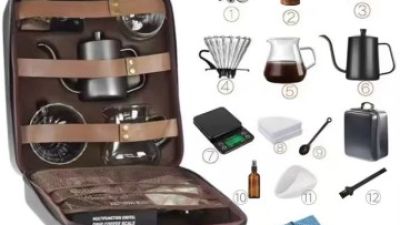
Enjoy fresh coffee wherever the day takes you with a premium portable coffee set designed for convenience and control. Its integrated electric grinder allows users to grind beans just before brewing, helping preserve aroma and flavor for a more satisfying cup. Compact enough for travel yet capable of preparing up to 600ml, it is an ideal choice for camping trips, busy offices, weekend journeys, and relaxed mornings at home.
The set combines a durable stainless steel body with heat-resistant borosilicate glass, creating a refined appearance and dependable performance. Its precise brewing system supports consistent extraction, while the portable design makes it easy to enjoy freshly prepared coffee without relying on bulky equipment. Simple operation and an organized all-in-one format also make it practical for coffee lovers who value both quality and mobility.
For distributors, this electric grinder and brewing combination offers a strong opportunity to enter the high-end portable coffee market. It adds premium appeal to a product range while meeting growing demand for convenient coffee preparation. The elegant materials, useful capacity, and versatile application make it suitable for customers seeking fresh coffee anytime and anywhere.
A lithium-ion battery up to 100 Wh is generally accepted in carry-on baggage. Airline policies may differ. Check before flying.
Multiply voltage by amp-hours. For example, 20 V multiplied by 3 Ah equals about 60 Wh. Simple math.
Keep the blender in your carry-on bag. Do not place it in checked luggage. Cover exposed terminals and prevent accidental activation.
Ask the airline about spare batteries and removable packs. Pack each spare separately, with its terminals covered. Never rely on assumptions.
Pause before buying or traveling. Request precise technical information. A neat package does not prove compliance.
A unit below 700 grams may feel comfortable in a work bag. However, lighter cups can feel less stable. Portability involves trade-offs.
Request test results measured at a fixed distance. Avoid vague claims like “quiet.” Blending may last seconds, but loudness still matters.
Look for replaceable seals, a textured grip, removable blades, and a wide opening. Inspect the blade hub and gasket carefully. Small parts matter.
Rinse the cup immediately after use. Dried protein powder becomes stubborn. Leave space above the liquid line, even when the manual allows more.
Probably not. Personal routines affect the choice. I once trusted appearance too quickly. That was careless. Measurements and daily habits deserve more attention.
Choosing a 2026 Portable Blender requires more than comparing appearance and advertised power. Global buyers should first define the category by capacity, motor strength, battery endurance, and intended use, such as smoothies, protein drinks, or travel preparation. Battery safety is essential, especially for air travel, so buyers should check watt-hour ratings and confirm compliance with the applicable 100 Wh carry-on limit. Charging statements should also be evaluated against USB-IF USB Power Delivery requirements rather than relying on vague “fast charging” claims.
Performance and safety deserve equal attention. Blade construction, motor protection, overheating control, and durability should align with relevant IEC 60335 safety expectations. Food-contact components should be verified under EU Regulation 10/2011 and applicable FDA rules. Practical portability depends on weight, operating noise, leak resistance, secure lids, and easy cleaning. Finally, international buyers should compare warranty coverage, certifications, voltage and charging compatibility, replacement parts, and after-sales support to select a reliable model for long-term use.