
China has really become a key player when it comes to sourcing burr grinder coffee equipment. You'll find products now serving everyone—from coffee shops and retailers to hotels and even home baristas around the world. But here’s the thing: quality can vary a lot from one supplier to another. Just because a factory’s website looks super polished doesn’t mean they’re necessarily top-notch in manufacturing — you’ve got to dig a little deeper.
James Hoffmann, the well-known coffee educator and writer, once said, “The grinder is more important than the coffee machine.” And honestly, that advice still holds true today, especially for folks buying gear from all over the globe. Having a burr set that’s consistent means it’ll produce more uniform particles, leading to cleaner extraction and fewer customer complaints. Small details really count here — think stainless-steel burrs, a sturdy motor, low retention, and an adjustment dial that feels solid rather than flimsy.
This guide is here to introduce you to some of the top China-based burr grinder coffee suppliers. It also walks you through how to better evaluate them—covering stuff like product variety, burr materials, grinding speed, noise levels, private-label options, packaging, certifications, and after-sales support. Brands like Timemore, Mavo, and manufacturers based in Ningbo probably cater to different markets—from compact manual grinders to big electric models. But before you make any purchase, it’s a good idea to double-check what's actually available, the specs, and export services directly with these companies.
Here's a little truth from experience — the cheapest quote doesn’t always mean the best quality. Sometimes it hides issues like misaligned burrs, poor quality control, or expensive-to-replace parts down the line. Sure, testing samples helps, but one sample isn’t proof of how the grinder will perform long-term. It’s smart to ask for test results, production photos, warranty details, and clear info about spare parts. Admittedly, there’s no foolproof way to judge a supplier perfectly — ultimately, you’ll need to use your judgment. Making careful comparisons just makes your decision more informed and, hopefully, less risky.
Overall, do your homework, ask questions, and don’t rush — good equipment is worth the effort.
What Defines a Burr Grinder Supplier in China?
A capable Burr Coffee Grinder supplier does more than provide a low factory price. It should understand particle size, burr alignment, motor heat, and retention during daily use. The USDA Foreign Agricultural Service forecast global coffee production at 176.2 million 60-kilogram bags for 2024/25. That volume increases pressure for consistent grinding equipment across homes, cafés, and offices. Suppliers serving global buyers need stable output, not only attractive samples.
Factory experience becomes visible in small details. Ask how burr flatness is measured and how often calibration tools are checked. Request test records for grind consistency, noise, temperature rise, and endurance cycles. A reliable supplier should explain its inspection points clearly. It should also provide traceable material records and controlled assembly procedures. ISO 9001 certification can support this process, but a certificate is not proof of excellent production. Evidence matters more.
Communication is another defining factor. Export-ready suppliers should offer accurate specifications, packaging data, spare-part guidance, and responsive engineering support. They should understand applicable safety and electromagnetic requirements in the target market. The International Electrotechnical Commission publishes relevant household appliance safety standards, including IEC 60335-2-14. Still, testing can expose weaknesses. I have seen polished samples hide inconsistent burr adjustment and loose internal wiring. That is why independent pre-shipment inspection remains useful, even when the factory appears professional.
A burr grinder supplier is typically evaluated by product consistency, compliance, manufacturing capability, customization, delivery reliability, and after-sales support. The chart below presents an illustrative buyer-weighted framework without using company or brand data.
How to read the chart: Higher percentages indicate criteria that commonly receive greater attention during international supplier qualification. Buyers should verify these factors through samples, factory audits, technical documents, certifications, and production records.
Chinese burr grinder manufacturers serve global buyers through OEM production, engineering support, and export coordination. USDA’s December 2024 report forecast global coffee consumption at 168.1 million 60-kilogram bags for 2024/25. That volume strengthens demand for reliable grinding equipment. Buyers should inspect burr alignment, shaft runout, motor heat, and particle-size distribution. Small details matter.
Manufacturers in China commonly adapt voltage, plugs, hopper capacity, burr geometry, packaging, and user manuals for different markets. Experienced suppliers can provide test samples, pilot batches, spare burrs, inspection records, and video-based factory checks.
The International Organization for Standardization identifies ISO 9001 as a quality-management framework, but certification alone does not prove grinder performance. Test evidence is still necessary.
A practical evaluation should compare grind retention, noise, adjustment accuracy, and cleaning time. Ask for repeated tests, not one impressive sample. A polished prototype may hide inconsistent production. That risk is real. Buyers should also confirm lead times, replacement-part availability, carton strength, and communication after shipment. Chinese factories can be flexible, but flexibility sometimes creates uneven documentation or changing specifications. Clear drawings, signed approval samples, and measurable acceptance standards reduce misunderstandings for global buyers.
When evaluating China-based suppliers, global buyers should compare burr geometry before comparing prices. Flat burrs often deliver clear separation in lighter roasts. Conical burrs can produce fuller body and lower operating noise. Both designs can perform well when alignment is precise. Burr size also matters. Larger burrs usually grind faster and manage heat better.
Material affects durability and flavor consistency. Hardened stainless steel suits busy cafés and frequent grinding. Ceramic burrs resist corrosion and transfer little heat, but they may chip under impact. Some manufacturers offer coated steel burrs for improved wear resistance. Ask for material reports and hardness data. Do not rely on appearance alone.
A Coffee Bean Burr Grinder should maintain stable particle size during repeated use. Check motor torque, adjustable settings, retention, static, and heat buildup. A slow motor is not always gentle; it may struggle with dense beans. Request sample testing with light and dark roasts. Measure output weight after several cycles. My own evaluations often reveal small retention differences between units. That detail can affect workflow. No grinder is perfect. A supplier’s response to defects matters as much as the first sample. Confirm burr alignment, replacement parts, inspection records, and packaging protection before placing a large order. Clear documentation builds trust, though it cannot replace hands-on testing.
China has become an important sourcing base for coffee equipment as global consumption expands. The International Coffee Organization estimated world coffee consumption at 177.0 million 60-kilogram bags in 2022/23. This scale makes supplier screening essential, not optional. When evaluating a Conical Burr Coffee Grinder, request factory videos, production records, and recent inspection reports. Confirm burr material, diameter, motor power, adjustment range, retention, and noise levels. Numbers should match the physical sample.
Ask for at least three production samples from different batches. Test espresso, filter, and coarse settings with the same beans. Measure dose retention after ten grinding cycles. Check whether the adjustment ring moves smoothly or slips under vibration. A reliable supplier should explain tolerance limits and corrective procedures. ISO 9001 certification can support process control, but it does not prove grinding performance. The International Trade Centre also identifies coffee equipment as part of a growing global value chain, where consistency matters across export markets.
I once trusted a polished sample too quickly. That was a mistake. A quiet motor may still produce uneven particles. Ask for particle-size testing, endurance results, and spare-part availability. Review packaging strength through drop testing, especially for heavy metal components. Supplier communication is evidence, too. Delayed answers often signal weak engineering support, although not always. Leave room for doubt. Verify claims independently before placing a large order.
Export compliance starts with the destination market, not the factory quotation. A reliable supplier should identify the correct product classification and provide current test reports. For electrical burr grinders, buyers often review IEC 60335 safety requirements, electromagnetic compatibility results, and RoHS or REACH documentation for applicable markets. Some regions may also require CE marking, while others follow different approval systems. Requirements can change.
Ask for reports that match the exact model, voltage, plug, motor, and internal components. A certificate for an older version may not support a modified grinder. Check the testing laboratory’s accreditation and report number. Then compare the serial plate with the approved sample. Small details matter.
Coffee-contact parts need careful review. Materials should have suitable declarations for the importing region, especially plastics, coatings, and lubricants near the grinding chamber. Suppliers should maintain batch records, inspection photos, calibration logs, and corrective-action reports. These records support traceability when a shipment fails inspection.
In practical sourcing work, pre-shipment inspection is valuable. It can reveal loose burr carriers, unstable switches, missing labels, or incorrect manuals. Packaging should protect the adjustment dial and power cord during ocean transport. Country-of-origin marks, user instructions, warning labels, and recycling symbols must match local rules. A supplier may appear experienced, yet incomplete records can create delays. I would not treat a certificate alone as proof of compliance. Independent verification remains necessary, and my own checklist could still miss a market-specific requirement.
Global buyers comparing China’s top burr grinder suppliers should examine pricing beyond the unit quote. An Electric Burr Coffee Grinder may cost more because of motor quality, burr material, speed control, and safety testing. Request tiered pricing for sample, small-batch, and full-container orders. Confirm whether tooling, spare parts, packaging, and export documentation are included.
Order terms need careful review. Many suppliers request a deposit before production, with the balance due after inspection or before shipment. Negotiate the minimum order quantity according to your sales forecast, not only the factory’s preference. Ask for a pre-production sample and a written specification sheet. It should state grinding settings, voltage, plug type, noise level, warranty period, and acceptable defect limits. Small details matter. I have seen low quotes become expensive after late changes and replacement requests.
Logistics should be planned before payment. Compare FOB, CIF, and DDP quotations, while checking which charges each term covers. Confirm carton dimensions, gross weight, pallet requirements, and estimated transit time. Use third-party inspection when the order is large, especially for motor performance and electrical safety. Production may take 20 to 45 days, but holidays and port congestion can extend schedules. This estimate is not guaranteed. Buyers should also verify import rules, labeling, and certification requirements in the destination market. A reliable supplier provides clear answers, but buyers must still test every assumption.
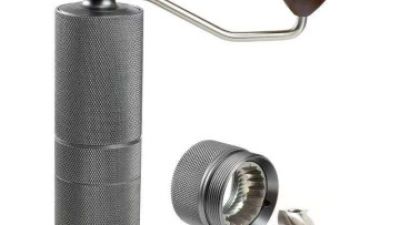
Built for espresso enthusiasts who value control and durability, this mini hand mill combines a lightweight aluminum-alloy body with a 420 stainless steel burr. The sturdy metal housing offers a comfortable, reliable grip while helping protect the internal components during daily use. Its compact form fits easily into a home coffee station, travel kit, or small workspace without sacrificing grinding stability.
A dual-bearing central shaft supports smooth, well-aligned rotation, helping the burr maintain a consistent position throughout the grinding process. This structure promotes a more uniform particle size, giving users greater control over espresso preparation and making it easier to fine-tune grind settings for different beans and brewing preferences. The hand-operated design also provides a direct, quiet experience without requiring a power connection.
For households that prepare coffee frequently, the replaceable whisk structure adds practical long-term value. Instead of replacing the entire mill when a key internal part eventually wears, users can renew the relevant component and continue using the main body. This serviceable construction helps extend the working life of the grinder, reduce replacement frequency, and support dependable performance for both occasional home brewing and more demanding repeated use.
A capable supplier understands particle size, burr alignment, motor heat, and coffee retention. A low price is not enough. Stable production matters more than one attractive sample.
Request test records for grind consistency, noise, temperature rise, and endurance cycles. Ask how burr flatness is measured. Calibration tools should be checked regularly.
Request at least three samples from different production batches. Use the same beans at espresso, filter, and coarse settings. Compare the results carefully. Small differences matter.
Confirm burr material, burr diameter, motor power, adjustment range, retention, and noise levels. The written specifications should match the physical sample. If they do not, pause the order.
Grind the same dose ten times and measure what remains inside. Check the chute, burr chamber, and container. A few retained grounds can affect the next dose.
The adjustment ring should move smoothly and stay fixed during operation. Vibration may cause unwanted movement. Test fine, medium, and coarse settings repeatedly.
Check packaging strength, internal wiring, spare parts, and assembly quality. Drop-test packaging containing heavy metal components. A polished exterior can hide loose wiring.
No. A certificate supports process control, but it does not prove grinding performance. Independent pre-shipment inspection remains useful. I once trusted a polished sample too quickly. That was a mistake.
China has become an important sourcing destination for burr grinder coffee equipment, offering a wide range of suppliers with different manufacturing capabilities, customization options, and production scales. Reliable suppliers typically provide consistent machining, stable motor performance, suitable burr materials, adjustable grinding settings, and designs adapted to household, commercial, or travel use. Global buyers should evaluate factory experience, quality-control procedures, sample performance, production capacity, and communication efficiency before placing an order.
Product selection should consider burr type, construction materials, grinding consistency, noise level, durability, safety features, and ease of cleaning. Buyers also need to confirm applicable export standards, testing reports, certifications, packaging requirements, and documentation for their target markets. Clear agreements covering pricing, minimum order quantities, payment terms, lead times, inspection procedures, shipping methods, and after-sales support can reduce purchasing risks. By comparing suppliers systematically and verifying product quality at each stage, international purchasers can build dependable supply relationships and obtain suitable burr grinder coffee products at competitive overall costs.