Leave Your Message
0%

Picking out an Electric Coffee Grinder isn’t just about looking at motor specs or shiny product photos. You’ve got to consider things like the design of the burrs or blades, how easy it is to adjust the grind, what materials the housing is made of, the capacity, and what kind of support you'll get once your order is shipped. This guide shares info on ten manufacturers in China — a good starting point if you're comparing suppliers, exploring private-label options, or looking for partners in product development. Just a heads-up, it’s not a ranking of every factory out there, more like a helpful intro.

A lot of useful details are in the samples you check out. For instance, do the grind settings stay consistent? Do grounds tend to spill around the chamber? How easy is it to clean the parts? Don't hesitate to ask suppliers for clear specs, info on their quality checks, certifications, and realistic timelines for delivery. Having a chat with a responsive sales rep is great, but getting everything in writing is even better — it helps you avoid surprises. Sometimes, it’s the little things that can make a big difference.

Ultimately, the best supplier depends on what you’re actually selling and what you need. A small, compact grinder works great for home use, but if you’re outfitting a busy café, you’ll want a machine with higher capacity — priorities change, right? When you’re comparing quotes, make sure to look at everything — packaging, minimum orders, options for customization, and warranty details. If you can, test out production samples with the coffee and brewing methods your customers actually use. One thing to keep in mind — a sample might not perfectly represent what you’ll get in larger batches. It’s smart to treat any claims skeptically, ask plenty of questions, and double-check key requirements directly with each manufacturer. The companies listed here can help you narrow down your options, but at the end of the day, thorough evaluation is pretty much essential.
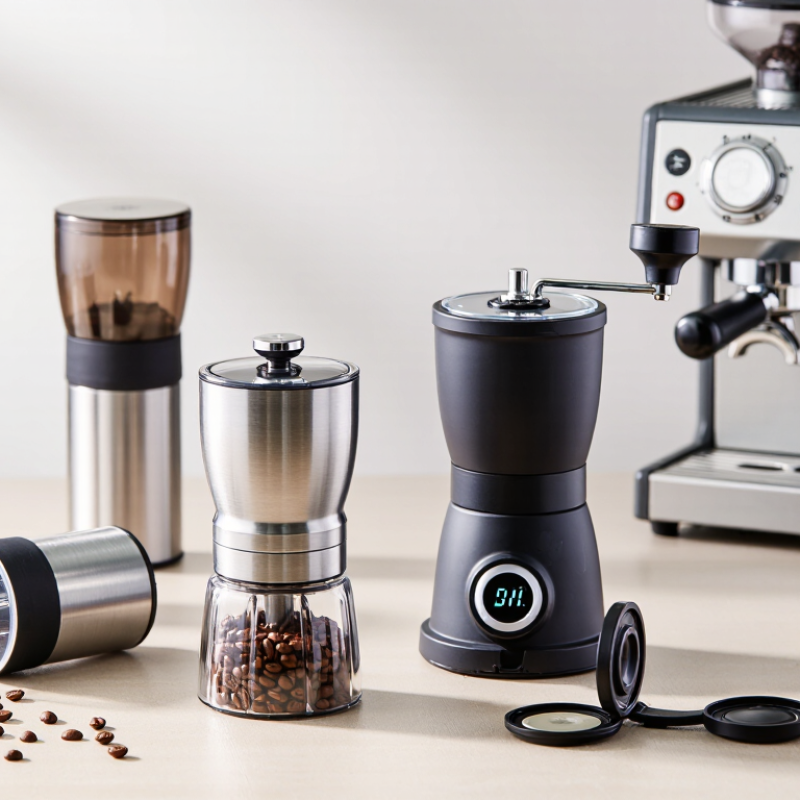
China Top 10 Electric Coffee Grinder Manufacturers

Defining Electric Coffee Grinders and Their Main Product Types

An electric coffee grinder uses a motor to reduce whole beans into grounds before brewing. Its core job is simple; particle consistency is harder. Grind size affects how quickly water extracts soluble compounds, so espresso usually calls for fine grounds, while French press typically uses coarser grounds. These are starting points, not fixed rules. Bean freshness, roast, and brewing equipment can change the result.

The main product types are blade grinders and burr grinders. Blade models chop beans with spinning blades, often producing a mix of fine dust and larger pieces. Burr models crush beans between rotating surfaces and usually offer more controlled adjustment. Burr designs commonly use conical or flat burrs; their performance also depends on alignment, burr geometry, and motor heat. The boundary is not always neat. A higher price alone does not guarantee better results.

Demand reflects coffee’s broad appeal: the National Coffee Association’s 2024 National Coffee Data Trends report found that 67% of U.S. adults had coffee in the previous day. That figure does not measure grinder ownership, but it helps explain why products range from compact home units to adjustable, high-throughput machines. When evaluating a Grinder Coffee Electric product, check grind settings, dose capacity, cleaning access, and noise. Real use matters. A setting scale can look precise yet still need dialing in with each bean.

Electric Coffee Grinders: Product Types and Typical Grind Settings

Electric coffee grinders use a motor to reduce whole beans to grounds. The main types are burr grinders, which crush beans between burrs and typically offer more consistent, adjustable grinds, and blade grinders, which chop beans with a rotating blade. The chart shows the typical relative grind fineness used for common brewing methods; actual settings vary by grinder and recipe.

Scale: 1 = coarse, 5 = fine. These values are a general guide, not measured particle sizes.

How China’s Top 10 Manufacturers Were Selected

Selecting China’s top ten electric coffee grinder manufacturers requires more than comparing catalogues. The shortlist should use consistent, verifiable criteria, not promotional claims. Evidence matters. Not claims alone.

Manufacturing capability is one key measure. Review whether a facility controls motor assembly, blade or burr fitting, and final inspection. Ask for records showing how teams check grind consistency, noise, heat, and unit-to-unit performance. A sample run can reveal details that a brochure cannot. It may also expose uneven results.

Product engineering and quality systems deserve close attention. For an Electric Coffee Grinder Machine, reviewers can examine food-contact materials, electrical testing procedures, production traceability, and the stated scope of any quality certificates. Export experience and customization capacity may also help, but neither proves reliable production by itself. Verify documents and test samples where possible.

The selection should distinguish actual production sites from trading operations through facility evidence and process documentation. Public information is often incomplete, so a ranking should state its limits rather than imply certainty. That part is easy to miss. Some comparisons still depend on imperfect records, and the method should be reviewed as better evidence becomes available.

China Top 10 Electric Coffee Grinder Manufacturers - How China’s Top 10 Manufacturers Were Selected

No. Selection criterion Weight How it is assessed Evidence to check
1 Electric grinder product relevance 16% Range and suitability of electric coffee grinders, including burr or blade models and intended use. Current product catalogues, specifications, and product documentation.
2 Manufacturing capability 15% Evidence of production facilities, relevant processes, and capacity to manufacture the listed products. Factory audit records, facility information, and production process documentation.
3 Quality management 13% Documented quality controls for incoming materials, production, and finished-product inspection. Valid quality-management certificates, inspection procedures, and audit findings.
4 Product safety and regulatory readiness 12% Ability to provide applicable safety and compliance documentation for the destination market and product model. Model-specific test reports and certificates; verify scope and validity with the issuing body.
5 Export experience 10% Demonstrated experience supplying international customers and preparing export documentation. Redacted shipment records, export documents, and verifiable trade references.
6 Product performance documentation 9% Availability of clear, model-specific specifications and repeatable performance-test information. Technical data sheets and test methods covering items such as power, capacity, and grind settings where applicable.
7 Customization and OEM/ODM support 8% Ability to support agreed customization, packaging, and private-label requirements. Documented service scope, sample process, and written project terms.
8 After-sales and spare-parts support 6% Clarity of warranty terms, service procedures, and availability of replacement parts. Written warranty policy, parts list, and service response procedures.
9 Business verification and transparency 6% Consistency between the supplier’s registered business details, stated role, and product claims. Business registration records, independently verified contact details, and clear factory/trading-company disclosures.
10 Commercial and communication reliability 5% Responsiveness and clarity of quotations, lead-time commitments, and order terms. Comparable written quotations, sample-order records, and documented communications.
Total weighting 100% Apply the same evidence-based scoring process to each candidate manufacturer.

Note: This table presents a transparent selection framework, not independently verified rankings or scores for specific manufacturers. Verify certificates, test reports, facility claims, and business records for the exact supplier and product model before purchasing.

Profiles of China’s Leading Electric Coffee Grinder Manufacturers

China’s electric coffee grinder manufacturers vary in scale and technical focus. Some concentrate on compact household models, while others develop higher-capacity units for cafés and small food-service businesses. Their profiles are best understood through product design, production experience, and quality-control practices, not promotional claims alone.

A factory’s engineering strengths often show in practical details. Check how it manages motor heat, burr alignment, grind adjustment, and grounds retention. A stable grind setting matters when preparing espresso; a removable collection cup can make daily cleaning easier. Ask whether the manufacturer tests noise, operating temperature, and repeated use. Small details count.

Other manufacturers emphasize customization, export support, or flexible production runs. These strengths may suit importers with specific packaging or electrical requirements, but they need careful verification. Request a sample and compare its grind consistency across several settings. Review inspection records and confirm that stated capabilities match the production site. A polished sample is not proof of consistent output. Supplier profiles can also miss weaknesses, so clear questions and hands-on checks remain essential.

Manufacturing Capabilities, Technologies, and Product Portfolios

China’s electric coffee grinder manufacturers differ in how they turn designs into repeatable production. Some operate in-house machining, assembly, and testing lines; others rely on qualified component suppliers. For buyers comparing ten manufacturers, factory capability matters as much as catalog size. Ask how burr alignment is checked, how motor temperature is monitored, and whether production samples match shipment units. Small details count. A loose adjustment dial or uneven grind can undermine an otherwise capable machine.

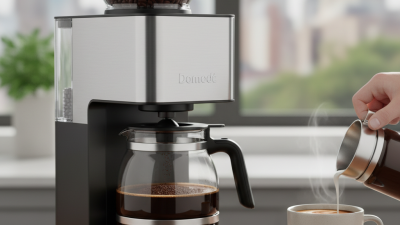
An Electric Burr Coffee Grinder typically combines a motor, burr set, adjustment mechanism, and grounds container. Manufacturers may offer conical or flat burr configurations, stepped or stepless adjustment, and housings made from plastic, stainless steel, or mixed materials. Production technologies can include CNC machining, automated screw fastening, and electrical safety checks. The useful question is not whether a factory lists these tools, but how consistently it uses them. Requesting inspection records and sample testing can reveal gaps. Catalogs look polished; factory variation is less tidy. Even experienced suppliers may need time to refine a new model, so buyers should verify noise, heat, grind consistency, and replacement-part availability before committing to a large order.

Quality Standards, Certifications, and Export Markets

For China’s leading electric coffee grinder manufacturers, quality checks should begin with the motor, wiring, and grinding chamber. IEC 60335-1 and IEC 60335-2-14 provide relevant safety requirements for household appliances and kitchen machines. Buyers should request test reports for the actual model, not just a factory certificate. Check insulation, temperature rise, overload protection, and repeated-use performance. Small details matter: a loose lid switch or uneven burr alignment can affect both safety and grind consistency.

Export documentation varies by destination. European buyers commonly check applicable CE conformity documentation and food-contact material compliance; US buyers may request testing against relevant safety standards. These are not interchangeable shortcuts. Ask which product configuration was tested, and whether the report covers its plug, voltage, and accessories.

The International Coffee Organization estimated global coffee consumption at 177.0 million 60-kilogram bags in crop year 2023/24. That indicates a large coffee market, but it does not measure grinder sales. It is not a perfect proxy.

Trade data needs similar care. UN Comtrade’s HS 850940 category covers many household electro-mechanical appliances, not coffee grinders alone, so its export figures cannot rank grinder suppliers precisely. Request destination-specific shipment records, warranty terms, and spare-parts lead times instead. Factory audits help, too. A Non Electric Coffee Grinder may avoid motor testing, but it still needs durable materials and consistent burr quality. On paper, a supplier can look excellent. Production samples sometimes tell a messier story.

How Buyers Compare Suppliers and Choose a Manufacturer

When comparing China’s top electric coffee grinder manufacturers, treat a top-ten list as a starting point, not proof of quality. Ask each supplier for the same specifications: burr or blade design, grind settings, motor power, rated operating time, and noise level. Then test samples with the same beans and grind setting. Look for an even particle size, steady output, and grounds that do not cling heavily inside the chamber. A low quote can hide differences in materials, assembly checks, or spare-part availability.

Tips: Request a sample. Check the burr alignment. Ask how defects are handled. Compare lead times in writing.

A capable manufacturer should explain its production process clearly and provide relevant inspection records. Ask how it checks motor temperature, switch durability, and grind consistency across production batches. Confirm minimum order quantities, packaging details, and whether replacement parts can be supplied later. A factory visit or independent inspection may help verify capacity, but neither replaces product testing. It is easy to focus too much on price; a neat comparison sheet can still miss weak after-sales support. Share your target use and expected order volume, then judge how precisely each supplier responds.

FAQS

What should buyers check when comparing electric coffee grinder manufacturers?

Check burr alignment, motor heat, grind adjustment, and grounds retention. Small details matter.

Which grinder features affect daily use?

Conical or flat burrs, stepped or stepless settings, and removable cups shape the experience. Cleaning should feel simple, not fiddly.

How can buyers assess grind consistency?

Test a sample with the same beans and settings. Compare particle size and output across several grind levels.

Do factory tools prove consistent production quality?

No. Ask how machining, assembly, and electrical checks are performed, then review inspection records. Tools alone prove little.

What tests should buyers request?

Ask about noise, operating temperature, switch durability, and repeated-use testing. Samples can deceive.

How should buyers compare supplier quotes?

Compare materials, inspection steps, lead times, and spare-part availability alongside price. A tidy spreadsheet can still mislead.

What details should be confirmed before placing an order?

Confirm minimum order quantities, packaging, electrical requirements, and replacement-part supply in writing. Keep the details clear.

Can customization claims be trusted without verification?

Request a sample and check that the production site can match it. New models may need refinement; that part is easy to overlook.

Conclusion

This article explores China’s electric coffee grinder industry, beginning with the main grinder types and how they serve different user and business needs. It explains the criteria used to assess leading manufacturers, including production experience, product range, manufacturing capacity, technical capabilities, and ability to meet varied customer requirements. The manufacturer profiles offer a structured overview of the suppliers without focusing on brand promotion.

The article also considers product development, quality management, relevant certifications, and export experience. For buyers comparing suppliers, it outlines practical factors such as grinder design, customization options, production consistency, communication, and delivery capability. Together, these topics provide a useful framework for understanding the market and selecting a manufacturer whose products and services fit a buyer’s intended application and sourcing priorities.
Leonardo

Leonardo

Leonardo is a dedicated marketing professional with a passion for enhancing everyday living through expertly crafted kitchen tools. At the heart of his work lies a commitment to creating meaningful moments in the home, from savoring that first cup of coffee in the morning to enjoying the last meal......
Previous China Top 10 Manual Grinder Kopi Suppliers?