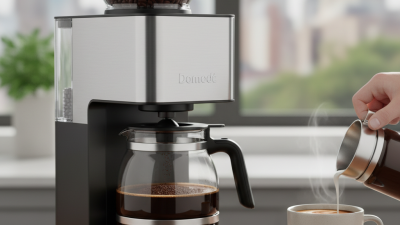
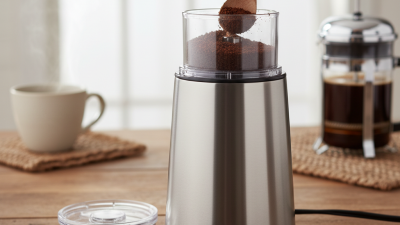
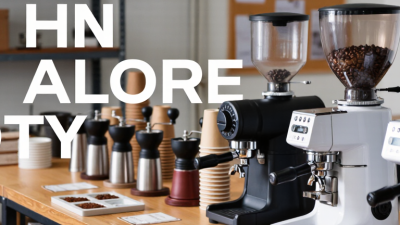
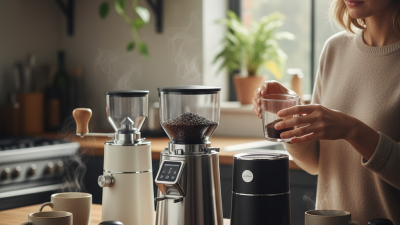
So, what does a Coffee Seed Grinder actually do? Basically, it takes roasted coffee seeds—most of us just call them beans—and breaks them down into particles you can brew with. The size of those particles? That's kind of a big deal. It changes how water flows through, how long extraction takes, and ultimately how the cup tastes and feels in your mouth. Coarse works well for French press. Fine is usually what you want for espresso. And honestly, even tiny tweaks can make a surprisingly different cup.
The name “Coffee Seed Grinder” can be a little confusing, though. Yes, coffee beans are technically seeds, but most brands just say “coffee grinder.” That difference matters when you're comparing products. A grinder made for roasted coffee shouldn't automatically be used on green coffee seeds. Those things are hard, dense, and can really strain a home setup. So yeah—follow the manufacturer's instructions.
Coffee educator James Hoffmann has a line that gets quoted a lot: “The grinder is more important than the coffee machine.” And if you brew daily, that really rings true. A consistent burr grinder—think Baratza or Mahlkönig—can give you more even particles than a lot of blade grinders. And consistency? That helps you repeat a recipe without as many surprises.
It's not magic.
A Coffee Seed Grinder won't save stale coffee or bad storage. Freshly roasted beans, accurate dosing, and clean equipment still matter. I'd also push back on one common assumption: the most expensive grinder isn't always the best pick. A beginner might care more about simple controls, low retention, and easy cleaning than extreme precision. This guide looks at what the grinder actually does, how burrs change particle size, and which features matter for different brewing methods. You'll hopefully get some useful clarity—but leave room for your own taste.
Coffee Seed Grinder Basics: Turning Roasted Beans Into Brew-Ready Particles
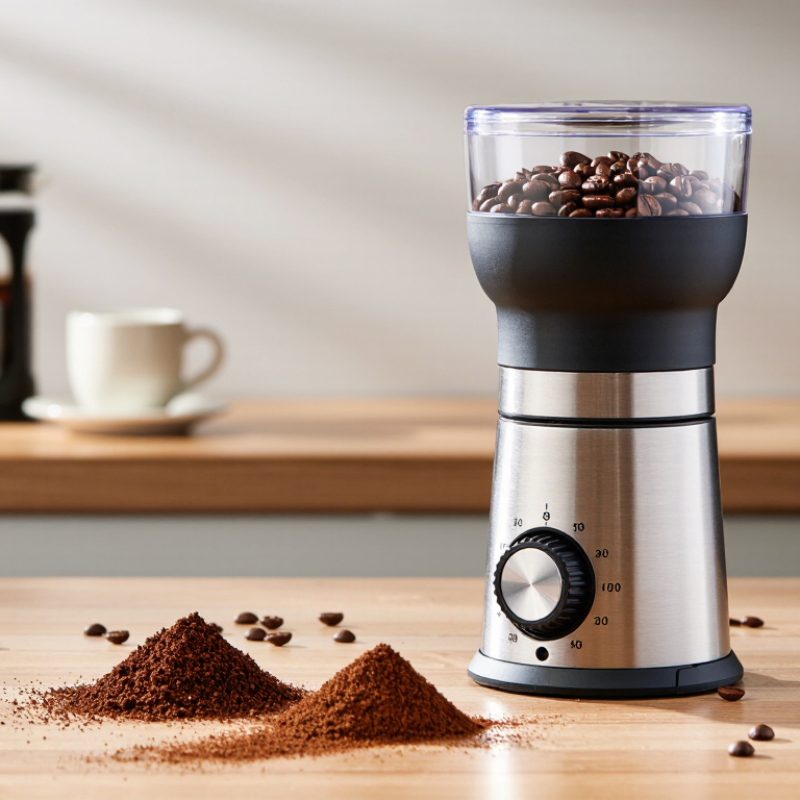
A coffee seed grinder is used to break roasted beans into controlled particles before brewing. Its real purpose is consistency, not noise or speed. A burr-based grinder crushes beans between two surfaces, while a blade system chops them unevenly. The difference appears in the cup: fine dust can taste bitter, while large fragments may produce weak, sour coffee.
The National Coffee Association’s 2024 report found that 67% of American adults drank coffee during the previous day. More home coffee drinkers now need practical control over grind size, dose, and freshness.
Grind size should match the brewing method. Coarse particles suit a French press, medium particles fit many pour-over brewers, and fine particles support espresso-style extraction.
The Specialty Coffee Association commonly references an extraction yield of 18–22% and a beverage strength near 1.15–1.35% TDS for filter coffee.
These figures are useful targets, not rigid laws. Water temperature, bean density, roast level, and brewing time still change the result.
A quality grinder should produce a narrow particle range, offer repeatable settings, and avoid excessive heat during extended use.
Choose a High-Quality Coffee Seed Grinder Supplier that provides measurable specifications, service guidance, and testing details. Ask about burr material, adjustment steps, retention, and cleaning access.
Small details matter. A few retained grounds can alter the next dose. I have found that users often chase finer settings before checking their recipe and scale. That habit creates confusion.
Even good equipment cannot repair stale beans, inaccurate dosing, or careless calibration. Some judgment remains necessary.
Why Grind Size Matters: The SCA Targets 18–22% Coffee Extraction
What Is a Coffee Seed Grinder Used For?
A coffee seed grinder breaks roasted coffee beans into controlled particles before brewing. Its main job is not simply making powder. It shapes how water moves through the coffee bed and how quickly flavor compounds dissolve. In my brewing experience, a consistent grind makes changes easier to understand. A grinder that creates many fine particles can make one cup taste harsh, while larger pieces may leave it thin and sour.
Grind size matters because the Specialty Coffee Association commonly places desirable extraction between 18% and 22%. This means water removes roughly that portion of the coffee’s soluble material. Below this range, the cup may taste sharp, grassy, or incomplete. Above it, bitterness and dryness can dominate. Small adjustments matter. A slightly finer grind increases contact, while a coarser setting slows extraction. Brewing time, water temperature, dose, and pouring technique also influence the result.
Taste remains essential.
A refractometer can estimate extraction, but numbers do not replace judgment. I once chased a target reading and produced a cup that felt flat, despite being within the suggested range. That mistake showed me that extraction percentages are guides, not promises. For a practical test, brew the same coffee twice, changing only the grind setting. Note the aroma, sweetness, acidity, and finish. Check for uneven particles, too. Even an experienced brewer can overlook them when rushing.
What Is a Coffee Seed Grinder Used For? - Why Grind Size Matters: The SCA Targets 18–22% Coffee Extraction
A grinder breaks roasted coffee seeds, commonly called coffee beans, into particles of a controlled size so water can extract flavor more evenly.
| Brewing Method |
Recommended Grind Profile |
Approximate Particle Size |
Typical Contact Time |
Main Brewing Effect |
Extraction Guidance |
| Turkish-Style Coffee |
Extra fine, powder-like |
Below 200 micrometres |
2–4 minutes |
Creates a dense body and allows the fine particles to remain in the cup. |
Use careful heat control; excessive extraction can produce strong bitterness. |
| Espresso |
Fine |
Approximately 200–400 micrometres |
About 20–35 seconds |
Supports resistance to pressurized water and produces concentrated coffee. |
If the shot runs too quickly, grind finer; if it runs too slowly, grind coarser. |
| Stovetop Brewer |
Medium-fine |
Approximately 400–650 micrometres |
About 3–6 minutes |
Balances water flow, pressure, body, and bitterness. |
Avoid an extremely fine grind, which can restrict flow and create harsh flavors. |
| Pour-Over |
Medium to medium-fine |
Approximately 600–900 micrometres |
About 2.5–4.5 minutes |
Encourages a clear cup and allows the brewer to control flow and agitation. |
Adjust grind size to keep the brew balanced within the commonly cited 18–22% extraction range. |
| Automatic Filter Brewing |
Medium |
Approximately 700–1,000 micrometres |
About 4–6 minutes |
Provides an even flow through a flat or cone-shaped filter bed. |
A coarse grind may taste weak; a fine grind may slow filtration and increase bitterness. |
| AeroPress-Style Brewing |
Medium-fine to medium |
Approximately 500–900 micrometres |
About 1.5–3 minutes |
Offers flexible control over immersion time, pressure, and concentration. |
Use a finer grind for shorter recipes and a coarser grind for longer immersion. |
| French Press |
Coarse |
Approximately 1,000–1,500 micrometres |
About 4–6 minutes |
Reduces sediment passing through the metal filter while producing a fuller body. |
If the coffee tastes thin, grind slightly finer; if it tastes bitter or silty, grind coarser. |
| Cold Brew |
Coarse |
Approximately 1,000–1,500 micrometres |
About 12–24 hours |
Supports slow extraction and helps limit excessive fines during long steeping. |
Long contact time can compensate for a coarse grind, but too many fine particles may add bitterness. |
Key principle: The grinder controls surface area. Finer particles expose more coffee to water and usually extract faster, while coarser particles extract more slowly. The 18–22% extraction range is a widely used brewing reference, but taste, water chemistry, dose, temperature, and brew time also affect the final result.
How Burrs Produce Consistent Particles for the SCA’s 55 g/L Brew Ratio
What Is a Coffee Seed Grinder Used For?
A coffee seed grinder breaks roasted seeds into controlled particles for brewing. A burr grinder crushes beans between two textured surfaces, unlike blades that chop unevenly. The gap between the burrs sets the average particle size. Smaller gaps create finer grounds, while wider gaps produce coarser grounds.
This matters for the SCA’s 55 g/L brew ratio. The SCA Brewing Standards identify 55 grams of coffee per liter of water as a central starting point, with a practical range of about 50–60 g/L. Consistent particles help that ratio behave predictably. A 1-liter brewer should receive roughly 55 grams of coffee, not a mixture of dust and large fragments. Fines may over-extract and taste bitter. Boulders may under-extract and taste thin.
I have tested the same recipe with a Coffee Grinder Hand Grinder and noticed a sharper difference after cooling. Burr alignment, speed, and bean hardness all affect the result. SCA sensory guidance also links balanced extraction with controlled strength and uniform brewing conditions. Yet the 55 g/L figure is not a guarantee. It is a reference point.
A small adjustment can change the cup.
A practical check is simple. Grind 55 grams, brew one liter, then taste at several temperatures. If bitterness appears early, reduce fines or coarsen the setting. If the cup tastes hollow, finer particles may help. My own measurements are imperfect, especially without laboratory sieves. That limitation deserves attention.
Choosing Coarse, Medium, or Fine Grounds for Different Brew Methods
What Is a Coffee Seed Grinder Used For?
A coffee seed grinder crushes roasted coffee seeds into controlled particles. Grind size directly affects water contact, flow, and flavor. Coarse grounds resemble sea salt and suit French press or cold brew. Water moves slowly through larger particles, producing a heavier, cleaner cup. Medium grounds feel like sand. They work well for drip machines and many pour-over brewers. Fine grounds resemble table salt and suit espresso or moka pots. Water passes quickly under pressure, extracting flavor from tightly packed particles.
The Specialty Coffee Association’s brewing standards recommend about 55 grams of coffee per liter of water, with a 10% tolerance. They also identify roughly 18–22% extraction as a useful brewing range. These figures are guides, not promises. I still adjust the grind when coffee tastes sharp, hollow, bitter, or muddy. A 2024 National Coffee Data Trends report found that 67% of American adults drank coffee the previous day. Small grind changes therefore affect many daily cups. A Coffee Grinder Spice Grinder may look similar, but coffee requires cleaner, more consistent particles.
Tips: Start with the recommended setting, then change only one step. Use a timer and weigh both coffee and water. If the cup tastes sour, grind finer. If it tastes harsh, grind coarser. Freshly ground coffee also loses aroma quickly, so store unused beans airtight and away from heat.
Dialing In Grind, Dose, and Time for 1.15–1.35% TDS
A coffee seed grinder is used to control particle size before brewing. That control matters when targeting 1.15–1.35% TDS. TDS measures dissolved coffee material in the cup. A consistent grind makes this range easier to reach. Coarse particles may produce weak, sharp coffee. Excessive fines can create bitterness and a heavy finish.
Start with a measured dose, such as 18 grams of coffee. Use 300 grams of water for a 1:16.7 ratio. Keep water temperature and pouring style consistent. Then adjust the grinder in small steps. If the TDS reads below 1.15%, grind slightly finer or extend contact time. If it exceeds 1.35%, grind coarser or shorten the brew.
Time deserves equal attention. A brew finishing in two minutes may taste thin. Four minutes can become dry, especially with many fines. I record grind setting, dose, water weight, and final TDS after each test. A refractometer helps, but taste remains essential. Numbers do not explain every harsh aftertaste. My own measurements sometimes look ideal while the cup feels flat. That is a useful warning.
A Coffee Grinder Coffee Maker setup can simplify this workflow, but it may limit adjustment range. Freshly ground coffee usually responds more clearly than pre-ground coffee. Small changes matter. Keep notes, taste carefully, and accept that one setting rarely suits every coffee.
Adjusting Grind Size to Control Flavor, Flow, and Brewing Uniformity
What Is a Coffee Seed Grinder Used For?
Adjusting Grind Size to Control Flavor, Flow, and Brewing Uniformity
A coffee seed grinder breaks roasted coffee into controlled particles before brewing. Its key job is not simply making coffee finer or coarser. It manages water contact, flow speed, flavor balance, and repeatability. The Specialty Coffee Association’s Brewing Control Chart commonly targets 18–22% extraction and about 1.15–1.35% dissolved solids. Grind size strongly influences whether a brew reaches that range.
A finer grind exposes more surface area. Water extracts flavor faster, but the bed may drain slowly. The cup can taste heavy, bitter, or dry. A coarser grind usually speeds flow and may create sour, thin flavors. Watch the stream. If water stalls above the coffee bed, move slightly coarser. If it rushes through like rain on glass, go finer. Small changes matter.
Uniform particles matter, too. The World Coffee Research Sensory Lexicon describes acidity, bitterness, body, and astringency as distinct sensory attributes. Uneven grinding can exaggerate several at once. That is where the lesson becomes less tidy. A “perfect” setting does not exist for every coffee, water, or brewer. Record the dose, time, and sensory result. Then adjust one variable. I sometimes chase extraction numbers and forget comfort in the cup. That is a mistake worth noticing.
What Is a Coffee Seed Grinder Used For?
Adjusting grind size helps control flavor, water flow, and brewing uniformity.
These approximate particle-size ranges show how different brewing methods use different grind settings.
Finer particles create more resistance and usually slow water flow, increasing extraction potential.
Coarser particles allow faster flow and generally reduce extraction. A consistent particle distribution
helps water contact the coffee more evenly and improves brewing uniformity.
Cleaning and Calibrating the Grinder to Maintain Particle Consistency
A coffee seed grinder is used to break roasted coffee beans into controlled particles for brewing. Its performance depends on more than sharp burrs or a powerful motor. Clean grinding surfaces help preserve particle consistency, while calibration keeps the selected setting accurate. In daily use, I check the grinder after several brews because fine coffee dust can collect around the burrs and adjustment mechanism. Small changes matter. A clogged path may create both powder and coarse fragments.
Cleaning should begin with the grinder unplugged. Remove accessible parts according to the manufacturer’s instructions. Brush away dry residue, then use a soft, lint-free cloth for remaining dust. Avoid water near electrical components. I inspect the burr edges, chute, and bean chamber under bright light. A useful warning: aggressive brushing can move calibration parts or damage delicate surfaces. I once cleaned too quickly and disturbed the adjustment ring, which changed the grind more than expected.
Tips: Record the setting that produces a balanced brew, then test it after cleaning. Turn the adjustment gradually, using small increments. Grind a small dose and examine the texture between your fingers. It should look reasonably even, not perfectly identical. Environmental changes, bean age, and static can affect results. If the brew still tastes uneven, repeat the check instead of assuming the grinder is faulty. Keep a simple maintenance log. It exposes patterns.
Wireless Mini Coffee Bean Grinder: Insights from Grand View Research’s 2024 Coffee Market Report
The 2024 coffee market report highlights the continued growth of convenient, personalized brewing experiences. As consumers increasingly prepare coffee at home, in offices, hotels, vehicles, and outdoor locations, portable equipment is becoming an important part of the coffee routine. A wireless mini coffee bean grinder responds to this shift by combining fresh grinding with a compact, easy-to-carry design. Its 7.7 × 7.7 × 18 cm body and lightweight construction of only 402 grams make it practical for travelers, commuters, campers, and commercial users who need flexibility without sacrificing freshly ground flavor.
Designed for everyday mobility, the grinder uses a 1200 mAh battery and a TYPE-C charging port, removing the inconvenience of a fixed power connection. Users can grind beans before work, during a road trip, in a hotel room, or at an outdoor location with greater freedom. The compact form also makes storage simple, while the rechargeable design supports repeated use across different settings. As the coffee market continues moving toward convenience, customization, and on-demand preparation, a small wireless grinder offers a practical way to bring freshly ground coffee into more moments of daily life.
FAQS
It breaks roasted coffee beans into controlled particles before brewing. Particle size affects water flow, extraction speed, and flavor balance.
A finer grind exposes more surface area to water. Extraction speeds up. A coarser grind usually allows faster drainage and lighter extraction.
A commonly suggested range is 18% to 22% extraction. Below it, coffee may taste sharp or grassy. Above it, bitterness and dryness can dominate.
Watch the water flow above the coffee bed. If it stalls, the grind may be too fine. The cup may taste heavy, bitter, or dry.
Water may rush through the coffee like rain on glass. The cup can taste thin, sour, or incomplete. Try a slightly finer setting.
No. A refractometer provides an estimate, not a final judgment. I once reached a suitable reading, yet the cup tasted flat. Taste still matters.
Brew the same coffee twice. Change only the grind setting. Compare aroma, sweetness, acidity, body, and finish.
Uneven particles can create both over-extracted and under-extracted flavors. Fine dust may add bitterness, while larger pieces remain sour. Perfect uniformity is unrealistic.
Unplug it first. Remove accessible parts according to its instructions. Brush away dry residue and wipe remaining dust with a soft cloth. Keep water away from electrical components.
Check it after cleaning or whenever the brew changes unexpectedly. Coffee dust, bean age, static, and humidity can shift results. I sometimes blame the coffee too quickly.
Conclusion
A Coffee Seed Grinder is used to transform roasted coffee beans into evenly sized particles that are ready for brewing. Its main purpose is to control grind size, which strongly affects water flow, extraction, strength, and flavor. A balanced brew generally aims for an extraction yield of 18–22%, often using a reference ratio of about 55 grams of coffee per liter of water. Burrs help produce more consistent particles than uneven grinding methods, making it easier to achieve repeatable results.
The ideal setting depends on the brewing method: coarse grounds suit slower immersion or filtration styles, medium grounds work well for many standard brewers, and fine grounds support faster pressure-based brewing. Brewers can adjust grind size together with coffee dose and brewing time to target approximately 1.15–1.35% TDS. Finer grinding may increase extraction and slow flow, while coarser grinding can reduce extraction and speed flow. Regular cleaning and calibration are also essential for preserving particle consistency and reliable brewing performance.
 +86 15268683708


 Contact Phone
 Contact Email
 Wechat