So, China’s portable coffee gear scene is pretty broad—you’ve got compact espresso makers, hand-powered brewers, and even battery-assisted designs. In this guide, I’m looking at some of the leading Portable Espresso Maker manufacturers in China, plus the details that don’t really come through in product photos. Because let’s be real: a device can look sturdy online, then feel totally awkward when you try to pack it next to your laptop or travel mug.
James Hoffmann is a coffee educator, and honestly, his equipment reviews point to a pretty useful buying principle. You could paraphrase it like this: convenience only really matters if the cup still tastes good. Just to be clear, that's my summary, not a verified verbatim quote. The idea gives you a practical test, though: look at extraction consistency, cleaning steps, pressure claims, and how easily the parts fit together. The little details really count. A slippery seal or a basket that's hard to rinse can ruin what should be a pleasant morning routine.
When you're looking at suppliers, it helps to keep the whole picture in mind—product design, manufacturing capabilities, quality control, export experience. But marketing claims? Take those with a grain of salt. Always ask for current specs and documentation directly from the factory, and compare them yourself. China has tons of manufacturers, each with their own strengths, but honestly, no single factory is going to be the right fit for every brand or every use case. It's easy to forget that in the excitement. And especially with something like a portable espresso maker—it has to actually work on a real trip, not just look great in a polished demo. Honestly, this comparison is here to help you ask tougher questions before you commit to a supplier. You know, the kind that make you stop and think—rather than just going with the first option.
Portable Espresso Maker Manufacturing in China: Industry Overview
China’s portable espresso maker industry brings together appliance assembly, precision machining, and compact fluid-system design. Manufacturers may source pumps, heating elements, seals, batteries, and metal housings through established regional supply networks. This proximity can shorten development cycles. It does not guarantee consistent quality, however, especially when suppliers or materials change between production runs.
Product development often balances pressure, temperature, weight, and battery life. A small change in gasket thickness can affect leakage or extraction consistency. Factories typically assess prototypes through repeated brewing, pressure checks, and inspection of electrical components. Details matter. Manual models also need practical testing: a stiff lever or awkward water chamber can frustrate users, even when the espresso tastes acceptable.
Manufacturing capabilities vary widely, from basic assembly to in-house tooling and product engineering. Buyers can examine sample units, request documented test criteria, and compare results across multiple batches. Clear communication about materials, tolerances, and inspection steps helps prevent avoidable surprises. A polished sample is not the whole story. Real use can expose weaknesses that a showroom test misses, and even a careful process may need revision after feedback from everyday brewing.
Key Technologies Used in Portable Espresso Machines
Portable espresso machines depend on precise heat, pressure, and water flow, not just a compact pump. A thermoblock can heat water quickly, while a small boiler may hold temperature more steadily during repeated shots. Either way, temperature sensors and electronic control help limit swings that can make coffee taste sharp or flat. Small parts matter. A pressure gauge can reveal whether pressure reaches the coffee puck, rather than merely showing the pump’s maximum rating.
Pre-infusion gently wets the grounds before full pressure, reducing dry pockets and uneven extraction. Some machines also adjust pressure during brewing, but added controls consume power and can complicate cleaning. Battery-powered models must balance heating speed with shot capacity; heat is costly. The Specialty Coffee Association’s Brewing Control Chart identifies an 18–22% extraction range for brewed coffee. It is a useful measurement reference, not a strict espresso rule. The National Coffee Association’s 2024 National Coffee Data Trends report found that 67% of U.S. adults had coffee the previous day, supporting interest in convenient brewing formats. For a Portable Electric Espresso Maker, manufacturers should test temperature recovery, pressure consistency, and food-contact materials under repeated use. One limitation remains: compact devices can perform differently in cold weather, and lab results may not reflect a hurried morning.
Leading Chinese Portable Espresso Maker Manufacturers
Leading Chinese portable espresso maker manufacturers often combine product design, metalworking, and assembly under one operation. Their capabilities vary, so buyers should compare actual samples rather than rely on catalog photos. Some factories focus on compact manual units, while others produce battery-powered models or custom components.
A practical review starts with the details users notice: how firmly the portafilter locks, whether the water chamber seals cleanly, and how evenly the machine extracts after repeated use. Ask suppliers for material specifications, pressure-test records, and clear instructions for cleaning and replacing parts. A sample test with the same coffee dose and grind can reveal inconsistent pressure or awkward handling. Small details matter.
Not every sample will impress. That is useful information. Check how the device performs after several brewing cycles, not just one polished demonstration. Also inspect the packaging and instruction sheet; unclear maintenance guidance can create avoidable support problems. Before placing a larger order, confirm production capacity, inspection procedures, lead times, and how defects are handled. A careful manufacturer should answer these questions with specific documents and realistic limits, rather than broad promises.
Product Ranges and Manufacturing Capabilities
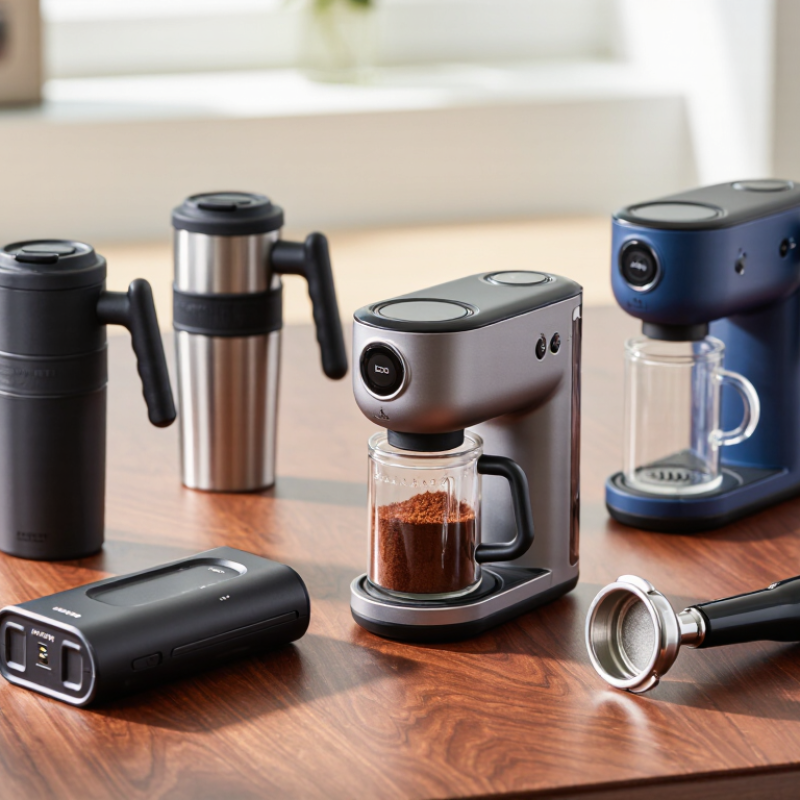
Portable espresso maker manufacturers in China often serve several product tiers, from hand-pumped travel brewers to compact electric models. Product ranges may include rechargeable units, car-compatible versions, and kits with cups or storage cases. A Portable Espresso Maker Electric typically combines a water chamber, heating element, pump, and removable coffee basket. Buyers should compare heating time, battery capacity, cup size, and cleaning access rather than relying on appearance alone. Small details matter.
Manufacturing capabilities vary between factories. Some handle plastic molding, metal-part sourcing, assembly, and packaging under one roof; others coordinate specialist suppliers. This difference can affect lead times and quality checks. A capable production process may include incoming-part inspection, leak testing, repeated heating cycles, and checks for stable extraction. Ask how tests are recorded, and whether samples represent regular production. Specifications on a sample can look reassuring, yet small production changes may alter performance.
Customization may cover color, surface finish, accessories, packaging, and electrical specifications. These options are useful, but each change needs clear approval and verification. Portable devices face practical wear: buttons get pressed in bags, seals collect coffee residue, and charging ports may be exposed to moisture. Not every catalog model is equally easy to service. Requesting drawings, test criteria, and spare-part details helps buyers judge manufacturing depth without assuming every supplier offers the same support.
Quality Standards and Export Certifications
For Chinese manufacturers of a Portable Coffee Maker, quality checks should cover more than pressure and extraction time. Buyers can ask for documented tests on leakage, temperature stability, handle strength, and repeated pumping. The ISO Survey 2022 recorded 1,265,216 valid ISO 9001 certificates across 189 countries and economies. This shows how widely quality-management systems are used; it does not prove that a particular espresso maker is safe or reliable.
Export requirements depend on the destination and product design. For electrical models, manufacturers should assess applicable safety and electromagnetic compatibility requirements, such as IEC 60335-1 and relevant EMC standards. Products sold in the European Union may also need CE conformity assessment, while materials contacting drinks must meet applicable food-contact rules, including Regulation (EC) No 1935/2004. Keep test reports, material declarations, and traceable production records together. Paperwork matters.
A practical supplier review should compare certificates with the exact factory, model, and components being shipped. Check that test samples match the production unit, including its heating element, seals, and cup-contact surfaces. Ask for inspection records and a clear process for handling defects. A certificate can be current while a component has changed; this is easy to overlook. No single document replaces hands-on inspection.
How to Evaluate Chinese Espresso Maker Suppliers
When evaluating Chinese portable espresso maker suppliers, look beyond product photos and quoted prices. Ask whether the supplier operates its own factory or outsources assembly, and request a live production walkthrough. Check how workers inspect seals, pumps, and battery connections. Small defects can cause leaks or inconsistent extraction. Ask for written quality-control steps and recent inspection records. Details matter.
Test a production sample with your own coffee and water, not just the supplier’s preferred setup. Record warm-up time, shot volume, pressure consistency, and cleaning effort. Run repeated cycles; one good espresso proves little. Request material specifications and relevant food-contact documentation for parts that touch water or coffee. Also confirm warranty terms, spare-part availability, packaging protection, and realistic lead times. A polished sample can still hide uneven production, so request samples from different batches when possible. Compare the supplier’s responsiveness, too. Clear answers are useful; vague promises are not. I would avoid judging a coffee device beside a Portable Smoothie Maker by appearance alone. Their performance needs different tests, and a tidy brochure cannot replace hands-on checks.
Trends Shaping China’s Portable Espresso Market
China’s portable espresso market is moving from novelty toward practical daily use. The USDA Foreign Agricultural Service’s 2024 China Coffee Annual estimated coffee consumption at about 6.3 million 60-kilogram bags for 2023/24. That figure covers coffee overall, not portable machines, but it signals a broader audience for compact brewing. Buyers increasingly expect a maker to fit a work bag, heat water reliably, and clean quickly after use. Small details matter: a stable cup on a train table, a pressure-resistant seal, and grounds that do not clog the filter.
Manufacturers are responding with lighter bodies, USB-C charging, and designs that work with both ground coffee and capsules. Yet specifications can hide trade-offs. A smaller water chamber saves space, but may produce a shorter shot; battery claims also depend on water temperature and ambient conditions. The China Household Electrical Appliances Association’s industry reporting tracks appliance development broadly, rather than portable espresso sales specifically, so precise market-size claims deserve caution. There is room to improve. Makers should publish repeatable extraction and battery test conditions, not just ideal results. For consumers, repairable seals and replaceable batteries may matter more than another mode. A compact machine is useful only when it works beyond the showroom.
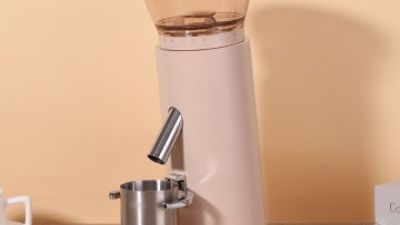
A Better Brew Starts Here: The Electric Timere Burr Espresso Mill Coffee Bean Grinder
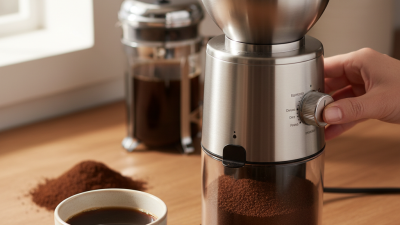
A better espresso begins with a consistent grind. The electric timed burr coffee grinder uses 41 mm stainless-steel conical burrs and a low 200 RPM grinding speed to help limit heat buildup and preserve the beans’ aroma. Adjustable grind settings let coffee drinkers tailor the result for different brewing preferences, while a smart touchscreen and timer memory make repeatable preparation simple. The timer-memory range is 5–98 minutes, and the 130 g capacity suits everyday home use as well as busier serving environments.
Convenience matters as much as grind quality: USB charging and a 2,600 mAh lithium battery make this grinder easier to move and use without relying on a fixed outlet. Food-grade materials support durable, everyday operation. Demand for fresh coffee is substantial: the National Coffee Association’s 2024 National Coffee Data Trends report found that 67% of U.S. adults had consumed coffee in the previous day. Meanwhile, the International Coffee Organization estimated global coffee consumption at about 177 million 60-kg bags in 2023/24. For distributors entering the coffee-appliance category, a portable grinder with practical capacity, adjustable grinding, and straightforward controls offers a useful fit for consumers seeking a more tailored daily brew.
FAQS
Ask for documented leakage, temperature stability, handle-strength, and repeated-pumping tests. Request inspection records too. One successful shot proves little.
No. It shows a quality-management system is in place, not that a particular model is safe or reliable. Check the actual product.
Requirements depend on the destination and design. Buyers may need safety and electromagnetic compatibility assessments, food-contact documents, and traceable production records. Keep reports together.
Compare the factory, model, and shipped components against each certificate. Check the heating element, seals, and cup-contact surfaces. Components can change quietly.
Ask whether assembly happens in the supplier’s factory or elsewhere. Request a production walkthrough and written quality checks for seals, pumps, and battery connections.
Use your own coffee and water. Record warm-up time, shot volume, pressure consistency, and cleaning effort. Run several cycles, not just one.
Check warranty terms, spare parts, packaging, and realistic lead times. Samples from different batches can reveal uneven production. They take more time to assess.
Lighter bodies, USB-C charging, and support for ground coffee or capsules are gaining attention. A smaller water chamber saves space but may shorten the shot.
Not necessarily. Results can depend on water temperature and surrounding conditions. Ask manufacturers to publish repeatable test conditions, not only ideal results.
A 2024 industry estimate put overall coffee consumption at about 6.3 million 60-kilogram bags for 2023/24. It does not measure portable-machine sales.
Conclusion
China’s portable espresso maker industry combines established appliance manufacturing expertise with growing demand for convenient, high-quality coffee equipment. Manufacturers use compact heating systems, pressure-generation mechanisms, and carefully designed water and brewing components to create machines suited to travel, outdoor use, and small kitchens. Product ranges may include manual, battery-powered, and electrically operated models, with capabilities varying by factory and production line.
When assessing suppliers, buyers should review manufacturing capacity, product consistency, materials, testing procedures, and relevant export certifications. Clear communication, reliable quality-control processes, and the ability to support customization are also important considerations. The market continues to evolve as consumers seek lighter designs, simpler operation, improved energy efficiency, and more consistent espresso extraction. Together, these developments are shaping how Chinese manufacturers design and produce portable espresso makers for domestic and international markets.
 +86 15268683708


 Contact Phone
 Contact Email
 Wechat