
China’s coffee equipment scene has been growing like crazy lately, and now manual grinders are popping up everywhere—from cafes and retailers to folks brewing at home all around the world. If you’re looking into these, this guide is a good starting point. It highlights China’s top 10 Manual Grinder Kopi suppliers, focusing on things like how they manufacture, how consistent their products are, and how reliable they are when it comes to exporting.
When choosing a supplier, it’s smart to ask about key details — stuff like what material the burrs are made of, the adjustment range, how sturdy the body is, and what kind of grinding capacity you can expect. Clear specs are super important. Sometimes a grinder looks sleek and polished, but after you use it a few times, it might not perform so well. So, don’t just take their word for it. Practical testing is essential — check if the burrs stay aligned, if the handle feels stable, how consistent the grind particles are, and how easy it is to clean.
Experience counts too. Look into how long the factory has been around, what kind of quality control they have in place, how they package their products, and whether they can support private-label orders if that’s what you need. These kinds of details help you see beyond just pretty pictures in a catalog and get a real sense of who you’re dealing with.
And don’t rely solely on online rankings. It’s a good idea to ask for samples, verify their certifications, review some photos of their production process, and get a sense of how they handle issues or defects. Communication matters — how quickly they respond can tell you a lot about their professionalism. Even the packaging quality can be revealing. Some suppliers might have great prices but be vague about tolerances or policies around replacements. That’s a red flag you shouldn’t ignore.
This guide is your starting point for finding capable Chinese manufacturers and trading companies that deal with Manual Grinder Kopi products. Keep in mind, info can change, and it’s always best to verify claims independently before you sign any deals or send deposits. Remember, how the grinder performs depends on the model itself, not just who makes it — it’s easy to overlook that if you’re not paying attention.
A reliable manual kopi grinder supplier in China should prove more than production capacity. During sample checks, buyers should examine burr alignment, shaft stability, adjustment consistency, and handle comfort. The grinder must produce a steady texture for coarse, medium, and fine brewing. Small defects matter.
Material choices also reveal technical competence. Hardened stainless steel burrs, food-contact-safe components, and durable bearings support repeated use.
However, a polished catalog can still hide weak quality control. Request inspection records, tolerance data, material certificates, and clear sample specifications. Compare several samples from different production batches. One good unit proves very little.
A dependable supplier communicates clearly before receiving an order. They should explain minimum quantities, tooling charges, packaging details, lead times, and replacement procedures. Factory audits, traceable inspections, and realistic warranty terms add confidence. Ask how rejected parts are handled. Silence is a warning. Export experience is useful, but it does not replace evidence. Some suppliers may promise customization too quickly, creating later delays or uneven performance. A careful buyer should test the final production sample, not only trust factory photographs or written promises.
China’s manual grinder market has changed from simple, low-cost hardware toward more precise kopi equipment. Small workshops once focused on basic steel bodies and ceramic burrs. Now, many factories test burr alignment, handle balance, grind adjustment, and packing durability before shipment. This shift reflects stronger buyer expectations from cafés, home brewers, and international distributors.
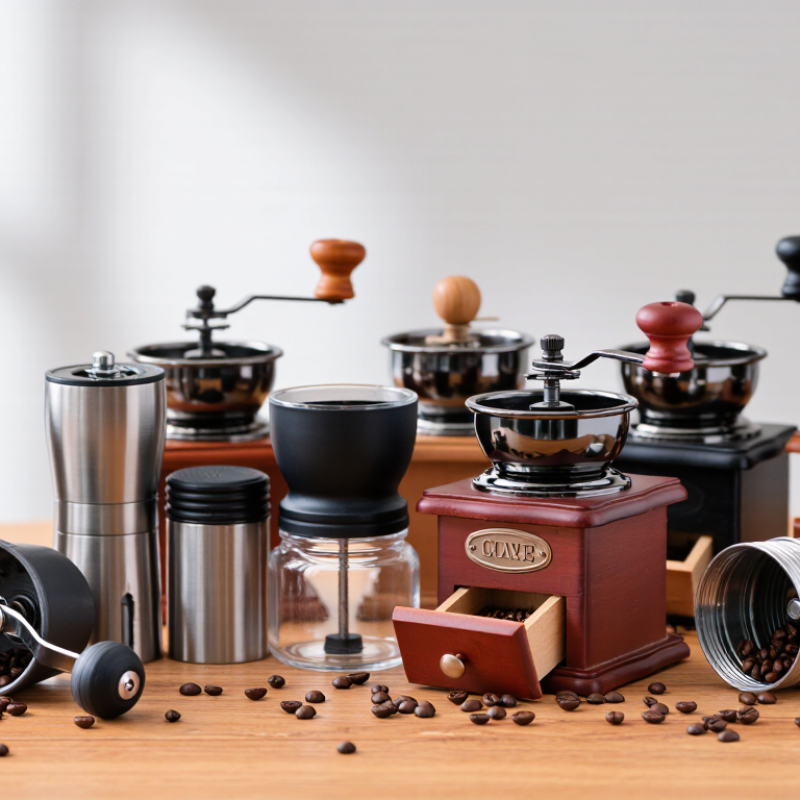
A High-Quality Manual Grinder Kopi Factory usually combines CNC machining with practical hand inspection. I have found that a smooth adjustment ring matters as much as attractive finishing. A grinder may look excellent, yet produce uneven particles if the axle wobbles. Chinese suppliers increasingly offer stainless steel, aluminum alloy, wood, and travel-sized designs. They also support private specifications, such as finer settings for espresso-style kopi or wider ranges for pour-over brewing. Development is real, but quality remains uneven across suppliers.
Tips: Ask for burr material, adjustment range, tolerance data, and sample testing records. Check whether the handle turns smoothly after repeated use. Request photos of internal parts, not only polished product images. A small test order can reveal packing weakness, loose screws, or inconsistent grinding. Do not rely on factory claims alone. My own assessment would include grind samples, noise checks, and a simple drop test. Even experienced buyers can overlook the lid fit.
China’s manual kopi grinder suppliers differ more in execution than in appearance. Ten common strengths stand out: compact travel designs, stainless burrs, ceramic burrs, adjustable grind settings, low minimum orders, custom finishes, fast sampling, export experience, spare-part support, and flexible packaging. Some factories excel at machining; others handle private-label projects more smoothly. Ask for burr material, adjustment steps, and replacement-part availability before comparing quotes. A polished sample can still hide uneven grinding.
The International Coffee Organization estimated global coffee consumption at 177.0 million 60-kilogram bags in coffee year 2023/24. That scale does not prove demand for manual grinders, but it shows the broad market behind coffee equipment. For suppliers, practical checks matter: request grounds from coarse to fine, test adjustment consistency, and inspect whether the handle slips under load. A supplier with clear tolerances and reliable sample records may be more useful than one offering the lowest price. Small flaws count. A loose catch cup or awkward cleaning routine can frustrate daily use. I would also compare lead times against actual production capacity; promises on paper are not always precise.
How to read this chart: These percentages are suggested evaluation weights, not measured supplier rankings or market-share data. They reflect practical factors to compare when sourcing manual coffee grinders; adjust them to fit your requirements.
When comparing a High-Quality Manual Grinder Kopi Supplier, ask for measurable test results, not just claims about “sharp” burrs. Check burr material, alignment, axle stability, and adjustment steps. Stainless steel resists corrosion; ceramic can stay hard but may chip if dropped. Neither material guarantees an even grind. Ask suppliers to grind the same coffee dose and show particle-size distribution, then inspect the fines and coarse fragments. A simple test helps.
Grinding feel matters, too. Turn the handle for a full dose and note wobble, rubbing, and effort. Then repeat the setting. Does the grind look similar? SCA’s Brewing Control Chart places a common brewed-coffee extraction target at 18–22%, with a typical drip-coffee strength range of 1.15–1.35% TDS. These are brewing benchmarks, not grinder certifications, but they can help you compare samples brewed under controlled conditions. Keep dose, water, and brew method constant. Small differences can come from the operator, and that is easy to overlook. Request sample units, material specifications, and repeat-test records before choosing a supplier.
When evaluating China-based manual grinder kopi suppliers, ask for current certificates and verify their scope. A document should match the factory, product, and destination market. Check quality-management records, food-contact material declarations, and any required electrical or safety approvals if the grinder includes powered parts. Many hand grinders do not. Ask for test reports, issuing-body details, and renewal dates, not just a logo on a brochure.
Customization can be practical rather than flashy. Request samples showing burr material, grind adjustment steps, handle length, hopper capacity, and finish quality. Try grinding the same beans at espresso-fine and French-press settings. Does the dial stay put? Inspect grounds for consistency, and check whether the handle feels secure after repeated turns. Small differences matter. A custom color is easy to promise; consistent burr alignment is harder. I would test both.
For OEM services, clarify who supplies drawings, packaging artwork, and tooling, and who owns each after production. Ask for a written sample-approval process, minimum order quantity, lead time, and defect-handling terms. Confirm that carton labels and manuals can be customized without changing required product information. Have the supplier document inspection steps, such as checking burr alignment and turning resistance. One awkward point: early samples may be excellent, while bulk units vary. Set measurable acceptance limits before ordering, and retain an approved reference sample.
When comparing a Manual Coffee Grinder supplier, request a dated quotation that separates grinder body, burrs, handle, packaging, tooling, and freight. A low unit price can hide setup charges. Ask whether the quote changes with material, finish, or order volume, and compare the same specifications across suppliers. Small details matter: a loose handle or uneven burr alignment can trigger costly returns.
Minimum order quantities should be checked against your sales plan, not just the supplier’s preferred batch size. The International Coffee Organization’s Coffee Development Report 2022 notes that coffee supports the livelihoods of millions of smallholders, but that broad market context does not guarantee demand for a particular grinder. Request sample costs, repeat-order terms, and written confirmation of any pilot quantity. One awkward point: samples may be hand-finished, so they may not reflect mass production.
Production capacity needs evidence. Ask for monthly output, current factory loading, lead times, and a recent production schedule, then verify these during a factory audit or independent inspection. The ISO Survey reports millions of valid ISO 9001 certificates worldwide, yet certification alone cannot prove a workshop can meet your order date. Check inspection records and defect rates. A spreadsheet is not a factory. Include buffer time for rework; I would not assume every supplier’s first estimate is realistic.
Note: The entries below are anonymized supplier profiles and indicative sourcing benchmarks, not verified quotations or rankings of specific companies. Actual prices, MOQs, and capacity depend on materials, specifications, customization, order terms, and factory availability. Confirm details directly with each supplier.
| Profile | Typical Product Focus | Indicative FOB Price (US$ / unit) | Indicative MOQ | Indicative Monthly Capacity | Customization | Evaluation Point |
|---|---|---|---|---|---|---|
| Profile 1 | Entry-level stainless-steel burr grinder | $4–$8 | 200–500 units | 5,000–15,000 units | Logo and packaging; limited design changes | Check burr alignment, grind consistency, and handle durability. |
| Profile 2 | Portable grinder with ceramic burrs | $3–$7 | 300–1,000 units | 8,000–20,000 units | Color, logo, and retail box options | Request samples to assess ceramic burr wear and adjustment range. |
| Profile 3 | Mid-range grinder with metal body and steel burrs | $8–$16 | 100–300 units | 3,000–10,000 units | Logo, finish, packaging, and selected component options | Compare burr material, bearing smoothness, and assembly tolerances. |
| Profile 4 | Aluminum-body grinder for specialty coffee retail | $12–$25 | 100–300 units | 2,000–8,000 units | Anodized colors, logo, and packaging | Verify finish consistency and whether spare parts are available. |
| Profile 5 | Wood-and-metal grinder with gift packaging | $10–$22 | 200–500 units | 2,000–6,000 units | Wood finish, logo, and gift-box customization | Check wood sourcing, moisture control, and finish uniformity. |
| Profile 6 | Compact travel grinder with detachable handle | $7–$15 | 200–500 units | 4,000–12,000 units | Logo, carry case, and packaging | Test handle fit, portability, and grounds-container retention. |
| Profile 7 | Large-capacity manual grinder for home use | $6–$13 | 300–1,000 units | 6,000–18,000 units | Logo, color, and retail packaging | Confirm hopper capacity, grind adjustment, and output consistency. |
| Profile 8 | OEM-focused grinder assembler | $5–$18 | 500–2,000 units | 10,000–30,000 units | Private label and packaging; tooling may be extra | Ask which components are made in-house and which are sourced externally. |
| Profile 9 | Small-batch custom grinder workshop | $15–$35 | 50–200 units | 500–2,000 units | More flexible design and material options | Clarify prototype charges, tooling ownership, and repeat-order lead times. |
| Profile 10 | Premium grinder with precision-machined components | $20–$45 | 50–200 units | 500–3,000 units | Component, finish, and packaging customization | Request dimensional checks, inspection criteria, and a documented QC plan. |
Before ordering: Request a written quotation with Incoterms, sample and tooling costs, production lead time, payment terms, packaging specifications, and inspection requirements. Compare like-for-like grinder specifications; a low unit price may exclude packaging, freight, duties, or quality-control costs.
Before ordering from a manual coffee grinder supplier, define the product in measurable terms. Specify burr material, grind settings, handle length, capacity, and target order quantity. Ask for a sample and test it with the same beans and brew method your customers use. Check grind consistency, adjustment feel, and whether grounds collect around the burr. Small details matter.
Request a written quotation, production timeline, packaging specifications, and inspection criteria. Confirm the sample and bulk goods use the same materials. The World Bank’s 2023 Logistics Performance Index assessed logistics in 139 economies, highlighting how tracking and shipment reliability vary across markets. Ask the supplier for carton dimensions, gross weight, and shipment tracking arrangements before comparing freight costs. Get answers in writing.
For quality checks, agree on acceptable defects and a pre-shipment inspection plan. ISO 2859-1 provides sampling procedures for inspection by attributes; buyers can reference it when setting a practical inspection level. Also verify payment milestones and what happens if goods fail inspection. The WTO reported that global merchandise trade volume grew 2.6% in 2024. That broader trade figure cannot predict your delivery date, though. Leave room for delays, and do not rely on a promise alone.
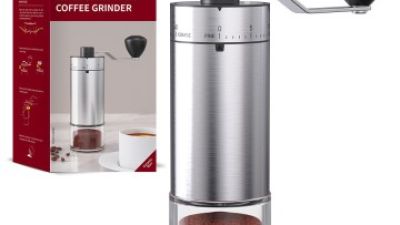
Freshly ground coffee becomes easier to enjoy with a compact mini manual grinder designed for everyday brewing. Its transparent top cover provides a clear view of the beans and supports a convenient 25g grinding capacity, making it suitable for preparing a fresh serving at home, in the office, or while traveling. The manual operation gives users direct control over the grinding process, while the detachable handle allows for easier storage and transport.
With 5–40 grind levels, the grinder can be adjusted for different brewing preferences, from a finer texture for espresso-style preparation to a coarser setting for French press coffee. An external adjustment mechanism enables quick changes without complicated disassembly, helping users maintain a smooth and efficient workflow. For wholesale and custom orders, the product supports screen or laser logo printing, with samples available within three days and a production cycle of approximately fifteen days.
It has moved beyond basic, low-cost hardware. Many factories now test burr alignment, handle balance, adjustment, and packaging durability. Quality still differs between suppliers. That gap matters.
Suppliers may offer stainless steel, aluminum alloy, wood, and compact travel designs. Some models suit espresso-style grinding. Others provide wider settings for pour-over brewing. Material choice affects weight, durability, and handling.
Ask about burr material, adjustment range, tolerance data, and testing records. Request internal photos, not only polished product images. Check the axle for wobbling. Turn the handle repeatedly. A smooth ring is important.
Use the same beans and brewing method intended for customers. Test fine and coarse settings. Inspect particle consistency and leftover grounds. Check noise, lid fit, and handle security. Test it twice.
Confirm that documents match the factory, product, and destination market. Request quality records and food-contact material declarations when relevant. Ask for issuing details and renewal dates. Do not trust a logo alone. Paperwork can be incomplete.
Discuss burr material, adjustment steps, handle length, capacity, and finish quality. A custom color is simple to promise. Stable burr alignment is harder. Test the customized sample before approving production.
Clarify responsibility for drawings, packaging artwork, tooling, and manuals. Confirm ownership after production. Record minimum quantities, lead times, and defect-handling terms. Keep an approved reference sample. Bulk units may vary.
Define acceptable defects and arrange pre-shipment inspection. Use measurable sampling rules when setting inspection levels. Confirm payment milestones and failed-inspection remedies in writing. Request carton dimensions, gross weight, and tracking details. Leave room for delays.
This article explores how to identify reliable Manual Grinder Kopi suppliers in China and how the country’s manual grinder market has developed. It outlines the strengths buyers should look for among leading suppliers, including consistent workmanship, dependable production, and clear communication. It also explains how to compare grinder materials, construction, and grinding performance so buyers can assess whether products meet their intended quality and use requirements.
For international buyers, the article offers a practical checklist for reviewing relevant certifications, customization options, and OEM services, as well as comparing pricing, minimum order quantities, and production capacity. Before placing an order, buyers should confirm specifications, request product samples where available, clarify timelines and quality expectations, and agree on the details of the purchasing process. These steps can help make supplier comparisons more informed and reduce avoidable misunderstandings.