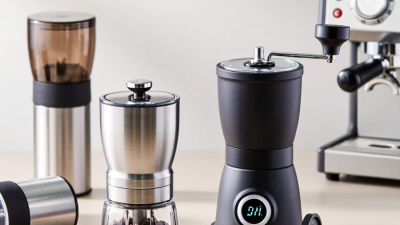
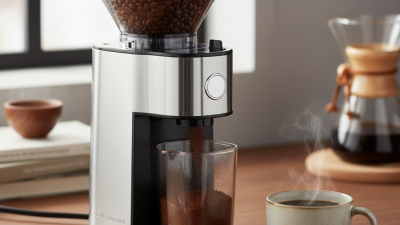
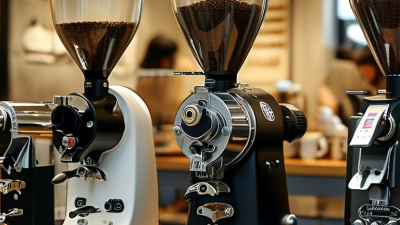
When you're in the market for a burr grinder supplier, it's not just about comparing prices, you know? If you're buying from overseas, you really need to dig into grind consistency, motor design, burr material, production capacity, and even how they handle after-sales support. Honestly, a sample can look super polished and still turn out uneven grinds. So before you place a big order, make sure you ask for test results, spare-part availability, and all the specs upfront. The little details? They totally matter.
So, Scott Rao—you know, the coffee consultant and author—makes a pretty straightforward point: if your grind particles are more consistent, your extraction is going to be way more repeatable. I'm obviously paraphrasing him here, not quoting, but that idea actually gives you a solid framework when you're comparing different machines. Like, for espresso, you might obsess over the grind adjustment range and how it handles fine particles, but for batch brewing, throughput and heat management could be the bigger deal. Honestly, no single spec is going to tell you the whole story.
So, we've put together this guide to the 10 best burr grinder manufacturers in China, aimed at global buyers. We've looked at their product focus, how much they can customize, and how ready they are to export. But hey, don't just take their word for it – you'll want to verify claims by checking actual samples, digging through factory docs, and talking to other buyers. A photo? That won't tell you if they're aligned with your needs. Same goes for a flashy brochure. And honestly, comparisons aren't perfect – each manufacturer publishes different levels of technical detail, so there's some uncertainty. That's something to pay attention to, not gloss over. Honestly, the whole point is to get importers to ask smarter questions—and, you know, pick out suppliers whose grinders actually suit real-world needs, whether that's a busy café, a retail shop, or just someone's home.
Burr grinders use two abrasive surfaces to crush beans into a more consistent range of particle sizes than blade grinders. Flat burrs sit parallel; conical burrs pair a cone with a ring. Both can work well. Alignment, burr geometry, and speed matter as much as shape. The National Coffee Association’s 2024 National Coffee Data Trends report found that 67% of U.S. adults had coffee in the past day. That daily demand makes repeatable grinding useful, especially when switching between espresso and filter coffee. A small adjustment can change how quickly water passes through the grounds.
The main components have distinct jobs. A hopper holds whole beans; an adjustment ring moves the burrs closer for finer grounds or farther apart for coarser ones. The motor turns one burr, while the burr carrier keeps it seated. A chute directs grounds into a cup or portafilter. Look for stable settings, accessible cleaning, and low retention—the grounds left inside after grinding. Details matter. Salt And Pepper Grinders may look similar on a counter, but coffee grinders need finer, controlled adjustments and food-safe parts suited to repeated use. A practical test is simple: grind a dose, change the setting, and check whether grounds remain trapped near the chute. Specifications alone do not prove consistency; real-world testing can reveal vibration, static, or uneven output.
China’s burr grinder industry sits within a vast manufacturing base. UNIDO’s International Yearbook of Industrial Statistics reports that China produces about 30% of global manufacturing value added. This scale supports access to metalworking, motor assembly, plastics, and packaging suppliers. It does not guarantee precise coffee grinding. Small differences in burr alignment can change particle consistency and brewing results.
Demand provides useful context. The International Coffee Organization estimated world coffee consumption at 177 million 60-kilogram bags in 2023/24. That figure signals a large coffee market, but it does not measure grinder sales. Buyers should assess factories directly: inspect burr material, adjustment range, motor heat management, and sample-to-sample consistency. Ask for test records, not just polished product photos. Details matter.
China-based suppliers vary widely in specialization. Some factories also make adjacent products, including Wood Pepper And Salt Grinders, but those lines do not prove coffee-burr expertise. A practical audit should include a test grind, burr inspection, and checks for stable settings after repeated use. Export experience can help with packaging and communication. Yet scale alone proves little. Supplier information may also be incomplete, so independent checks are worth the effort.
A practical overview of common burr-grinder manufacturing capabilities and sourcing checks for international buyers.
| Industry Dimension | Common Options or Practice | What Global Buyers Should Verify |
|---|---|---|
| Burr Material | Stainless or hardened steel and ceramic are commonly used. Material choice affects durability, heat behavior, and product positioning. | Request material specifications, hardness or composition data where applicable, and test results for the finished burr set. |
| Burr Geometry | Flat and conical burr designs are both used in coffee grinders. Performance depends on the complete design, not geometry alone. | Ask for particle-size distribution and sensory test results using the intended coffee and brewing method. |
| Grind Adjustment | Products may use stepped adjustment, stepless adjustment, or a combination of calibrated settings and continuous movement. | Check adjustment repeatability, retention between settings, and whether the range suits espresso, filter, or other intended uses. |
| Grinder Format | Manual and electric burr grinders are established product formats. Electric models may be designed for home, commercial, or portable use. | Confirm the intended duty cycle, operating instructions, and suitability for the target user and market. |
| Motor and Power | Motor rating, speed, voltage, frequency, and plug configuration vary by model and destination market. | Verify the exact electrical rating on the product label and confirm compatibility with destination-market requirements. |
| Grinding Capacity | Hopper-fed and single-dose configurations are both available across the broader grinder market. | Check usable hopper capacity, dose consistency, grind retention, and the cleaning procedure for the specific model. |
| Housing and Finish | Grinders may combine metal and polymer components; surface finishes and enclosure designs vary by product segment. | Review material declarations, finish samples, assembly quality, and packaging protection before approving production. |
| OEM and Customization | Some manufacturers offer private-label production or customization, but available services differ by supplier and order. | Confirm tooling ownership, minimum order quantity, sample approval steps, lead time, and permitted use of artwork. |
| Quality Control | Useful checks include burr alignment, grind consistency, noise, vibration, electrical safety, and functional testing. | Agree on measurable acceptance criteria, inspection sampling, defect handling, and pre-shipment inspection arrangements. |
| Market Compliance | Applicable safety, electromagnetic compatibility, labeling, and food-contact requirements depend on the product and destination market. | Identify the relevant rules for each sales market and validate certificates and test reports for the exact model and factory. |
Note: This is an industry overview, not a verified ranking of ten individual manufacturers. Product specifications, production capabilities, certifications, and export experience should be confirmed directly with each supplier.
When evaluating Chinese burr grinder manufacturers, ask for measurable evidence, not polished factory photos. The USDA’s Coffee: World Markets and Trade report (June 2024) estimated 2023/24 global coffee production at about 178 million 60-kilogram bags. That scale supports a large equipment market, but it does not prove a supplier can hold tolerances. Request burr material and hardness specifications, shaft runout results, motor temperature records, and particle-size tests from multiple units. Ask whether the same settings produce consistent grounds across separate production batches. Small details matter.
Check the test method. A particle-size chart means little without the grinder setting, sample size, and measurement method. The National Coffee Association’s 2024 National Coffee Data Trends report found that 67% of U.S. adults drank coffee in the past day; home use makes repeatable adjustment and easy cleaning relevant buyer checks. Request a sample, then weigh and time repeated doses, inspect grounds for excess fines, and listen for unusual vibration. Ask for written inspection records and a clear process for handling defects. Not every supplier will share raw data; that deserves a follow-up, not an instant verdict. If a brief includes “Cool Salt And Pepper Grinders,” separate SEO wording from coffee-grinder specifications. The phrase is not a quality criterion.
The ten manufacturer profiles offer a practical way to compare Chinese burr grinder suppliers without relying on product photos alone. Each profile should examine burr material, cutting geometry, motor design, and the range of grind settings. These details affect particle consistency, heat, and workflow. Small differences matter. A clear adjustment scale and stable burr alignment can make daily use more predictable, especially in busy cafés.
Manufacturing capability deserves equal attention. Buyers can ask how suppliers inspect burrs, test motor noise, and check grinder performance before shipment. Requesting sample units helps reveal details a catalogue may miss, such as grounds left around the chute or a hopper that feels loose. Some suppliers may focus on compact home models, while others offer higher-capacity machines for commercial settings. Still, a polished sample does not prove every production batch will match. That is an awkward but useful point to verify through documented quality checks, spare-parts availability, and direct technical questions. A careful profile should distinguish confirmed specifications from sales claims, since public information can be incomplete.
When comparing China’s top burr grinder manufacturers, look beyond catalog variety. A useful product range should cover different burr sizes, grind settings, motor options, and daily-use volumes. Check whether the same platform supports both home and commercial models. This can simplify spare-parts planning. Ask for specifications, not just product photos, including burr material, adjustment steps, and rated duty cycle.
Customization can include housing colors, labels, packaging, plug types, and control panels. More technical changes may require new tooling, higher minimum orders, or longer sampling periods. Request a written quotation that separates these costs. Production capacity also needs careful checking: ask about monthly output, current lead times, quality checks, and how capacity is reserved for your order. A factory’s stated capacity may be an estimate, so confirm it with a sample order and realistic delivery schedule. Details matter.
Tips: Compare samples using the same beans and grind setting. Record dose consistency, heat, noise, and adjustment feel. Ask for inspection records and replacement-part availability. A polished sample is useful, but it cannot prove every production unit will match. Build in time for revisions; even a small change can delay approval.
For China’s burr grinder manufacturers, export readiness starts with the destination market, not a generic certificate. Confirm applicable requirements for food-contact parts, product labeling, packaging, and electrical safety when the grinder is powered. Ask suppliers for current test reports that identify the exact model and materials. A document for a similar grinder may not cover the unit you plan to buy.
Quality checks should include burr alignment, adjustment consistency, and grinding tests across several settings. Inspect sample units for sharp edges, loose fasteners, and grounds trapped around the chamber. Request a written inspection record and agree on defect limits before production. Then verify the factory’s registered details, production address, and ability to provide traceable batch records. Video calls help, but they cannot replace an independent inspection. Small checks matter.
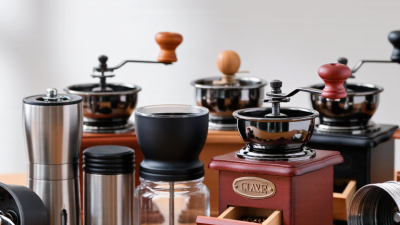
For buyers comparing Top Rated Manual Coffee Grinders, test samples with the same beans and brewing method. Record grind range, handle stability, and cleaning time; these details can expose differences that product photos hide. A polished certificate does not prove every batch matches the tested sample. Even a careful checklist can miss wear that appears after months of use, so keep a retained sample and review complaint data after delivery.
Reference power-supply values to consider when verifying burr grinder models for export.
Confirm the destination market’s voltage, frequency, plug type, and applicable product safety approvals with the importer or a qualified testing laboratory. Japan uses 50 Hz in eastern regions and 60 Hz in western regions.
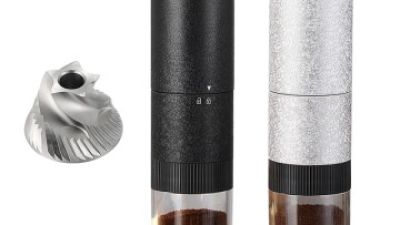
As coffee routines become more mobile, a portable burr grinder can help people enjoy freshly ground coffee away from home, whether they are traveling, commuting, or brewing at work. An aluminum-alloy body makes the grinder a practical fit for everyday carry while offering a sturdy, polished look for retail displays. For buyers considering portable equipment, the balance of compact design and durable construction is an important part of the appeal.
The Blossom Automatic Portable Electric Coffee Grinder pairs a 1200mAh battery with a CNC stainless-steel grinding core designed for stable performance over 8,000 cycles. Its low-noise design is rated at 6 decibels, making it suitable for settings where quieter operation is valued. These features support several purchasing scenarios, from individual use to bulk orders, gift distribution, supermarket and retailer assortments, and home-appliance channels. The combination of an aluminum body, rechargeable portability, and a robust grinding core gives buyers a clear set of practical attributes to assess when selecting an on-the-go grinder.
China produces about 30% of global manufacturing value added. This supports broad supplier access, but does not guarantee precise grinding. Details matter.
No. Global coffee consumption was estimated at 177 million 60-kilogram bags in 2023/24. That signals a large coffee market, not grinder sales.
Ask for burr material and hardness, shaft runout, motor temperature, and particle-size test records. Request results from multiple units and batches.
Check the grinder setting, sample size, and measurement method. A chart without those details tells you little.
Weigh and time repeated doses. Inspect the grounds for excess fines, listen for unusual vibration, and check whether settings stay stable.
No. Adjacent product lines do not establish coffee-burr skill. Inspect the burrs and run a practical test grind.
Ask follow-up questions and request written inspection records. Missing raw data deserves attention, but it is not an instant verdict.
No. It may help with packaging and communication, but repeated-use checks and batch consistency matter more. I might be overchecking, but small differences can affect brewing.
This guide introduces burr grinders by explaining their main types, core components, and how each part contributes to consistent grinding. It also offers an overview of China’s burr grinder manufacturing industry, including the capabilities and production strengths buyers may encounter. Readers will find practical criteria for assessing manufacturers, such as product range, customization options, production capacity, communication, and quality management.
The guide profiles ten leading Chinese manufacturers without focusing on brand promotion, helping global buyers compare potential suppliers and identify those suited to their requirements. It also outlines export standards, quality checks, and supplier verification steps that can support a careful purchasing process. Together, these topics provide a clear framework for understanding the market, comparing manufacturing partners, and making informed sourcing decisions.