China has really become a key place for global buyers on the lookout for coffee equipment. You’ll find a bunch of manufacturers there offering Electric Burr Grinders not just for homes, but also for cafes, offices, or even private-label gigs. The production quality varies a lot though—some factories mainly make small, plastic-bodied grinders, while others build sturdier machines with metal burr chambers, more powerful motors, and features like programmable dosing. It’s quite a spectrum.
If you’ve heard coffee guru Scott Rao talk, you’ll remember he’s always stressing that “the grinder is the most important piece of equipment in making great coffee.” That’s spot on—so it’s really worth digging deeper than just how pretty the grinder looks. Things like the burr material, how easy it is to adjust the grind size, the motor’s stability, heat control, and even how consistent the grind particles are, all matter a lot. Just because a sample looks shiny and perfect doesn’t mean it’s well-calibrated or that it won’t leak grounds over time.
In this guide, I’ll introduce some of the top Chinese manufacturers along with practical tips on what to double-check. Stuff like their experience in the business, quality control processes, testing routines, export logistics, and how smoothly they handle post-sale support. Don’t forget to ask for data on grind size consistency, noise levels, sample reports, and clear warranty info. It’s also smart to verify if they can keep performance steady, even when producing larger quantities.
Now, the market isn’t perfect. Sometimes product pages make big promises that testing can’t fully back up. That’s not a reason to get all cynical, but it’s worth being cautious. An Electric Burr Coffee Grinder might look tempting because of its price or specs, but its everyday reliability really depends on some small engineering details. You should check the burr alignment, test how well it doses repeatedly, and listen closely to the motor’s sound.
At the end of the day, what really matters is how well the grinder performs in real-world use. And transparency from the supplier is just as crucial. With a bit of careful research and comparison, international buyers can find trustworthy partners and avoid costly surprises. Remember, the cheapest option isn’t always the best—what you really want is a grinder that keeps performing consistently after months of regular use.
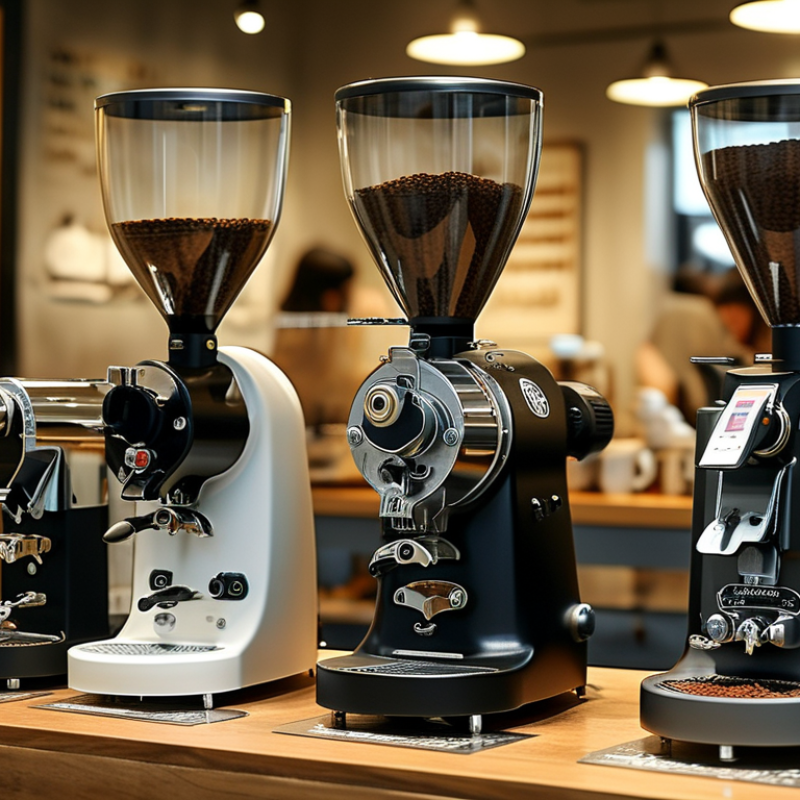
China has become a major hub for electric burr grinder production because several capabilities meet in one industrial network. Precision machining suppliers produce stainless steel and hardened alloy burrs, while nearby electronics factories develop motors, controls, and safety systems. This proximity can shorten development cycles and reduce coordination problems for international buyers.
From supplier evaluations, manufacturing strength depends on more than factory size. Experienced producers test burr alignment, motor temperature, grinding consistency, and noise levels during repeated use. They also maintain tooling records and inspection reports. Some facilities use automated measurement equipment, but skilled technicians still check samples by hand. That balance matters.
China’s logistics infrastructure adds practical value. Export-oriented factories can coordinate packaging, documentation, and container shipments through established channels. Buyers should still verify material certificates, electrical compliance, production capacity, and quality-control procedures before placing large orders. A low quotation may conceal weaker bearings or inconsistent assembly. Not every supplier offers the same reliability.
The industry also has room for improvement. Energy efficiency, repairability, and long-term burr performance are sometimes treated as secondary concerns. Responsible manufacturers are beginning to address these issues through modular designs and clearer testing standards. Global buyers who request transparent data, independent inspections, and realistic sample trials can identify stronger partners without relying on attractive claims alone.
Chinese manufacturers produce several electric burr grinder types for global buyers. Grand View Research estimated the global coffee grinder market at about USD 1.37 billion in 2023. It also forecasts steady growth through 2030. This demand supports wider factory development, but product quality still varies between suppliers.
Conical burr grinders remain common in home and light-commercial models. They usually operate quietly and create less heat during short grinding cycles. Flat burr grinders suit cafés and higher-volume users. Their larger cutting surfaces can improve grind consistency, especially for espresso. Some Chinese factories also make single-dose grinders, hopper-fed grinders, and compact travel units. Single-dose designs reduce retained coffee, while hopper systems support faster service.
Motor selection matters. Commercial models often use stronger motors, metal burr carriers, and adjustable cooling paths. Buyers should check burr diameter, grind range, burr material, noise readings, and retention tests. A 64-millimeter burr is not automatically better than a smaller burr. That assumption needs testing. The Specialty Coffee Association highlights grind consistency as a major control factor in brewing quality, while International Coffee Organization consumption data shows sustained global demand for prepared coffee. Factory samples should therefore be tested with the buyer’s own beans, roast levels, and voltage requirements. A polished sample may still hide uneven alignment. Insist on repeat measurements.
China-based Electric Burr Grinder manufacturers increasingly support global buyers with flexible production, technical development, and export experience. Many factories offer standard models, private-label production, and customized housing designs. Their engineering teams usually focus on burr alignment, motor stability, grind adjustment, and heat control.
A reliable manufacturer should provide clear specifications before sampling. Ask about burr material, grinding range, hopper capacity, noise testing, and motor lifespan. Voltage and plug requirements also need careful confirmation for each market. Experienced suppliers can explain testing methods, production timelines, packaging protection, and replacement-part availability. Factory visits or live video inspections can reveal assembly details that catalogs often hide.
Quality control is not always perfect. Even established manufacturers may face calibration differences between production batches. This deserves attention. Buyers should request sample testing with several coffee types, including light and dark roasts. Check grind consistency, retention, vibration, and cleaning access. Certifications should match the destination country and product category. A professional supplier will share relevant documents without making vague promises. Communication matters too. Slow replies may signal future service problems. Still, one weak sample should not define an entire factory; corrective action shows more than polished sales material. Careful buyers can compare records, test results, and after-sales support before placing larger orders.
Chinese electric burr grinder development usually begins with the target coffee market. Engineers study brew methods, voltage requirements, noise limits, and daily grinding volume. They select hardened steel or ceramic burrs for consistent particle size. Small changes matter. Burr diameter affects speed, heat, and grinding capacity. Motor torque must remain stable when beans become dense or oily. Designers also consider hopper shape, static control, and easy cleaning.
In a typical factory, aluminum or reinforced plastic housing is molded, machined, and inspected. Burr carriers are measured carefully to reduce uneven spacing. Workers test motor noise, grinding speed, temperature, and switch durability. Each Coffee Burr Grinder Electric unit should pass repeated-load testing before packaging. Calibration is often performed by hand, although automated tools improve consistency. No production line is flawless. A rushed adjustment can create excess fines or a louder machine.
Experienced suppliers usually maintain inspection records for incoming materials and finished products. Global buyers should request sample reports, voltage specifications, replacement-part details, and packaging tests. Clear communication is essential. It prevents expensive misunderstandings. A reliable manufacturer explains tolerances instead of promising perfect results. Factory visits can reveal practical details, such as dust control, assembly order, and worker training. Even strong designs may need revision after real café testing. Feedback from baristas often exposes problems that laboratory measurements miss.
For international buyers, an Electric Coffee Burr Grinder should meet the destination market’s electrical and product safety rules. Compliance is not proven by a factory brochure alone. Importers should request a Declaration of Conformity, valid test reports, and the exact model number on every document.
Common requirements may include CE marking for relevant European markets, EMC testing, and low-voltage safety evaluation. RoHS evidence can help confirm restricted substances are controlled. However, requirements differ by country. A certificate accepted in one region may be insufficient elsewhere. Check voltage, plug design, frequency, and language requirements before placing a purchase order.
Coffee-contact materials also deserve careful review. Ask for material declarations, food-contact test results, and records for burr coatings or plastic components. Reports from laboratories operating under ISO/IEC 17025 provide stronger technical confidence. An ISO 9001 certificate supports factory management, but it does not certify the grinder itself. That distinction is often missed.
A practical inspection should test grinding consistency, overheating protection, noise, insulation, and repeated switch use. Keep batch records and production samples for traceability. One certificate without traceable testing is weak evidence. Even a compliant sample can change during mass production. My checklist is not flawless, so I prefer third-party inspections before shipment and random checks after arrival. Small details matter.
China’s Electric Conical Burr Grinder suppliers vary widely in engineering quality and service. The International Coffee Organization reported global coffee consumption near 177 million 60-kilogram bags in 2023/24. This demand supports serious capacity, but volume alone proves little.
Request a working sample before discussing large orders. Measure grind consistency, noise, heat, retention, and dosing accuracy. Ask for burr material, motor duty cycle, voltage options, and test records. Pricing should include tooling, packaging, spare parts, inspection, shipping, and warranty support. A low factory quote can become expensive after customization. I have seen attractive samples hide unstable calibration. That risk deserves attention.
Tips: Compare three suppliers using the same test beans and settings. Request a written quotation with MOQ, lead time, payment terms, and replacement policy. Custom options may include hopper size, burr diameter, control panel, color, and packaging. However, each change can affect tooling fees and delivery time. The Specialty Coffee Association’s equipment guidance emphasizes repeatability and measurable brewing variables, so ask suppliers to document particle-size results, not just claim “professional quality.” Recheck every figure. Supplier data can be incomplete.
| Evaluation Dimension | Common Export-Ready Benchmark | What Global Buyers Should Verify | Commercial Impact |
|---|---|---|---|
| Burr Type | Conical or flat burrs; stainless-steel burrs are common, while hardened or coated burrs are used for longer service life. | Burr material, diameter, hardness, replacement availability, alignment, and manufacturer test results. | Affects grind consistency, heat generation, durability, and long-term maintenance cost. |
| Burr Diameter | Approximately 40–83 mm for consumer, prosumer, and light-commercial electric grinders. | Actual burr diameter, effective cutting area, burr replacement price, and calibration procedure. | Larger burrs may improve throughput but normally increase motor, housing, and tooling requirements. |
| Grind Adjustment | Stepped adjustment for repeatability or stepless adjustment for finer control; espresso models often provide a broad adjustment range. | Number of steps, adjustment mechanism, backlash, retention, and repeatability between settings. | Determines suitability for espresso, pour-over, French press, and other brewing methods. |
| Motor and Electrical Input | Common household models use roughly 150–400 W; higher-throughput units may use more. | Rated power, thermal protection, motor duty cycle, voltage options, frequency, plug type, and electrical test reports. | Influences grinding speed, overheating risk, target market compatibility, and certification requirements. |
| Grinding Speed and Throughput | Typical consumer output is approximately 1–3 g/s for espresso and 2–6 g/s for coarser settings, depending on burr design and coffee density. | Measured output by grind size, bean type, temperature rise, retention, and continuous-duty test duration. | Important for cafés, offices, subscription services, and buyers requiring consistent daily production. |
| Hopper and Grounds Capacity | Hoppers commonly range from about 150–500 g; single-dose designs generally use smaller bean containers. | Usable capacity, airtight performance, food-contact materials, dosing accuracy, and anti-static design. | Affects workflow, freshness, packaging dimensions, and shipping volume. |
| Retention and Static Control | Low-retention designs commonly target less than 1–2 g of retained coffee after suitable purging, but results vary by coffee and grind setting. | Test method, coffee type, retention before and after purging, static behavior, and ease of cleaning. | Directly affects dose accuracy, flavor cross-contamination, product reviews, and after-sales claims. |
| Noise and Vibration | Noise commonly falls within approximately 65–85 dB(A), depending on distance, bean hardness, motor design, and enclosure. | Measurement distance, operating condition, vibration isolation, structural resonance, and batch-to-batch consistency. | Important for home, office, hospitality, and premium retail positioning. |
| Materials and Food Contact Safety | Common materials include stainless steel, aluminum alloys, ABS, PC, PP, and food-contact elastomers. | Material declarations, food-contact compliance for the destination market, surface finish, odor, and migration documentation. | Impacts regulatory clearance, perceived quality, durability, and retail acceptance. |
| Safety and Compliance | Typical export documentation may include electrical safety and EMC testing applicable to the destination market, such as CE, UKCA, UL/ETL, or equivalent requirements. | Validity of reports, model-number matching, factory audit records, RoHS status, labeling, and required importer documentation. | Missing or mismatched documents can cause customs delays, listing removal, or product recalls. |
| Customization Options | Common options include housing color, control panel, logo placement, packaging, plug, voltage, hopper, burr set, and firmware or timer settings. | Engineering-change fees, tooling ownership, minimum order quantity, sample approval process, and customization lead time. | Customization can improve market differentiation but increases development and inventory risk. |
| Indicative OEM Price Position | Entry-level electric burr grinders are generally lower-cost; larger burrs, metal structures, advanced controls, and compliance packages place products in higher price tiers. | Request a written EXW or FOB quotation with model configuration, packaging, testing, tooling, spare parts, and payment terms itemized separately. | The lowest unit price may create higher costs through defects, certification gaps, packaging damage, or warranty returns. |
| Minimum Order Quantity | Stock models may support smaller trial orders; customized colors, packaging, and tooling usually require higher quantities. | Separate MOQ for standard units, custom colors, printed packaging, logo application, and spare parts. | MOQ affects cash flow, inventory exposure, and the feasibility of market testing. |
| Production Lead Time | Standard products commonly require several weeks; new tooling, custom packaging, and certification may extend the schedule. | Material availability, production calendar, sample approval milestone, inspection date, and shipment-ready definition. | Reliable planning reduces stockouts and helps coordinate ocean, air, and rail freight. |
| Quality-Control Process | A complete process should include incoming-material checks, assembly inspection, electrical safety testing, functional testing, and final random inspection. | Sampling standard, acceptance criteria, calibration records, defect classification, traceability, and corrective-action procedure. | Strong controls reduce inconsistent grind performance, cosmetic defects, and field failures. |
| Warranty and Spare Parts | Commercial warranty periods vary by contract; replaceable burrs, hoppers, containers, switches, and electronic modules are commonly requested spare parts. | Warranty duration, exclusions, response time, spare-parts pricing, repair instructions, and replacement-unit policy. | A clear service plan protects channel reputation and lowers total cost of ownership. |
| Supplier Verification | A credible supplier should provide a consistent legal entity, factory or production-site information, product samples, technical files, and export references. | Business license, production capability, audit evidence, sample-to-bulk consistency, customer references, and secure payment details. | Verification lowers the risk of unauthorized trading, quality substitution, payment fraud, and delivery failure. |
Note: The benchmarks above are general purchasing reference points for electric burr grinders. Final specifications, pricing, minimum order quantities, compliance documents, and lead times should be confirmed through a written quotation, approved sample, and destination-market compliance review.
Sourcing electric burr grinders from China starts with a precise product brief. Define burr material, grinding range, motor voltage, hopper capacity, noise limits, and daily output. Ask shortlisted manufacturers for factory details, production photos, certifications, and export experience. A live video audit can reveal assembly lines, testing equipment, and warehouse conditions. Product samples matter more than attractive quotations.
Test each sample for grind consistency, heat buildup, retention, and switch durability. Record results with the same beans and settings. Request documents for electrical safety, food-contact materials, labeling, and energy requirements in your destination market. Confirm the correct HS classification with a licensed customs professional. Do not rely only on supplier advice. Import duties can change. Shipping terms, insurance, packaging strength, and spare parts should be written into the purchase contract. A pre-shipment inspection can catch cracked hoppers or loose burrs before loading.
Tips: Compare at least three quotations, but do not choose the lowest price automatically. Check whether the offer includes tooling, packaging, testing, and inland transport. Use a small trial order before scaling. Keep a written inspection checklist. I once underestimated carton vibration during transit; the grinders arrived functional, but several lids were scratched. That mistake made packaging tests essential. Ask for drop-test evidence and confirm the agreed remedy for defects before payment. Loose promises are not quality control.
Representative market configurations for electric burr grinders commonly sourced from China. The figures show typical nominal motor power associated with different burr diameters and are intended for product comparison, quotation review, and import planning.
For global buyers, burr diameter is a practical starting point when comparing supplier quotations: compact models generally use 40–48 mm burrs, while commercial-oriented models commonly use 64–83 mm burrs and higher motor ratings. Buyers should confirm voltage, frequency, plug type, certifications, packaging, minimum order quantity, and lead time before placing an order.
Engineers study brewing methods, voltage, noise limits, and daily grinding volume. Burr diameter affects speed, heat, and capacity. Small changes matter.
Hardened steel or ceramic burrs support consistent particle sizes. Housings may use aluminum or reinforced plastic. Material choice affects durability, weight, and cleaning.
Workers inspect burr spacing, motor noise, grinding speed, temperature, and switch durability. Units should pass repeated-load testing. Calibration may still require manual adjustment.
No machine is flawless. A rushed adjustment can create extra fines or louder operation. Real café testing may reveal issues that laboratory measurements miss.
Request exact model numbers, electrical test reports, conformity documents, voltage details, and replacement-part information. Keep batch records too. One certificate is not enough.
Requirements vary by destination market. Review electrical safety, electromagnetic compatibility, restricted-substance evidence, and food-contact materials. Check plugs, frequency, labels, and language requirements.
Use the same beans and settings for every sample. Measure grind consistency, heat buildup, retention, noise, and switch durability. Record the results clearly.
Request packaging-strength evidence and drop-test results. Inspect carton vibration risks. Scratched lids may not stop operation, but they still indicate weak packaging control.
Not automatically. Compare at least three offers and check tooling, testing, packaging, transport, and spare parts. A small trial order is safer than rapid scaling.
Define specifications, inspection steps, shipping terms, insurance, defect remedies, and delivery conditions. Loose promises are not quality control. Mistakes can remain.
China has become a major hub for Electric Burr Grinder production because of its mature manufacturing networks, skilled engineering teams, efficient supply chains, and flexible production capacity. Chinese manufacturers produce a wide range of models, including home-use grinders, commercial units, compact travel designs, and customized products for different markets. Their development process generally covers product design, burr selection, motor testing, housing production, assembly, and performance inspection, with attention to grinding consistency, noise control, durability, and user safety.
For global buyers, selecting a reliable supplier requires evaluating factory experience, production capability, quality management, certifications, communication, pricing, minimum order quantities, and customization services. Importers should confirm product specifications, request samples, review testing records, and clarify packaging, payment, shipping, and after-sales terms. A well-planned sourcing process also includes supplier verification, contract confirmation, pre-shipment inspection, and preparation of accurate import documentation. By comparing suppliers carefully and defining requirements in advance, buyers can obtain dependable Electric Burr Grinder products that match their target market and budget.