
China has really become a major hub for sourcing portable blenders, supplying retailers, distributors, and private-label brands all over the world. If you look at the market reports, the demand for small, handy kitchen gadgets doesn’t seem to slow down anytime soon. Companies like Grand View Research point out that folks love the convenience, cordless features, and how small these devices are getting — basically, they want things that are easy to use and fit into busy lifestyles. Meanwhile, Fortune Business Insights expects the global blender market to keep growing steadily. But here’s the thing — estimates about portable blender sales can vary a lot.
That’s partly because different reports don’t always use the same definitions. Some lump countertop and personal blenders together, while others focus just on battery-powered models. This little detail really matters when you’re comparing suppliers from China, so it’s worth paying attention to. Joe Derochowski, who’s the Home Industry Advisor at Circana, put it simply: 'Consumers want products that make everyday life easier.' A portable blender pretty much hits that mark — think USB-C charging, one-touch controls, and bottles that fit right into your car’s cup holder.
But hey, don’t just take what you see at face value. A sleek-looking sample doesn’t guarantee solid after-sales support. When you’re shopping globally, it’s smart to dig deeper — look into motor performance, blade strength, battery life cycles, leakage tests, and whether the materials are food-safe. Factory visits can also tell you more than just glossy photos on a website. Always ask for records of repeat tests, not just one demo. And if a supplier has experience exporting, they’ll usually explain their packaging, spare parts, warranty policies, and customization options clearly — but some might not.
This guide is meant to help you choose reliable portable blender suppliers from China based on real, practical criteria. It looks at how well they produce, quality management systems, certifications, on-time delivery, and how easy they are to communicate with. Still, it’s important to verify every claim yourself — rushing through this step might seem slow, but it can save you from costly headaches later on. The best supplier isn’t always the cheapest factory; it’s the one you can count on to deliver consistent quality long after that first shipment.
China has become a leading source of portable blenders because its manufacturing ecosystem connects design, components, assembly, and export services. Buyers can compare several suppliers within a short sourcing cycle. This often reduces development time and supports flexible order quantities.
A reliable Portable Juice Blender supplier should provide clear motor specifications, battery details, blade materials, and charging test records. Experienced factories can adjust cup capacity, lid structure, colors, and packaging for different markets. During supplier evaluation, ask for product samples and inspect sealing around the charging port. A small leak can damage customer trust quickly. Factory experience matters.
Tips: Request a sample before mass production. Check blending performance with ice, soft fruit, and water. Review safety documents and production quality records. Confirm replacement parts and after-sales support in writing.
China’s advantage is not only lower production cost. It also includes mature tooling services, fast component access, and practical experience with overseas product requirements. However, no supplier is perfect. A polished sample may hide inconsistent batch quality. Buyers should compare production samples, test reports, communication speed, and inspection results. Visiting a factory, when possible, reveals details that online calls miss, such as material storage, assembly cleanliness, and final testing procedures. Reliability grows from evidence, not promises.
China’s portable blender suppliers offer three practical formats: cup-integrated, bottle-style, and compact countertop models. Cup-integrated units suit commuters and gym users, usually holding 300–500 milliliters. Bottle-style designs combine blending and drinking, reducing cleanup. Compact countertop models provide stronger motors, but they are less convenient for travel.
Fortune Business Insights valued the global blender market at USD 2.72 billion in 2024. It forecasts continued growth through 2032, supported by convenience-focused appliances. For buyers searching “Blender Smoothies Portable,” useful features include USB-C charging, 150–250-watt motors, stainless-steel blades, safety locks, and leak-resistant seals. A clear battery indicator also helps users avoid failed blending sessions. Look for food-contact test reports, electrical safety documentation, and consistent sample results before placing a bulk order.
One lesson from product sampling is simple: more blades do not always mean smoother drinks. Fruit fibers can still remain in a weak motor. Suppliers should provide measured blending tests, not only attractive specifications. Check noise levels, charging time, cup durability, and performance with ice or frozen fruit. Some low-cost models feel impressive at first, yet their seals weaken after repeated washing. That detail is easy to miss. Experienced buyers should request factory inspection records, production samples, and packaging tests before approving a shipment.
When evaluating China’s portable blender suppliers, start with evidence, not polished product photos. Ask for factory registration, production capacity, and recent audit records. A reliable supplier should explain where motors, batteries, blades, and charging components come from. Vague answers deserve caution.
Request samples of the Cup Blender Portable before discussing large orders. Test blending time, leakage, charging stability, noise, and cleaning access. Check whether the jar survives repeated drops and temperature changes. I once underestimated lid durability during a sample review. That mistake taught me to test seals repeatedly, not just once. Also compare sample quality with the promised production specification.
Examine quality control at several stages. Ask for inspection procedures, defect limits, batch records, and corrective-action reports. Suppliers with experienced engineers can explain torque, blade balance, battery protection, and waterproofing limits clearly. Verify product documents for your target market through qualified testing providers. Do not rely on copied certificates or unclear laboratory names. Communication speed matters, but technical honesty matters more. A supplier admitting a weakness may be safer than one promising perfection. Evaluate packaging, spare parts, lead times, and after-sales response in writing. Small details often reveal operational maturity.
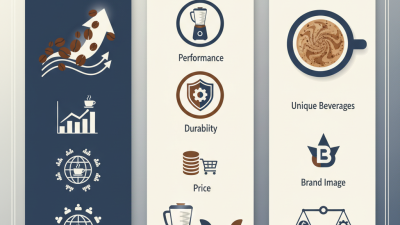
This evaluation framework uses a 100-point weighting model for global buyers. Product safety and battery reliability receive the highest priority, followed by quality consistency, OEM/ODM capability, MOQ flexibility, and export readiness. Buyers can apply these weights when comparing supplier documents, samples, factory audits, and shipment records.
Shenzhen remains a strong hub for portable blender development. Its electronics supply chain supports motors, batteries, charging boards, and compact control panels. Buyers can often test several prototypes within one sourcing cycle. However, Shenzhen pricing may be higher than other regions. That trade-off matters.
Ningbo and Cixi offer deep experience in small household appliances and plastic injection molding. Their factories commonly produce jars, lids, blades, and motor housings nearby. This shorter supply chain can simplify sampling and production changes. It may also reduce communication delays. Still, not every supplier owns its critical processes. Factory audits remain essential.
Dongguan is useful when product refinement involves electronics, assembly, and packaging. Some manufacturers can combine waterproof testing, battery checks, and small-batch assembly. Ask for test records, material specifications, and production photos. Confirm whether the listed factory makes the blender or only trades it. That distinction is easy to miss.
A dependable evaluation should examine blade balance, charging safety, sealing quality, and noise levels. Request samples from different production batches. One impressive sample proves little. I have seen polished prototypes hide inconsistent assembly. Buyers should also review quality-control procedures before signing purchase terms. No hub is perfect. The best choice depends on volume, target features, inspection access, and required delivery stability.
China’s portable blender suppliers increasingly support OEM, ODM, and detailed product customization for global buyers. Grand View Research estimates the global small kitchen appliances market will grow at about 5% annually through 2030. Portable blending is a smaller segment, but demand follows convenience, wellness, and travel habits.
OEM buyers can provide their own design, logo, colors, packaging, and user manual. ODM projects usually begin with an existing structure, then adjust the blade system, cup volume, battery capacity, or charging port. Practical buyers should request a pre-production sample. Test crushed ice, frozen fruit, leakage, noise, and charging time. A 300–500 ml cup needs careful balance between portability and usable capacity.
Customization can also include food-contact materials, safety locks, silicone seals, gift boxes, and multilingual labels. Battery transport requirements must be checked for each destination. Industry reports from Mordor Intelligence and Fortune Business Insights show continued growth in rechargeable consumer appliances, although their market definitions differ. That difference matters. Do not treat every forecast as precise.
Supplier evaluation should include factory audits, material declarations, inspection records, and batch-level quality controls. Ask for test evidence rather than attractive claims. One weakness is often overlooked: customized parts may increase minimum order quantities and replacement costs. A cheaper first quote can become expensive after mold revisions, packaging changes, and failed samples.
China Top Portable Blender Suppliers for Global Buyers?
When ordering a Rechargeable Portable Blender, define the product before comparing prices. Specify capacity, motor performance, charging port, battery rating, jar material, and included accessories. Ask for a written quotation with packaging, spare parts, and minimum order quantities.
Request samples from shortlisted suppliers. Test blending frozen fruit, ice, and thick mixtures, not only water. Check leakage after repeated opening and closing. Inspect blade alignment, charging stability, noise, and surface finishing. Small details matter. Ask for test reports, battery documents, and inspection photos linked to your exact production batch. An independent pre-shipment inspection can verify quantity, color, labeling, carton strength, and function. Factory photos alone are weak evidence. I have seen attractive samples differ from mass production, so approval samples should be sealed and recorded.
Shipping requires careful planning because portable blenders contain rechargeable batteries. Confirm the battery classification, transport documents, carton markings, and destination requirements with the supplier and freight forwarder. Air shipment may involve stricter limits than sea shipment. Choose delivery terms that clearly assign responsibility for export clearance, freight, insurance, and import charges. Request a carton drop test when products will face long warehouse handling. Keep records. A small packaging defect can create cracked jars, charging failures, or expensive returns. Do not guess. Recheck lead times around holidays, and leave room for a second inspection when the first batch reveals inconsistent results.
| Typical Supplier Cluster | Common Product Positioning | Indicative MOQ | Typical Production Lead Time | Common Customization Options | Recommended Quality-Control Checks | Relevant Compliance Documents | Typical Export Gateway | Best-Fit Buyer |
|---|---|---|---|---|---|---|---|---|
| Guangdong coastal manufacturing cluster | USB-rechargeable personal blenders with plastic or glass-style portable cups | 500–1,000 units for standard models; higher for special packaging | 25–45 days after artwork and deposit approval | Logo printing, colors, packaging artwork, cup capacity, charging cable, button design | Blade rotation, leakage, charging safety, battery capacity, over-current protection, drop testing, carton strength | Commercial invoice, packing list, battery test documents, UN 38.3 test summary where applicable, destination-market electrical and EMC documents | Shenzhen or nearby South China ports | Online retailers, importers, private-label kitchenware distributors |
| Zhejiang small-appliance manufacturing cluster | Cost-sensitive promotional and entry-level portable blenders | 1,000–3,000 units for stock designs | 20–40 days for standard products; 45–60 days for new tooling | Color matching, basic logo application, retail box, instruction manual, bundled accessories | Incoming component inspection, motor noise, switch durability, charging-port fit, food-contact material declaration, sample-to-bulk consistency | Material declarations, applicable RoHS records, battery documentation, product inspection report, certificate of origin when required | Ningbo or Shanghai-area ports | Promotional-goods buyers, discount retailers, regional distributors |
| Established appliance OEM/ODM facilities | Higher-specification products with improved motor performance, sealing, and battery management | 1,000–5,000 units depending on tooling and customization | 45–75 days for customized development; 30–45 days for existing platforms | Industrial design, molded parts, firmware or control logic, packaging structure, accessory sets, user interface | Design verification, endurance testing, thermal testing, battery cycle testing, water-ingress assessment, production-line audits, final random inspection | Applicable destination-market safety, EMC, RoHS, REACH, battery transport, and food-contact records; factory quality-system evidence | Shenzhen, Guangzhou, Ningbo, or Shanghai-area ports | National retailers, subscription-box companies, established e-commerce sellers |
| Trading-company coordinated supply chain | Mixed-model sourcing for buyers that need packaging, inspection, and export coordination | 300–1,000 units per model; mixed orders may be possible | 30–60 days, depending on the underlying factory | Multi-model consolidation, multilingual manuals, assorted colors, retail packaging, shipment labeling | Verify factory identity, compare pre-production and mass-production samples, inspect carton markings, confirm component traceability and warranty process | Supplier-issued test reports must be matched to the actual model; request inspection reports, battery documents, invoices, and packing lists | Port selected according to factory location and freight route | Small and medium importers needing sourcing support |
| Export-oriented direct manufacturer | Standardized products prepared for recurring international orders | 1,000–3,000 units for a regular production run | 25–50 days after confirmed purchase order | Logo, color, box artwork, barcode label, plug or cable configuration where technically suitable | Approved golden sample, AQL-based final inspection, quantity verification, cosmetic inspection, functional testing, packaging and label checks | Commercial export documents, applicable product test reports, battery transport records, origin documents, and destination-market labeling evidence | Factory-selected port based on inland freight cost | Repeat-order buyers seeking stable specifications and predictable replenishment |
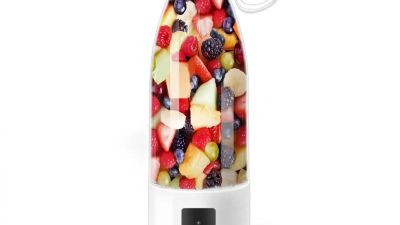
Portable juicing becomes effortless with a compact personal blender designed for busy daily routines. Powered by a strong 300W motor and six stainless-steel blades, it can blend fruit, vegetables, smoothies, and even small ice cubes at speeds of up to 30,000 RPM. The 500 ml cup provides a convenient single-serving capacity, making it easy to prepare a fresh drink for breakfast, work, exercise, or travel without using a bulky countertop appliance.
Built for flexible use, this blender features an IPX7 waterproof design and a one-button self-cleaning function that completes a quick rinse cycle in about 20 seconds. Its 2,000mAh battery supports repeated blending away from power outlets, while magnetic charging offers a simple and secure connection. The compact shape fits naturally into car trips, camping bags, kitchen cabinets, and office spaces. With straightforward operation and a portable design, it is suitable for families, outdoor activities, personal wellness routines, and practical gift selections.
: Its manufacturing network connects design, components, assembly, tooling, and export services. Buyers can compare suppliers during one sourcing cycle. This may shorten development time.
Ask for motor power, battery capacity, blade material, and charging test records. Request sealing details around the charging port. Small leaks can quickly damage customer trust.
Yes. Test samples with ice, soft fruit, and water. Check blending time, noise, leakage, charging, and cleaning access. One sample proves little.
Repeat lid-seal tests several times. Check the jar after controlled drops and temperature changes. I once trusted one successful seal test. That was not enough.
Request registration details, production capacity, audit records, and quality-control procedures. Review defect limits, batch records, and corrective-action reports. Vague answers deserve caution.
Ask whether the facility makes the blender or only trades it. Request production photos, material specifications, and recent test records. An online meeting may miss storage problems.
Some areas specialize in electronics, batteries, plastic molding, assembly, or packaging. One area may offer faster component access. Another may provide lower pricing. The best choice depends on features, order size, and inspection access.
Compare blade balance, charging stability, sealing, noise, battery protection, and waterproofing limits. Inspect samples from different production batches. A polished prototype can hide uneven assembly.
Confirm replacement parts, response times, packaging, and support duties in writing. Do not rely only on friendly messages. Written details reveal operational maturity.
It is not always necessary, but it can reveal useful details. Check material storage, assembly cleanliness, and final testing procedures. Evidence matters more than promises.
China has become a major sourcing destination for portable blender products because of its mature manufacturing base, flexible supply chains, competitive production costs, and broad component network. Global buyers can find compact USB-rechargeable models, travel-friendly designs, personal smoothie makers, and higher-capacity options with features such as safety locks, stainless-steel blades, leak-resistant lids, multiple speed settings, and easy-clean structures. Selecting the right supplier requires careful evaluation of factory experience, product certifications, quality systems, production capacity, communication, sample performance, and customer support.
Important manufacturing hubs offer different advantages in electronics, plastics, motor production, and appliance assembly. Buyers may also request OEM or ODM services, including customized colors, packaging, molds, functions, and logo-free product development. Before placing an order, they should confirm specifications, minimum order quantities, pricing, payment terms, inspection procedures, warranty policies, and shipping arrangements. Clear contracts, pre-shipment quality checks, reliable packaging, and an understanding of import requirements can help ensure consistent product quality and smooth international delivery.