

 +86 15268683708


News





0102030405
Coffee and pepper grinders
Building a Coffee-Appliance Product Line: A SKU Architecture Strategy for New Distributors
2026-09-15
Building a Coffee-Appliance Product Line: A SKU Architecture Strategy for New Distributors
Most first-time importers make the same mistake. They fall in love with a single product, place a container of it, and then discover six months later that one SKU cannot carry a каталог, a sales team, or a brand promise. The buyers who build durable coffee-appliance businesses do the opposite: they design a range first and let individual products serve roles inside that range. If you are a distributor, importer, Amazon FBA seller, or procurement manager evaluating private label SKUs from Jinhua Blossom Technology (zjblossom.com), this guide walks through how to assemble a coherent product line rather than a pile of unrelated gadgets.
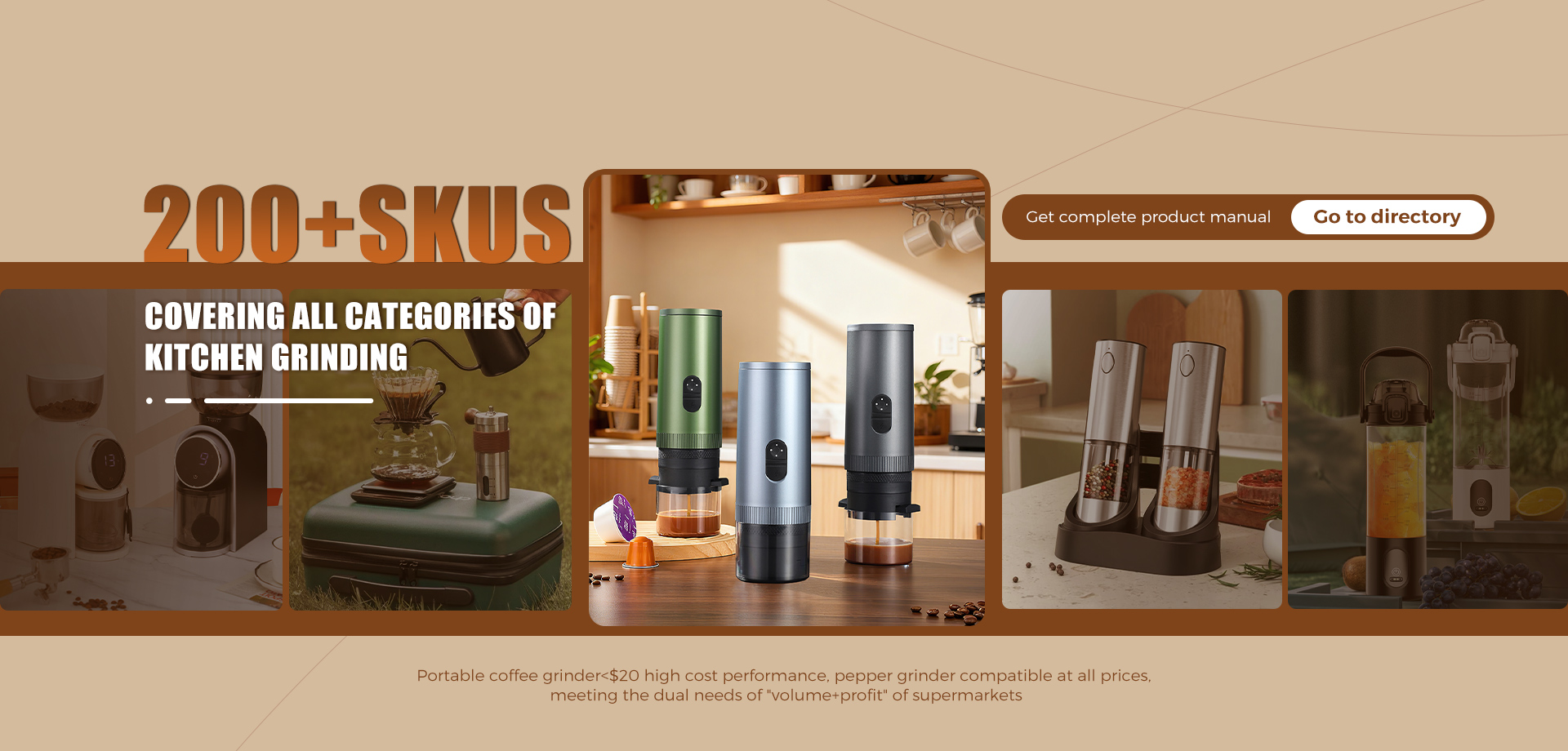
The four core families at Blossom — electric coffee grinders, pepper and spice grinders, milk frothers, and juice cups — were never meant to ship alone. They are complementary small kitchen appliances that share motors, housings, certifications, and retail shelf logic. A well-built range uses that overlap to cut your tooling cost, smooth your container loads, and give your sales channel a story to tell.

Why New Distributors Need a Range, Not a Single SKU
A lone product is fragile. Demand dips, a competitor undercuts you, a platform changes its fee structure, and your entire program is exposed. A range absorbs shocks because different tiers and categories behave differently across seasons and channels. When café-grade burr grinders slow in summer, portable juice cups often climb as consumers chase cold-pressed habits. Spice grinders sell steadily through holiday cooking seasons when coffee hardware might soften.
The Hero, Halo, and Anchor Model
We use a simple three-role framework with every new distributor we onboard. The hero-halo-anchor model keeps a range disciplined instead of sprawling into random SKUs that confuse buyers and bloat inventory.
- Hero — the one product you lead with. It has the strongest margin story, the clearest differentiation, and the best listing photos. For most Blossom partners this is a conical-burr electric coffee grinder.
- Halo — the aspirational or novelty pieces that make the brand look complete: a matte-finish milk frother, a rechargeable pepper mill, a personal juice cup with a travel lid.
- Anchor — the dependable volume workhorses that keep reorder cash flowing: a basic blade grinder, a manual spice mill, a standard frother wand.
The hero wins attention. The halo builds brand equity. The anchor pays the warehouse rent. You need all three, and you need them sized correctly against each other.
Margin Layering Across Price Tiers
Do not price your range by adding a flat percentage to factory cost. That flattens your incentive to push higher tiers. Instead, layer margin so that moving a buyer up one tier grows your absolute profit more than the percentage suggests. A juice cup at a thin margin can fund a premium burr grinder at a fat one, as long as the two are presented as a system rather than as competitors.
Mapping the Blossom Catalog to a Cohesive Range
Before you invent SKUs, map what already exists. Blossom's catalog clusters naturally into four families, and each can seed a tier in your range:
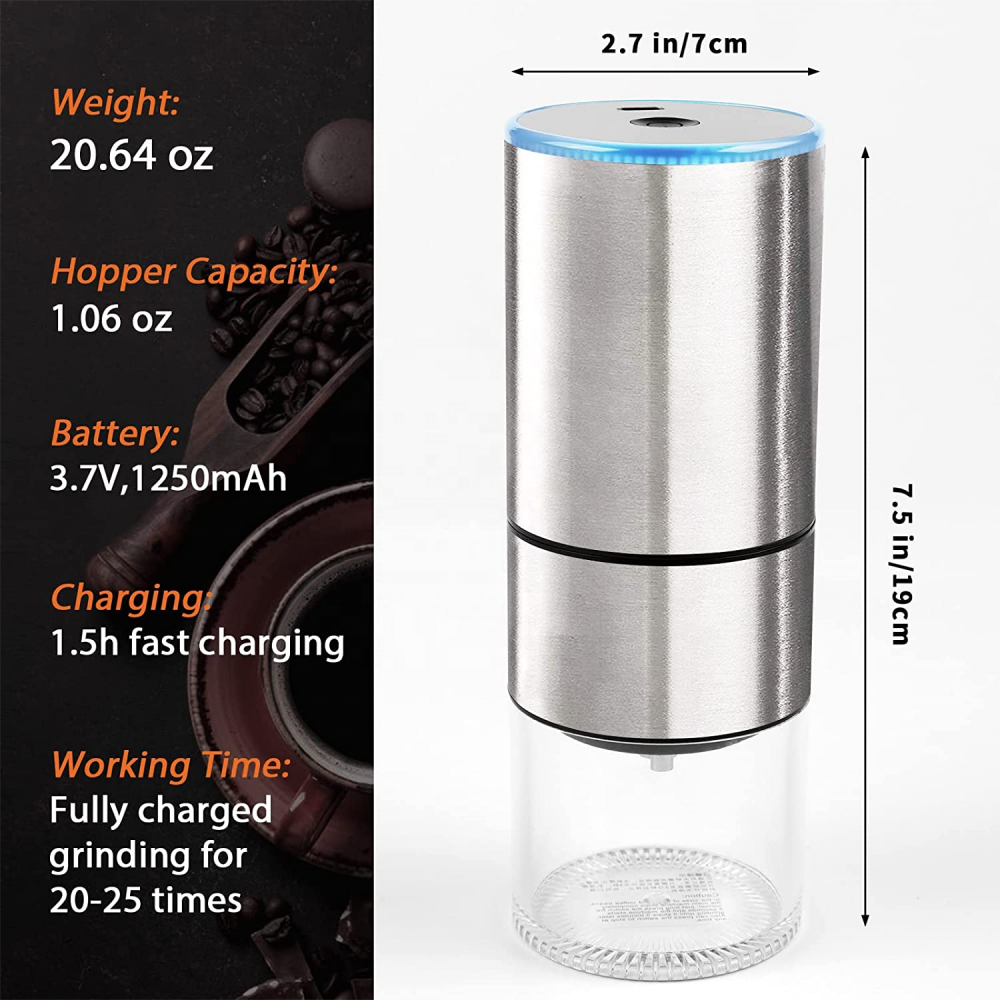
- Electric coffee grinders — blade and burr variants, 150W to 250W motors, 30g to 120g bean capacities, USB-rechargeable and corded options.
- Pepper and spice grinders — adjustable ceramic-core mills, single-handed models, and gravity-activated units for foodservice.
- Milk frothers — handheld battery wands, stand-alone electric frothers with dual heating and cold-foam functions.
- Juice cups — personal blenders with integrated drinking lids, USB-C charging, and 300ml to 600ml capacities.
The magic is in the shared bill of materials. Many of these units use the same motor architecture, the same switchgear, and overlapping injection-molded housing tools. A distributor who buys across two or three families can often negotiate consolidated tooling amortization and a better per-unit landed cost than someone ordering a single hero product in isolation.
Tiering by Function and by Buyer
A range is not just cheap, mid, and expensive. It is organized by who buys it and what job it does for them. We recommend splitting your Blossom range along two axes at once.
Entry Tier for Amazon FBA Sellers
The entry tier is built for velocity and review velocity. Compact blade grinders, a basic frother wand, and a 300ml juice cup belong here. These carry lower unit cost, smaller cartons, and faster sell-through, which matters when you are funding inventory from marketplace cash flow. The goal at this tier is not maximum margin per unit; it is maximum turns and a clean star rating that pulls buyers into your storefront.
Mid Tier for Retail Brands and Gift Programs
The mid tier is where private label lives. A burr coffee grinder with adjustable settings, a ceramic pepper mill, and a stand-alone frother with a pour spout sit comfortably here. This is the band where your minimum advertised price (MAP) policy starts to matter, because multiple sellers may carry the same Blossom platform under different brands and you do not want a price war eroding the category for everyone.
Premium Tier for Specialty Coffee Importers
The premium tier is small, deliberate, and high-margin. Think a heavy-duty burr grinder with metal housing, a dual-function hot-and-cold frother, and a 600ml juice cup with a reinforced base. You carry fewer of these, you merchandise them as a set, and you protect them with tighter distribution so the premium story holds.
Pricing Architecture and Margin Waterfalls
Pricing architecture is the discipline of deciding, in advance, where each SKU sits on the shelf and why. A grinder range with no architecture looks like a accident: three products at nearly the same price, none clearly better than the next, and a confused buyer who walks away.
Start with your_target retail price points, then work backward. Common North American and EU shelf anchors for this category run roughly 19, 29, 39, and 59 units of local currency. Assign one Blossom SKU to each anchor and resist the urge to fill every gap. Empty price points are fine; they give you room to launch a new colorway or a bundled set later without cannibalizing existing volume.
Build a margin waterfall for each SKU: factory cost, ocean freight and duties, warehouse and pick-pack, marketplace or distributor margin, and finally retail. When you can see the waterfall side by side across the range, you will notice that the halo products often carry thinner percentage margins but drive attachment, while the anchor products carry the floor. Balance them deliberately.
Packaging and Listing Assets as Part of the Range
A product line is only as strong as the assets attached to it. Blossom supplies neutral product photography, spec sheets, and bilingual manuals, but a serious distributor should request a listing-asset package sized to the range, not the single SKU. That means consistent background, consistent scale reference, and a coherent color treatment across grinders, frothers, and cups so your storefront reads as one brand.
This is also where cross-category storytelling pays off. A buyer browsing a burr grinder is one click from a frother and a juice cup if your assets present them as a morning routine. If you want background on how experienced retail brands combination their sets, our guide on wholesale coffee set buying for retail brands covers the bundle math in detail, and the piece on why coffee shops prefer adjustable grind settings explains the feature buyers actually look for.
Inventory Staggering and Pre-Order Cadence
New distributors frequently stock every tier at equal depth, then watch the hero sell out while the halo gathers dust. Stagger your inventory by role. Carry deeper safety stock on anchors, moderate stock on heroes, and thin, replenishment-driven stock on halos and premium pieces. This protects cash without risking stockouts on the items that drive the sale.
Coordinate your lead-time buffer with Blossom's production calendar. Small kitchen appliances run on component cycles — motors, batteries, and certifiable PCBs all have their own supply rhythms. Place hero and anchor reorders on a fixed cadence so a single delayed component does not take down your whole range at once. Spreading production across weeks is cheaper than expediting a panic airfreight later.
Container-Load Balance and Freight Efficiency
The range approach pays a concrete dividend at the dock. Coffee grinders are dense and heavy; juice cups and frothers are light and bulky. A container filled only with grinders maxes out weight before it maxes out volume, and you pay for empty space. A container-load balance that mixes dense grinders with lighter cups and frothers lets you approach both weight and volume limits together, lowering your per-unit ocean cost across the whole program.
Tip: ask Blossom for a mixed-SKU consolidation quote rather than separate container quotes per family — the combined carton mix usually drops your landed cost by more than the sum of individual discounts suggests.
Build your first consolidation plan around a 40-foot high-cube container and let Blossom's team propose a carton ratio. Most new partners find that a 50/30/20 split — half grinders, thirty percent frothers and spice mills, twenty percent juice cups — lands close to both limits without special loading gymnastics.

Common Mistakes When Assembling a First Range
We see the same failures repeatedly, and most are avoidable with a little planning.
- SKU sprawl — ten products with no clear role each, none deep enough to reorder efficiently.
- Tier collision — two grinders at the same price point competing for the same buyer.
- No MAP discipline — allowing every reseller to price freely, which destroys the premium tier overnight.
- Asset neglect — shipping great hardware with listing photos that look like three different brands.
- Flat margins — marking up every SKU by the same percentage instead of layering margin to steer buyers up tiers.
Avoiding these five traps is most of what separates a distributor who reorders for years from one who clears stock once and disappears.
FAQ
How many SKUs should a new distributor launch with?
A practical starting range is six to nine SKUs spread across the four families: two or three grinders, one or two spice mills, one or two frothers, and one or two juice cups. That is enough to tell a complete story without spreading inventory so thin that no single item can reach reorder depth.
Should I private label everything or keep some Blossom-branded stock?
For a first program, private label the hero and mid tiers where your margin and brand equity live, but keep the anchor products flexible. Some distributors run Blossom-branded anchors for faster turnover and switch to private label once they validate demand. This hedges your tooling commitment while you learn the category.
What margin should I expect across the range?
Anchors typically run thinner, often in the low double digits of gross margin at the distributor level, while heroes and premium tiers carry the program's profit. Judge the range by blended margin and inventory turns together, not by any single SKU's percentage.
How do I stop resellers from undercutting my price tiers?
Establish a written MAP policy at onboarding, assign tiers to specific channels, and use serialized or region-coded cartons so diverted stock is traceable. Blossom can support regional labeling and carton coding as part of the private label agreement, which makes enforcement realistic rather than theoretical.
Can Blossom help with mixed-family container consolidation?
Yes. Blossom regularly consolidates grinders, spice mills, frothers, and juice cups into shared containers and will propose a carton mix that approaches both weight and volume limits. Request a mixed-SKU quote early so the production schedule can be planned around it.
How long before I should review and revise the range?
Plan a structured range review every two quarters. Track sell-through by tier, return rates by SKU, and cross-sell attachment rate between categories. After three to four cycles you will have enough data to retire weak halos, promote a strong hero, and add a premium piece with confidence.