

 +86 15268683708


News

0102030405
Coffee and pepper grinders
Ceramic vs. Stainless Steel Burr Coffee Grinders: A B2B Retail Assortment Guide
2026-10-19
For retail category managers and private-label brand buyers in North America and Europe, choosing between ceramic conical burrs and CNC stainless steel burrs is the single most critical engineering decision when developing a coffee grinder program. The burr set dictates the grinder’s price tier, grinding speed, particle distribution, and overall return rate on e-commerce channels.
Understanding the mechanical differences and target customer profiles allows distributors to build a balanced product assortment that captures both mass-market retail shoppers and specialty coffee enthusiasts.
1. Technical Comparison: Material Mechanics and Grind Performance
When evaluating pre-production samples from OEM manufacturers, procurement teams should benchmark both burr types across four operational parameters:
2. Channel & Merchandising Strategy
Entry-to-Mid Retail (Ceramic Burrs)
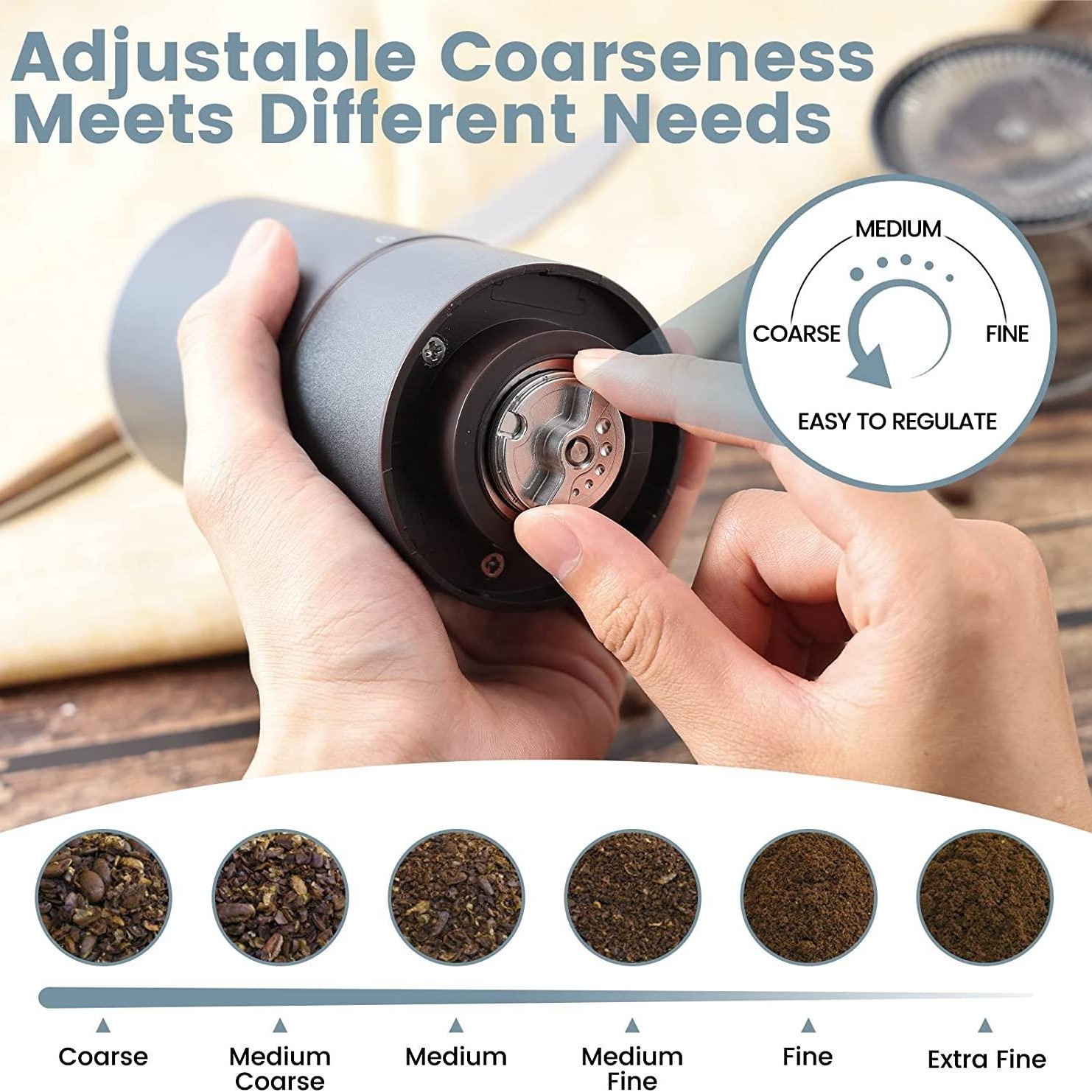
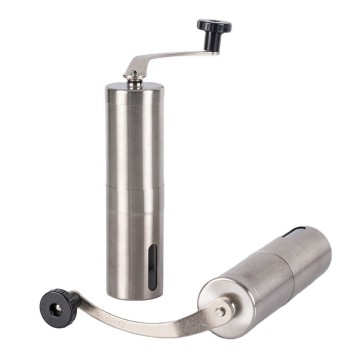
Ceramic burrs do not rust, are washable, and offer long service life for general drip coffee and French press brewing. They are ideal for:
- Supermarket and Hypermarket Shelves: Value-driven home kitchen aisles requiring high turnover at competitive MSRPs.
- Corporate Gift Sets and Bundles: Lightweight, battery-operated units paired with travel mugs or french presses.
- Entry Private Label: Brands expanding from pre-ground coffee into whole bean starter kits.
Premium Retail & Specialty E-Commerce (CNC 420 Stainless Steel)
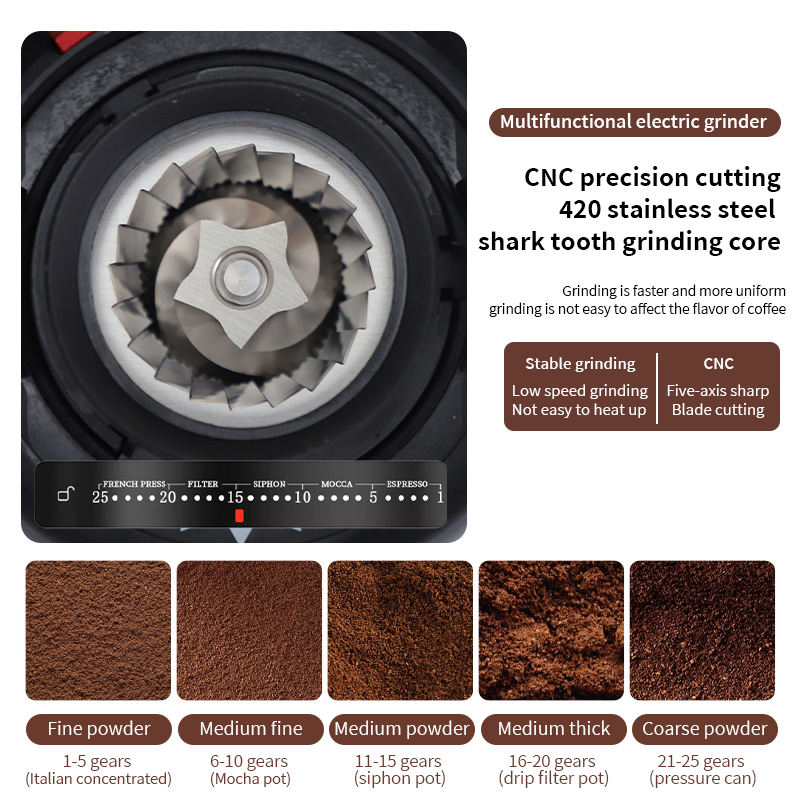
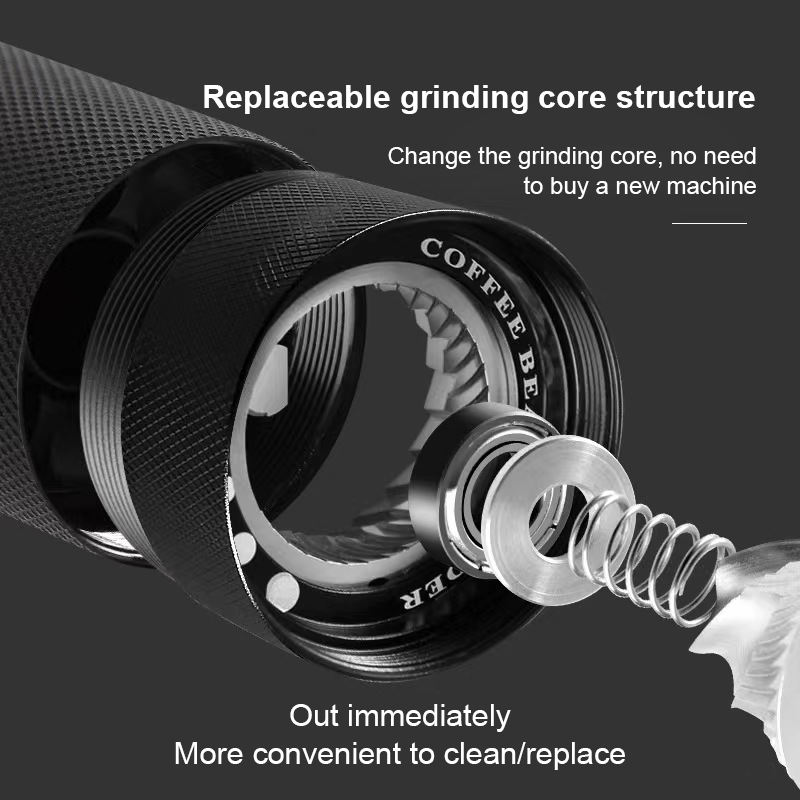
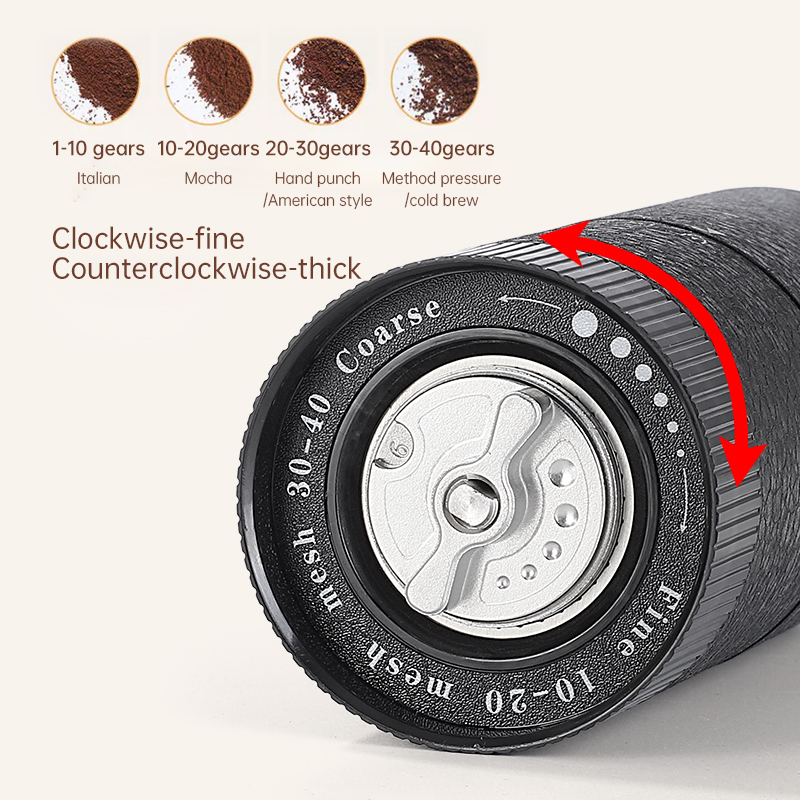
CNC-machined stainless steel burrs (such as 420 stainless steel with 38-to-60 micro-step external adjustment) deliver the razor sharpness needed for true espresso extraction and high-end pour-overs:
- Specialty Lifestyle Boutiques: Gear displays targeting home baristas who demand repeatable grind micron settings.
- Amazon & TikTok Shop Private Labels: Products with higher average order value (AOV) where premium tactile weight (aluminum unibody) drives positive reviews and lowers return rates.
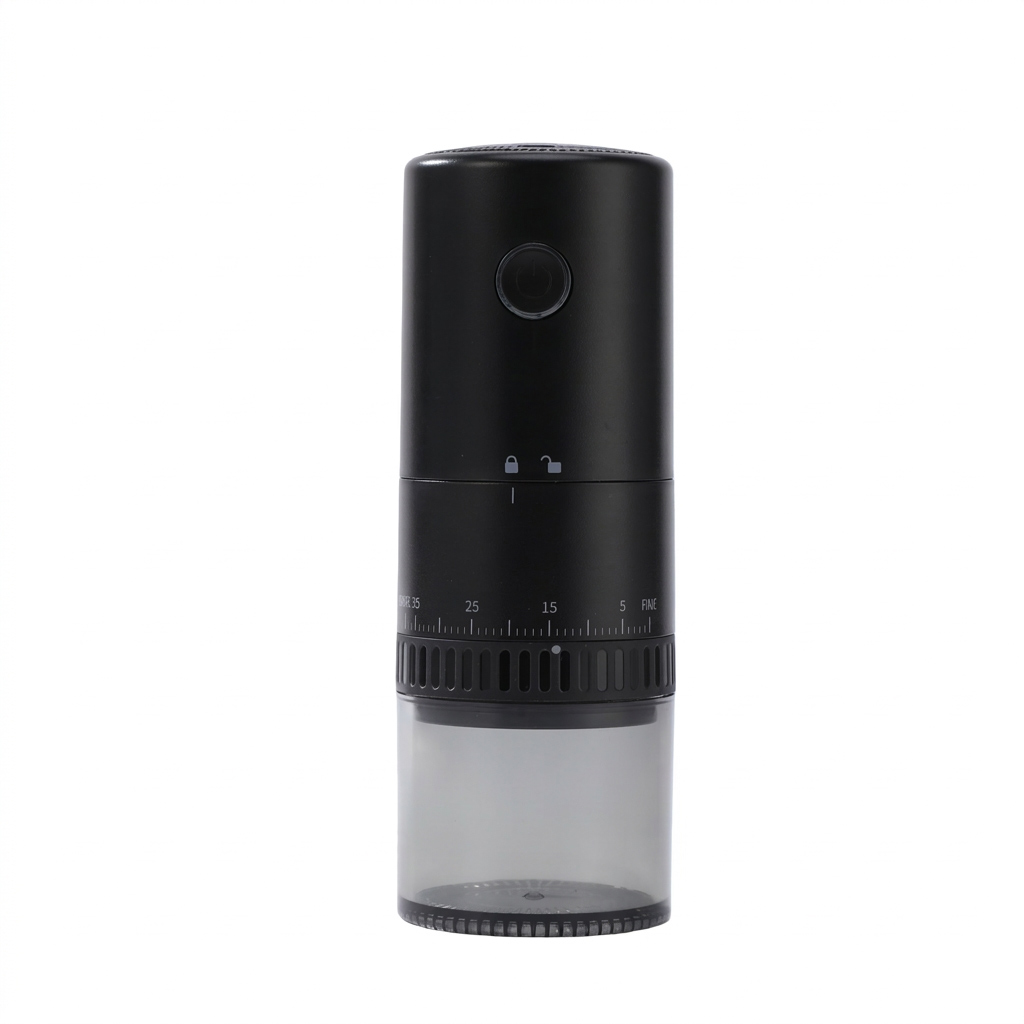
A prime example for specialty retailers is the 420 CNC External Adjusted Coffee Grinder, which features 60 stepped dial adjustments for espresso-to-filter versatility.
3. Supplier Quality Verification Checklist
Before issuing a Purchase Order (PO) for container-load quantities, buyers should verify the following engineering controls with their factory partner:
- Axial Concentricity: Ensure double-bearing central shaft stabilization (radial runout tolerance ≤ 0.05 mm) to prevent burr wobbling during coarse grinding.
- Food Contact Certification: Obtain third-party lab test reports (FDA 21 CFR, EU 1935/2004, LFGB) for all stainless steel, ceramic, and silicone components.
- Burr Alignment Stability: Confirm that calibration points do not shift under continuous vibration testing.
To explore electric options with built-in precision scales, review our guide on Prosumer and Commercial Espresso Grinders or discover our complete Portable & Outdoor Kitchen Appliance Sets.
Source Verified Coffee Equipment with Blossom
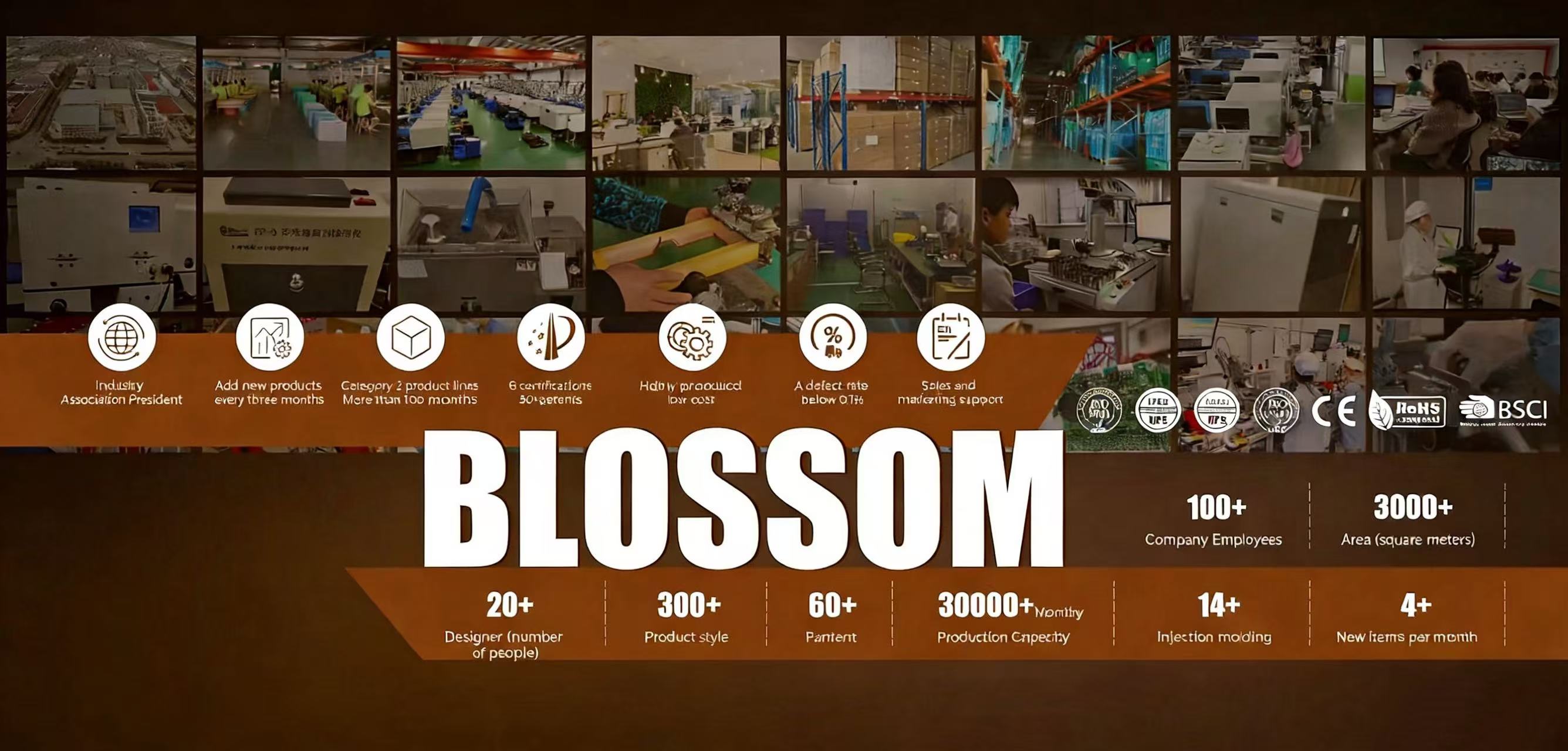
As an experienced OEM/ODM manufacturer holding CE, FCC, RoHS, and BSCI audit qualifications, Blossom provides end-to-end coffee equipment manufacturing—from CNC machining to custom retail packaging.
- Explore our full range of Electric and Manual Coffee Grinders.
- Learn about packaging standards in our Small Kitchen Appliance Packaging & Compliance Guide.
- Connect with our engineering team for OEM quotes and rapid sample dispatch via the Contact Us Page.