
 +86 15268683708



Industry News

0102030405
Coffee and pepper grinders
Coffee Equipment Factory Audit Checklist for Importers
2026-10-08
Part of the Complete Coffee Equipment Sourcing Guide · by the Blossom Coffee Equipment Team

A supplier presentation can look convincing while revealing very little about whether the factory can deliver your order consistently. A useful coffee equipment factory audit focuses on evidence: who controls the parts, how specifications move into production, what is tested, how defects are recorded and whether documents match the exact model you plan to import.
This checklist helps coffee brands, retailers and importers audit a manufacturer of coffee grinders, portable coffee makers, milk frothers and related equipment before sample approval or a bulk purchase.
Evaluating Blossom as a supplier? Request factory information, product recommendations, model-specific documents and samples through our contact page. A useful supplier conversation should begin with evidence, not sales claims.
1. Confirm the Legal and Commercial Identity
- Company name and business registration
- Factory address and operating location
- Export experience and main product categories
- Who signs the contract and receives payment
- Whether the seller is the manufacturer, a trading company or a combined operation
The company named in the quotation, bank information, certificate and contract should be understandable and consistent. Differences are not always a problem, but they must be explained before payment.
2. Verify Product-Category Experience
A factory may be strong in one appliance and weak in another. Ask for evidence related to the product you actually want:
- Current models in the category
- Recent production or inspection records
- Applicable test equipment
- Typical customization options
- Model-specific compliance documents
- Common failure modes and how they are controlled
For grinders, discuss burr alignment, adjustment, retention, motor consistency and noise. For portable coffee makers, discuss heating, pressure, seals, battery transport and cleaning. For milk frothers, discuss whisk materials, speed settings, shaft sealing and food-contact parts.
3. Inspect Incoming Material Control
Quality begins before assembly. Check how the factory manages:
- Approved component and material suppliers
- Incoming inspection criteria
- Food-contact materials
- Electronic components and batteries
- Lot identification and traceability
- Handling of rejected incoming materials
If the factory cannot show how critical components are accepted or rejected, final inspection alone will not protect your order.
4. Map the Production Process
| Process stage | Evidence to request |
|---|---|
| Pre-production | Approved sample, bill of materials, work instructions and packaging files |
| Assembly | Line checks, torque/control requirements and operator instructions |
| Performance testing | Functional test method and acceptance limits |
| Final inspection | Sampling plan, defect classification and inspection report |
| Packing | Packaging specification, drop/transport checks and label verification |
The factory should be able to explain where quality is checked, not only state that every product is “100% inspected.”
5. Review Test and Laboratory Capability
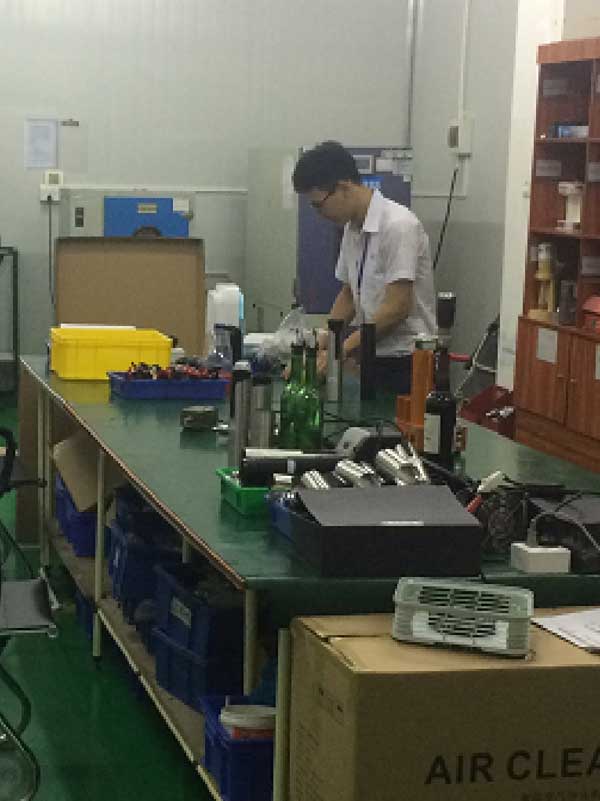
Ask which tests are performed in-house and which are outsourced. Depending on the product, useful evidence may include:
- Functional cycle testing
- Noise and vibration checks
- Charging and battery checks
- Material or surface testing
- Salt-spray testing for relevant metal parts
- Packaging and transport checks
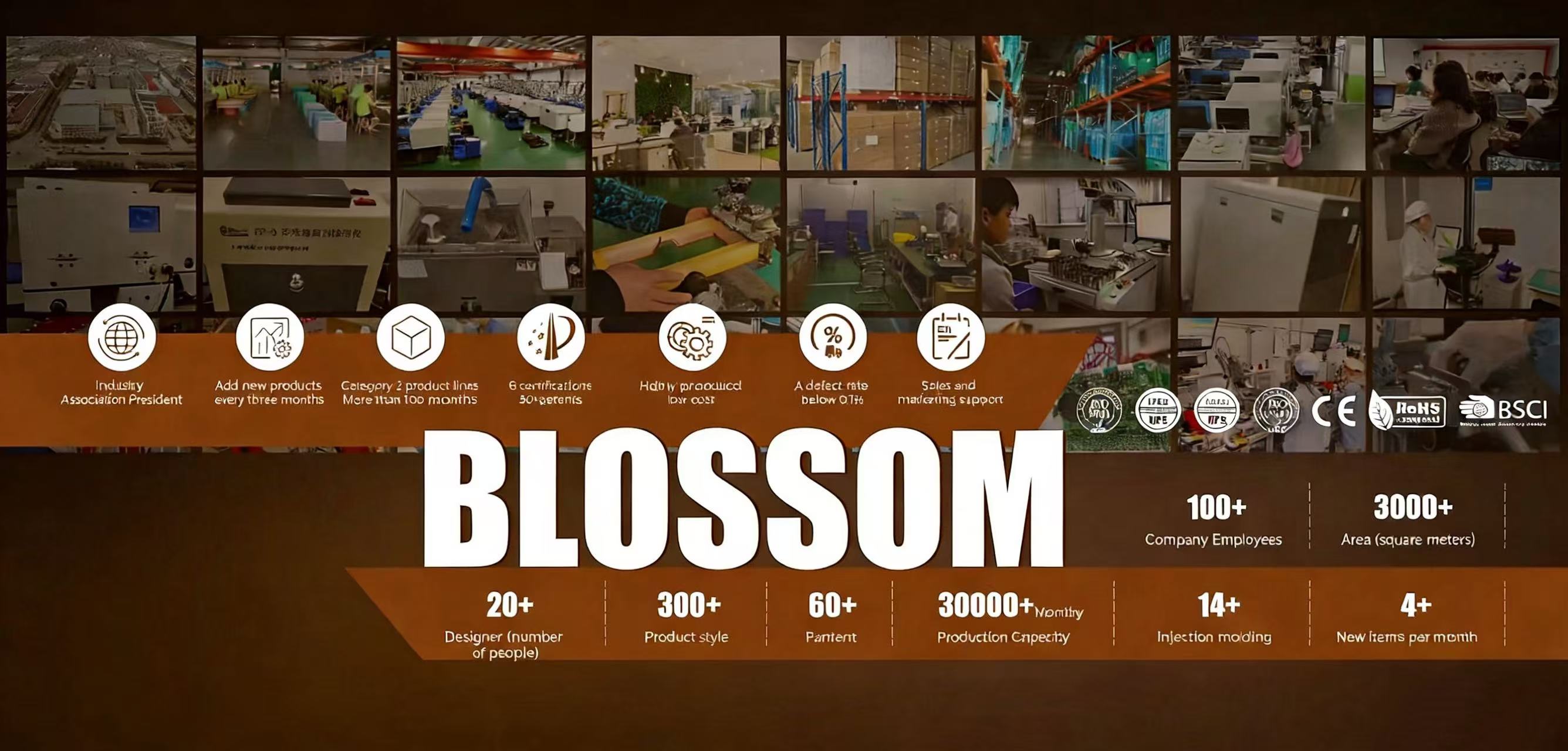
Blossom's factory page displays R&D, production and laboratory equipment, including 3D printing, automatic assembly tools, salt-spray testing and a laboratory environment. Buyers should request the tests relevant to their selected product.
6. Audit Quality Records, Not Just the Production Floor
A clean factory is useful, but records reveal whether the system works over time. Request examples of:
- Incoming quality reports
- In-process inspection sheets
- Final inspection reports
- Non-conformance records
- Corrective-action reports
- Complaint and return analysis
Look for traceability between the order, production lot, inspection result and corrective action.
7. Match Certificates to the Model and Market
Do not accept “our factory is certified” as proof that your product can be sold in your market. Verify:
- The certificate or report belongs to the relevant product family.
- The model number or model series is covered.
- The applicant/manufacturer relationship is clear.
- The standard is relevant to the destination market.
- Battery transport documents are available when required.
Review Blossom's certificate page and request the exact documents for your chosen model. See also Coffee Equipment Certifications by Market.
8. Examine OEM/ODM Development Capability
If your project involves more than a logo, review how development is managed:
- Who owns the design brief?
- How are drawings, prototypes and changes approved?
- How are tooling, samples and revisions documented?
- How is intellectual property handled?
- What testing is repeated after a design change?
A reliable development partner should be able to turn feedback into controlled revisions rather than informal verbal changes.
9. Review Capacity and Delivery Control
Ask how the supplier handles peak-season demand, material shortages and delivery risks. Useful questions include:
- What is the normal lead-time structure?
- Which components create the longest lead time?
- How far in advance should Q4 orders be placed?
- How does the factory report schedule changes?
- What happens if final inspection fails?
The goal is not to demand a perfect schedule. It is to see whether the supplier manages the schedule visibly and responds early when risks appear.
10. Score the Factory Consistently
| Audit area | Suggested weight |
|---|---|
| Legal/commercial identity | 10% |
| Category experience | 15% |
| Material and process control | 20% |
| Testing and quality records | 20% |
| Compliance documents | 15% |
| Development capability | 10% |
| Capacity and communication | 10% |
Adjust the weights to your project, but use the same scoring method for every candidate. This prevents a polished sales presentation or low quotation from overpowering the evidence.
What to Request Before the Audit Call
- Company profile and factory address
- Relevant product list
- Model-specific specifications
- Applicable certificates
- Production and QC flow
- Sample and order timeline
- Customization options
Audit Blossom for your next coffee equipment project.
Tell us the category, destination market, quantity and required customization. We can prepare factory information, model options, compliance documents and samples for your review.
Request Factory & Product Information →
Email: fiona@zjblossom.cn · WhatsApp: +86 15268683708