

 +86 15268683708


Industry News






0102030405
Coffee and pepper grinders
How to Choose the Right Coffee Grind Size for Espresso, Pour-Over, French Press, and Cold Brew
2026-09-06
How to Choose the Right Coffee Grind Size for Espresso, Pour-Over, French Press, and Cold Brew
The right coffee grind size helps water extract flavor at the right speed. As a simple rule, finer grounds expose more surface area and slow the flow of water through the coffee bed. Coarser grounds allow water to move more freely and are better suited to longer steeping methods.
There is no universal setting that works for every bean and every brewer. Use a chart as a starting point, then adjust according to taste and brew time.
Coffee grind size chart
The names are more useful than a numbered dial because each grinder uses a different scale. A “6” on one grinder is not necessarily the same as a “6” on another.
Espresso: start fine, then adjust carefully
Espresso needs a fine grind because water passes through a compact coffee puck under pressure. If the grind is too coarse, water may run through too quickly and produce a thin, sour shot. If it is too fine, the shot may stall or taste bitter and dry.
Change one variable at a time. If the shot runs quickly and tastes sharp, move slightly finer. If it runs slowly and tastes harsh, move slightly coarser. Make small changes rather than turning the dial dramatically.
Pour-over: consistency matters more than chasing a number
Pour-over brewing rewards a consistent medium-fine or medium grind. If the coffee bed drains too quickly and the cup tastes weak, try a slightly finer setting. If the drawdown is slow and the cup tastes dry, move a little coarser.
A good pour-over routine also depends on pouring technique. Keep your pour controlled, use a stable recipe, and avoid changing the grind, water, and dose all at once.
Drip coffee: build a dependable daily setting
For a standard automatic drip coffee maker, begin with a medium grind. If your coffee tastes watery, move slightly finer. If it tastes bitter or overly dry, move slightly coarser.
This is one reason a multi-setting electric burr grinder can be convenient for households. You can keep a repeatable setting for weekday drip coffee and adjust only when you change beans or brew a different style.
French press: choose a genuinely coarse grind
French press coffee normally benefits from coarse particles and a longer steep. A grind that is too fine can pass through the filter, increase sediment, and make the cup taste harsh.
If your French press tastes muddy, check both the grind and the pouring technique. A coarse setting, a gentle stir, and a careful plunge can make the cup cleaner without removing its full body. Blossom also publishes a dedicated French press coffee grinder guide for readers who want to go deeper.
Cold brew: coarser is usually easier to manage
Cold brew steeps for many hours, so use a coarse to extra-coarse grind as a starting point. Very fine grounds can over-extract during a long steep and make filtering difficult.
If the concentrate is weak, you can adjust the coffee-to-water ratio, steep time, or grind size. Change one factor per batch so you know what improved the result.
Practical example: dialing in one grinder for three brewers
Consider a household that uses the same beans for an espresso machine, a weekday drip brewer, and a French press on weekends.
- Monday: start with a fine setting for espresso.
- Tuesday: move to a medium setting for drip coffee.
- Saturday: move much coarser for French press.
- Record the setting and taste notes in a phone note or on a small card beside the grinder.
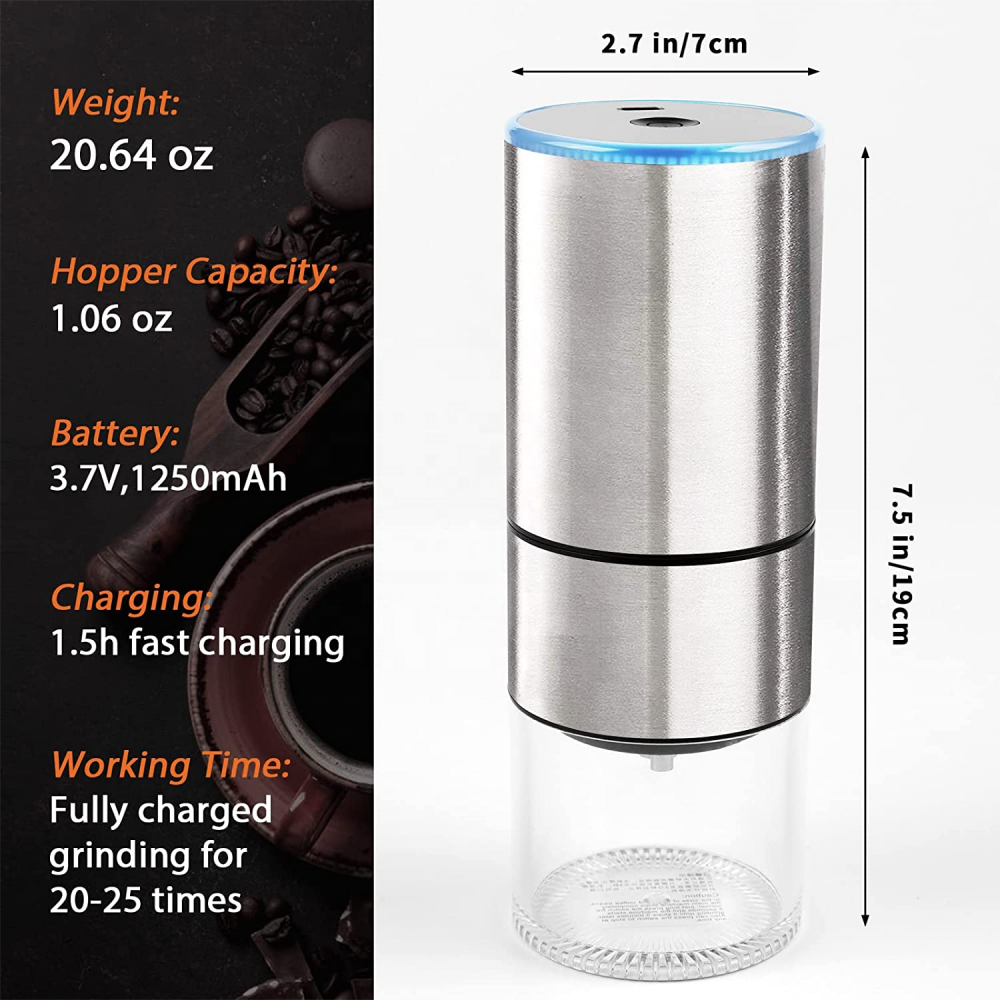
After a few brews, the household has a useful personal reference instead of relying on generic numbers. A grinder with a wide adjustment range makes this routine easier. Blossom’s homepage describes an electric model with 38-level precision adjustment; readers can review the electric grinder category to compare formats and features.
How to adjust grind size by taste
Use this quick troubleshooting rule:
- Sour, sharp, or thin: Try a slightly finer grind or a longer brew time.
- Bitter, dry, or hollow: Try a slightly coarser grind or a shorter brew time.
- Muddy or overly heavy: Try a coarser grind and check for excessive fines.
- Inconsistent from cup to cup: Check dose, water, distribution, and grinder consistency before changing the recipe.
For more detailed adjustment ideas, read How to Calibrate Your Coffee Grinder for the Perfect Grind Size.
The key takeaway
A coffee grind size chart is a starting map, not a fixed rule. Begin with the range that matches your brewing method, taste the result, and make small, deliberate adjustments. With a consistent burr grinder, the changes become easier to understand and repeat.
Next, decide which grinder format fits your lifestyle in Day 3: Manual vs. Electric Coffee Grinder.
FAQ
What is the best grind size for pour-over coffee?
Start with medium-fine to medium. Adjust finer if the brew runs quickly and tastes weak; adjust coarser if it runs slowly and tastes dry.
How fine should coffee be for espresso?
Start with a fine grind. The exact setting depends on the grinder, beans, dose, and espresso recipe.
Why does French press coffee need a coarse grind?
Coarse grounds are easier to filter and reduce the amount of fine sediment in a long-steeped brew.