

 +86 15268683708



News

0102030405
Coffee and pepper grinders
Coffee Grinder Gift Set Packaging and Assortment Planning
2026-10-23
Coffee Grinder Gift Set Packaging and Assortment Planning
This article is written for small-appliance importers, kitchenware wholesalers, Amazon FBA sellers, cafe and restaurant equipment buyers, and gift-channel distributors who need to plan seasonal coffee grinder gift sets. The problem it solves is concrete: how to choose the right assortment, packaging format, carton size, SKU mix, compliance labels, and cost model so that a holiday or occasion-based batch ships on time, protects the product, clears customs, and earns a higher basket value than a single grinder sold alone. If your team is building a Christmas, Valentine's Day, Father's Day, or corporate-gift program around an electric coffee grinder, the methods below give you a working framework rather than guesswork, and they apply whether you import under your own brand or distribute an existing line to retail accounts.
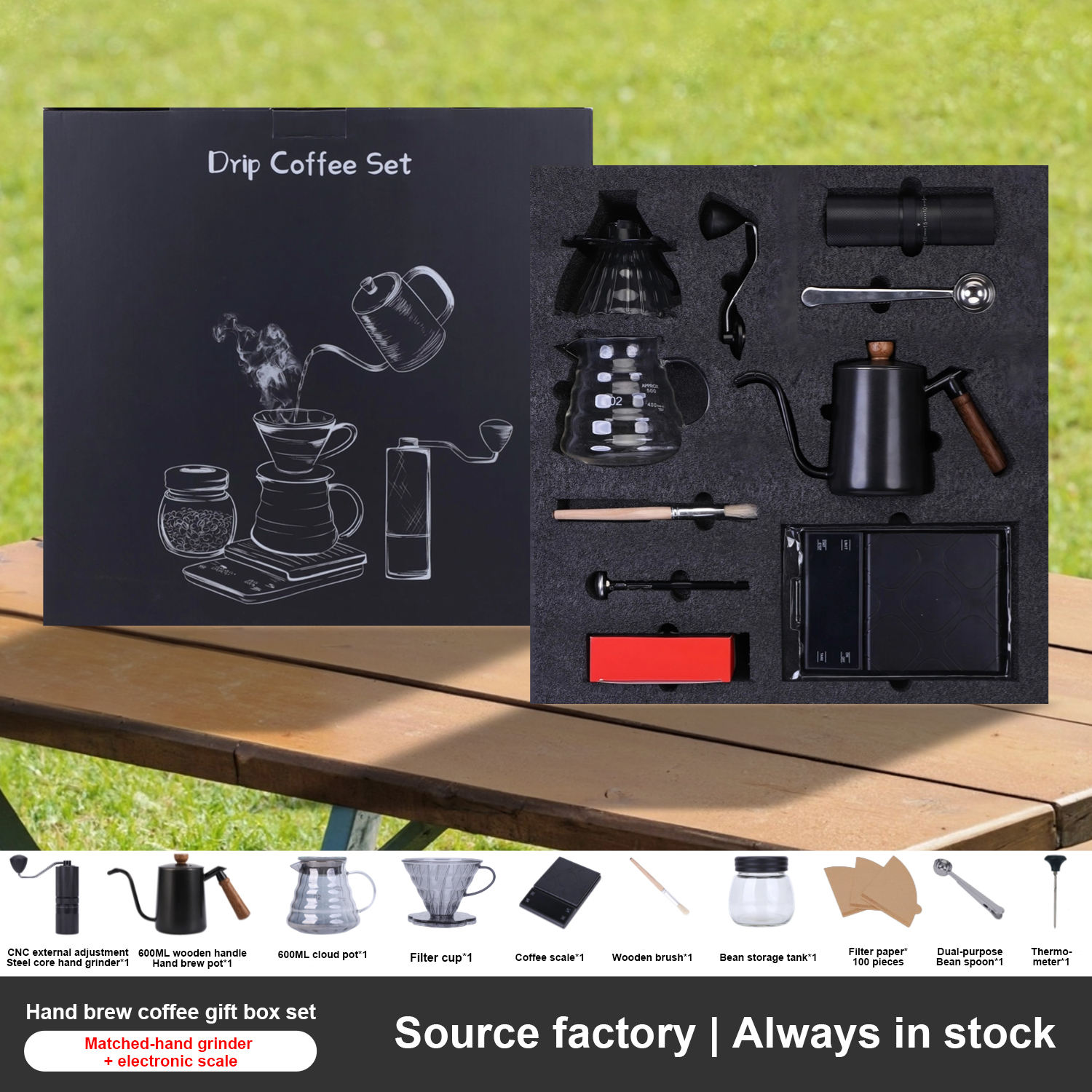
Why Gift Sets Are the Best Incremental Category for Coffee Grinders
A coffee grinder on its own is a considered purchase, but a grinder placed inside a gift set becomes an emotional purchase with a higher ceiling. The first reason is price. A standalone grinder competes on specification and price; a curated set sells a moment, a ritual, or a relationship, and that lets you lift the gift-ready average order value without changing the core motor or burr inside the unit. Buyers comparing two single grinders will argue over watts and grams per second, while buyers comparing a grinder-plus-accessory set are comparing the feeling of the gift, which is far harder to commoditize.
The second reason is the occasion calendar. Grinders pair naturally with Christmas gifting, Valentine's Day breakfast themes, Father's Day good-coffee-at-home messaging, and corporate thank-you packages where the branded box carries the sender's logo. Each occasion repeats every year, which means the assortment can be planned, sampled, and re-ordered with a predictable rhythm instead of being invented from scratch each season. A distributor who maps the calendar in advance can lock factory time before the peak, avoid the late-season capacity crunch, and still have weeks to react to early sell-through data.
The third reason is margin protection through bundling. When you sell accessories that you already source or can source cheaply, the set's added cost is often lower than the added retail price you can command. The risk to manage is self-cannibalization: a set priced too close to the standalone grinder may simply shift existing demand rather than create new demand. Use a cannibalization test using paired SKUs by listing the set and the single grinder in the same storefront for a controlled period and comparing incremental units against the single-unit baseline before committing to a full production run. If the set mostly steals your own single sales, widen the price gap or change the accessory so the two offers target different buyers.
Four Forms of Set Composition
There are four practical ways to build a coffee grinder gift set, and each fits a different channel, price band, and warehouse reality. Choose the form before you choose the box, because the form decides the dimensions, the assembly labor, and the stocking risk. The forms are not mutually exclusive across a catalog, but each individual set should pick one clear hero story so the shopper understands the gift in two seconds.
Grinder Plus Coffee Beans
- Target channel: grocery private label, gift shops, and corporate holiday programs where the end user expects an immediately usable present.
- Price band: mid tier, because the beans add perceived value but are a consumable that does not raise the hardware cost much.
- Assembly and stocking complexity: moderate to high, since the beans introduce a food item with shelf life, separate storage, and often a different compliance path from the appliance; plan the bean pack as a separately dated component with its own lot control.
Grinder Plus Pour-Over Gear
- Target channel: specialty coffee retailers, independent roasters, and DTC brands that sell a brewing story rather than a kitchen tool.
- Price band: mid to upper tier, supported by the ritual narrative of grind-then-brew that justifies a premium over a bare grinder.
- Assembly and stocking complexity: low to moderate, because the accessories are dry, non-food, and easy to source; the main work is fitting the dripper and carafe into the same footprint as the grinder without crushing the glass.
Grinder Plus Milk Frother (Breakfast Combo)
- Target channel: Amazon FBA, big-box seasonal end caps, and breakfast or brunch gift positioning where two appliances read as a complete morning.
- Price band: upper tier, because two working electric appliances justify a higher ticket and a stronger gift impression than one.
- Assembly and stocking complexity: moderate, since both items are electronic, share plugs and voltages, and need coordinated carton sizing; test that both units power safely from the same market spec and that the combined weight stays within parcel limits.
Grinder Plus Pepper Grinder (Kitchen Two-Piece)
- Target channel: warehouse clubs, homeware chains, and dual-use kitchen gift sets that cross coffee and cooking audiences.
- Price band: mid tier, with the pepper grinder acting as an affordable second item that widens the recipient profile beyond coffee drinkers.
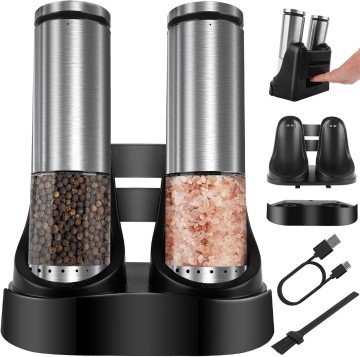
- Assembly and stocking complexity: low, because a manual pepper grinder is small, light, and non-electronic, making it the easiest companion to pack beside an electric grinder and the lowest-risk item to hold as buffer stock.
Packaging Type Comparison
The box is not just a container; it is a sales tool, a protection system, and a logistics cost driver at the same time. Four structures dominate the gift category, and the right choice depends on how the product is displayed, shipped, and recycled. The mistake most first-time buyers make is choosing the box that looks best on a desk and ignoring the three pressures of shelf, freight, and recycling until the batch is already in production.
A window carton uses a die-cut opening, usually covered with a thin PET or PP film, so the grinder shows through. It is strong on shelf display and lets the buyer see the finish, but the window adds a plastic component that complicates recycling and slightly raises material cost. A rigid gift box gives the highest unboxing impression and the best corner protection, yet it is bulky, heavier, and pushes up dimensional weight in air or small-parcel shipping, which can erase the margin the premium box was meant to create. A drawer box slides open like a tray and photographs well for social content, but the sliding mechanics need precise tolerance control or the drawer feels cheap and the inner tray can shift during transit. A handle carry box signals gift immediately and improves trial at point of sale, although the handle adds a weak point in stack-load and a recycling step that some markets scrutinize under plastic or mixed-material rules.
On protection, rigid and drawer boxes win; on shelf visibility, window and handle boxes win; on logistics volume, the flattest rigid or a well-compressed carton wins; on recycling, a mono-material carton with soy ink and a detachable window scores best. Choose by weighing which of those four pressures is tightest for your channel, and document the reason so the next season's buyer inherits the logic instead of re-debating the box.
Professional Methods for Sizing and Carton Packing
Sizing a gift set is an engineering decision, not a decoration decision. The method starts with the product fixing system. Use EVA foam, molded pulp, or corrugated dividers depending on the fragility and the shape of the items. EVA gives precise cushioning for a grinder body and a fragile carafe but is a plastic; molded pulp is recyclable and good for irregular shapes but needs tooling; corrugated dividers are cheapest and best for rigid items that simply must not touch. Match the fixing method to the most fragile component, not the average one, because the weakest item sets the protection standard for the whole carton.
Validate protection with a drop test and a stacking test before mass production. The drop test should follow the fall height matched to the parcel weight class your carrier uses, on each face, edge, and corner, with the inner product inspected afterward for cracks, loosened parts, and scuffing that would fail retail quality. The stack test should simulate the planned pallet height and transit duration, including warehouse dwell time. Do not accept a carton whose results are verbal only; require the documented test report with photos so a retailer claim can be answered with evidence rather than memory.
Carton count and box dimensions directly drive freight. Compute the dimensional weight using the carrier formula of length times width times height divided by the divisor, then compare it with the actual gross weight; the higher of the two is what you pay. Pack the maximum units per outer carton that keeps the dimensional weight below the next charge breakpoint, and keep the carton within manual handling limits to avoid surcharges. The trade-off between a double-wall gift box plus master carton and a single protective structure depends on damage rate versus material cost; model both and pick the one with the lower total landed cost at your damage assumption rather than the one that feels safer in the showroom.
To decide box size, collect these input parameters: the outer dimensions of every component, the cushion thickness required by the drop-test class, the target units per carton, the carrier dimensional divisor, the pallet footprint, and the maximum stack height allowed at the destination warehouse. Run the carton length, width, height, gross weight, and dimensional weight for at least two layouts and compare landed cost per sellable unit. The layout with the lower per-unit landed cost at your realistic damage rate is the correct one even if it looks less protective on the bench.
SKU and Inventory Planning
A gift set should not multiply your SKU count without control. The cleanest method is a shared grinder body with variant accessories, so the expensive, slow-moving core stays one SKU while the cheaper companions create the assortment. Limit each set to a small number of distinct components so the pick-and-pack step stays fast and error rates stay low, because every extra SKU inside the box is another chance for a mispack that triggers a return.
Plan for slow-moving accessories by setting a separate min-max level for each companion item and by designing the set so a leftover accessory can also be sold or donated standalone. For seasonal programs, split the order into an early commit and a replenishment commit; the first covers the confirmed base, the second is triggered by sell-through data from the first weeks. Identify hard-to-replenish SKUs early by mapping supplier lead time, minimum order quantity, and custom-tooling dependency, then place those long items first so they do not block the whole batch. A gift program lives or dies on the slowest component, not the fastest.
Track the kit-level replenishment lead time as its own metric, because the set is only shippable when every component is present; one late accessory can strand an entire carton of otherwise ready goods. Report this metric separately from the grinder lead time so planners see the true constraint, and set the reorder point on the kit clock rather than the grinder clock.
Labels and Compliance
Gift sets create labeling duties that single items avoid. The outer carton must state the contents, the component count, and the material composition where required, so a customs officer or retailer can verify the parcel at a glance. The multi-language manual should cover every market in the launch plan, and each language must match the actual spec of the shipped unit, not a generic translation that drifts from the real voltage, plug, or capacity.
Apply a scannable barcode to the retail box and a separate carton code to the outer shipping carton, and confirm the two are not confused in your fulfillment system. Mark the country of origin on both the retail box and the carton, using the wording the destination market requires. For battery and electronic waste marking, apply the WEEE-style crossed-out wheeled-bin symbol and related text only where the regulation applies to your product category and market; where applicability is uncertain, print the label subject to the latest standard text and official notices alongside the compliance statement and confirm with the importer of record before lockup. This keeps the carton defensible without asserting a marking that may not apply.
Cost Structure
A set costs more than a single grinder by a predictable set of add-ons. The new cost items are assembly labor at the factory or warehouse, the extra packaging materials, the printed manual and inserts, and the secondary warehouse operation of kitting and re-boxing. None of these is mysterious; the discipline is to model them before pricing instead of discovering them after the first invoice.
Build the cost model from these input parameters: grinder unit cost, companion item unit costs, carton and insert material cost, assembly minutes per set multiplied by the labor rate, manual printing cost per language, secondary handling cost per carton, and expected damage rate. Add a freight estimate using the dimensional weight from the sizing step. Then set the set price so that the added margin over the standalone grinder covers the added cost with a margin buffer; if the buffer is negative at your target retail, either reduce the companion cost, simplify the box, or raise the set price. The dimensional weight break-even point is the carton density at which smaller packaging stops saving freight, and you should compute it whenever you consider a thicker or more protective box, because protection and freight pull in opposite directions and only the math settles the argument.
Common Purchasing Mistakes
Most gift-set failures repeat the same patterns. Avoid the following:
Frequent Errors to Avoid
- Choosing the box for looks first and discovering the dimensional weight pushes freight above the product margin after the run is committed.
- Mixing too many accessories so the pick-pack error rate climbs and returns rise beyond the planned damage allowance.
- Forgetting the food or liquid component lead time, which strands an otherwise finished carton at the factory dock.
- Skipping the drop and stack test, then absorbing damage claims after the first delivery instead of before production.
- Printing compliance text that does not match the actual shipped configuration or the specific destination market.
- Ordering the full run before a cannibalization check, then shifting own single-unit sales instead of growing the category.
- Negotiating the grinder price hard while ignoring the kitting labor, which is where the hidden cost of the set actually lives.
Supplier Audit Questions
Before committing a seasonal batch, ask the factory the following and keep the answers in writing so the next buyer can verify them without starting over.
Questions to Ask Your Supplier
- Can you provide a documented drop-test and stack-test report for the proposed gift carton at the planned weight and face count?
- What is your real lead time for the grinder body, and what is the longest-lead component in the set?
- Do you have experience assembling multi-component gift sets, and what is your typical kitting defect rate?
- Which packaging materials are mono-material and recyclable in the destination market, and which need separate handling?
- Can you print multi-language manuals and match each language to the exact shipped specification without generic translation drift?
- What is your minimum order quantity per set configuration, and can configurations share the same grinder body to protect buffer stock?
- How do you handle leftover or unsold companion accessories after a seasonal program ends, and can they be reissued next year?
- Can you apply the required barcode, carton code, country of origin, and WEEE-style marking where applicable and confirmed?
- What is your secondary warehouse operation capacity for re-boxing or kitting if the first pack fails incoming audit?
- Will you hold a buffer stock of the hard-to-replenish SKU so a late accessory cannot block the entire shipment?
- Can you supply a pre-production sample of the full closed set, not just the loose components, for a real unboxing and damage check?
Tip: never approve a gift carton whose internal drop-test result is missing or undocumented, because a single crushed unit returned by a retailer can erase the margin of an entire seasonal batch.
Frequently Asked Questions
How Early Should I Place a Gift Set Order Before the Season?
Start with the longest-lead component and work backward through sampling, carton testing, production, and ocean or air transit, then add a buffer for customs and warehouse receiving. The planning window is the sum of those steps, not the factory production time alone, so the companion with the slowest tooling usually sets the order date. Build the calendar from the constraint outward rather than from the sell date inward.
Should the Gift Box Be the Shipping Carton or a Separate Retail Box?
That depends on damage rate and presentation. A separate retail gift box inside a plain master carton protects better and photographs for unboxing content, while a combined structure saves material and freight but risks shelf and transit wear. Model both using the cost and damage inputs described above and choose by total landed cost at your realistic damage assumption, not by which option feels more premium in the meeting room.
How Do I Prevent the Set from Cannibalizing Single Grinder Sales?
Price the set above the standalone grinder by enough to signal a different buyer, target a different occasion or channel, and run a short paired-SKU test to measure incremental units. If the set mostly shifts existing demand, adjust the accessory value or the price gap before scaling, because a set that only relabels your current sales adds cost without adding category growth.
What Compliance Marks Are Mandatory on the Carton?
At minimum, content description, component count, country of origin, retail and carton barcodes, and any applicable electronic-waste marking for the relevant market. Where a marking's applicability is unclear, follow the latest standard text and official notices and confirm with the importer of record before print lockup, so the carton is defensible and the shipment is not delayed at the border over a disputed label.