

 +86 15268683708


Industry News




0102030405
Coffee and pepper grinders
How to Evaluate Grind Consistency in a Retail Coffee Grinder Program
2026-09-24
Why grind consistency matters to retail buyers
For a retailer or distributor, coffee grinder grind consistency is not only a technical specification. It affects how easily a customer can reproduce a familiar brew, how confidently a private-label brand can communicate its product benefits and how many returns a channel may generate.
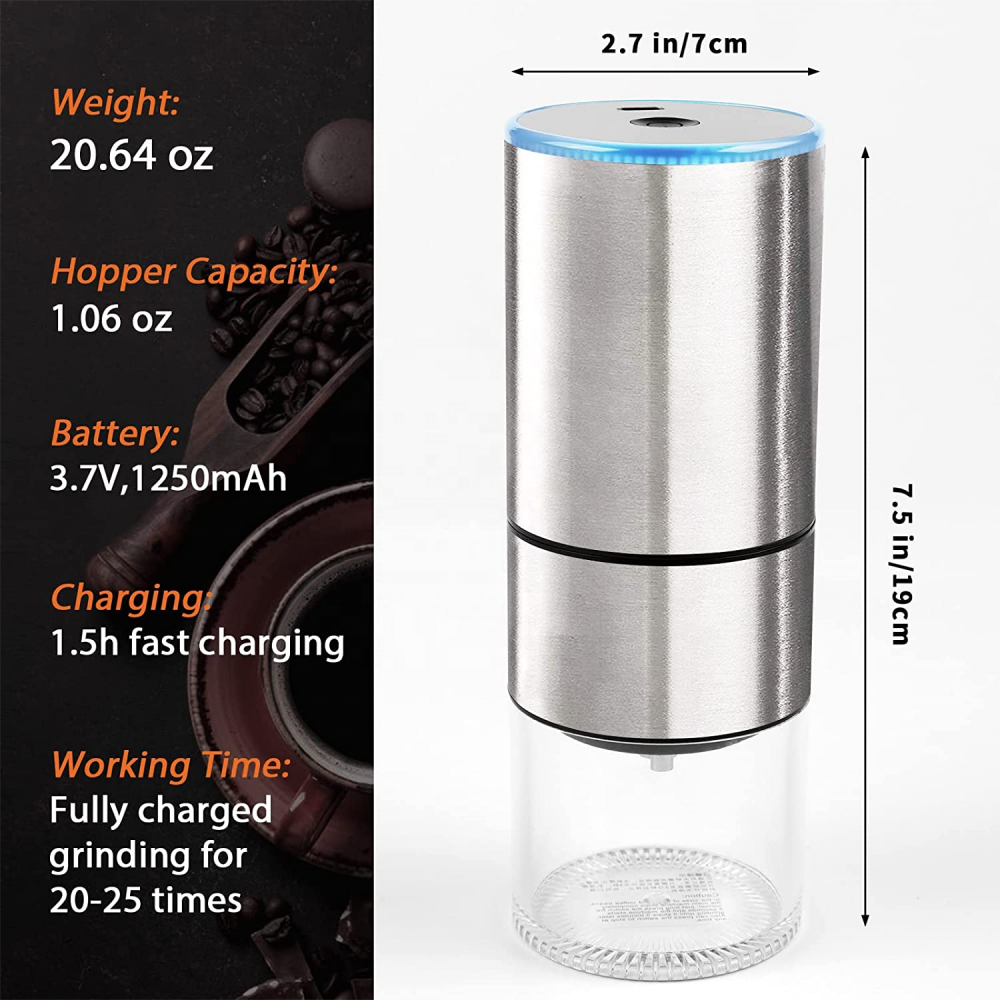
A catalogue photo cannot answer whether two units produce comparable grounds. Buyers need a repeatable sample-testing process that connects the product claim to a measurable user experience. The Blossom electric coffee grinder category and manual coffee grinder category provide different formats for that review.
1. Define the brewing use cases first
A grinder intended for espresso should be reviewed differently from a grinder intended for French press or filter coffee. Before testing, list the brewing methods that matter to the target channel and select a standard bean, dose and setting for each method.
A useful retail brief can include:
- Fine setting for espresso-style preparation.
- Medium setting for pour-over or drip coffee.
- Coarse setting for French press or cold brew.
- A simple adjustment method that customers can understand from the packaging.
The goal is not to prove that one grinder is perfect for every method. It is to confirm that the selected model has a clear and credible use case.
2. Review the burr and adjustment system
The burr type, alignment, adjustment mechanism and catch-cup design all influence the sample review. Ask the supplier to identify the exact burr material and adjustment range for the model being quoted. Do not transfer specifications from a similar product in the catalogue.
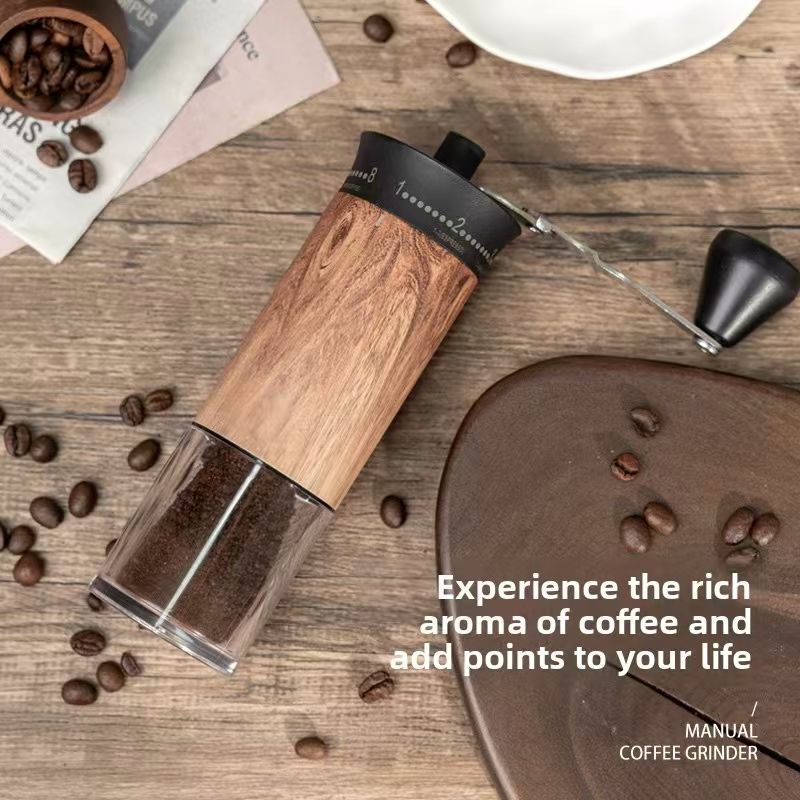
The 420 CNC external-adjusted manual grinder is listed with a 420 stainless-steel burr and 60-level external adjustment. Those details make it suitable for a specification-led comparison, but buyers should still verify the exact production sample and documentation before approving a private-label claim.
3. Use a simple side-by-side sample test
For each sample, record the model number, burr setting, bean weight, grinding time and the condition of the grounds. Compare at least two units from the same quotation and repeat the test after cleaning.
Look for:
- Similar output at the same setting.
- No obvious excess of fines or unusually large particles for the intended use.
- An adjustment ring that moves consistently and does not drift during use.
- A catch cup that removes cleanly without excessive grounds retention.
- Stable operation without abnormal vibration or heat.
For a more formal program, use a sieve or particle-analysis method. Smaller retailers can still create a useful internal benchmark by photographing the grounds and documenting brew results under controlled conditions.
4. Check the customer experience around consistency
A product can perform well in a lab-style test and still frustrate shoppers if the adjustment instructions are unclear. Ask whether the packaging explains the direction of adjustment, whether the setting scale is visible and whether the user can return to a previous setting.
For e-commerce listings, show the adjustment system, burr area, capacity and cleaning method. Link technical details to the product page rather than making a general claim across the entire category. Buyers building listing content can also review Blossom’s live guide on market-ready listing asset kits.
5. Add consistency checks to the RFQ
A supplier quotation should specify the exact model, burr type, adjustment range, sample requirements, packaging and acceptance criteria. If consistency matters to the channel, add a sample-approval section that records the test method and the agreed reference unit.
For a product shortlist, send Blossom the target brewing method, retail channel, destination market, packaging direction and forecast volume through the Contact Us page. The more specific the brief, the easier it is to compare samples on an equal basis.
Final takeaway
Retail buyers do not need a laboratory to make a better first decision. They need a repeatable test: define the brewing use case, record the exact sample, compare output at controlled settings, review the adjustment experience and confirm the specification before production.