

 +86 15268683708



News
0102030405
Coffee and pepper grinders
Coffee Grinder Hopper Design: Capacity, Bean Flow and Static
2026-10-30
Coffee Grinder Hopper Design: Capacity, Bean Flow and Static
For importers, distributor brands and private-label buyers, the hopper is rarely the first component discussed in a sourcing meeting, yet it decides how a grinder behaves on a retail shelf, in a café back bar and inside a warehouse carton. A hopper that looks adequate in a product photo can stall beans, leak fines, pick up odors or crack in transit. This article treats the hopper as a procurement specification, not a cosmetic shell, and walks through the parameters that determine capacity tiers, bean flow, static behavior and the inspection steps that protect your order before it leaves the factory.
Hopper Capacity Tiers: Matching Channels and Use Cases
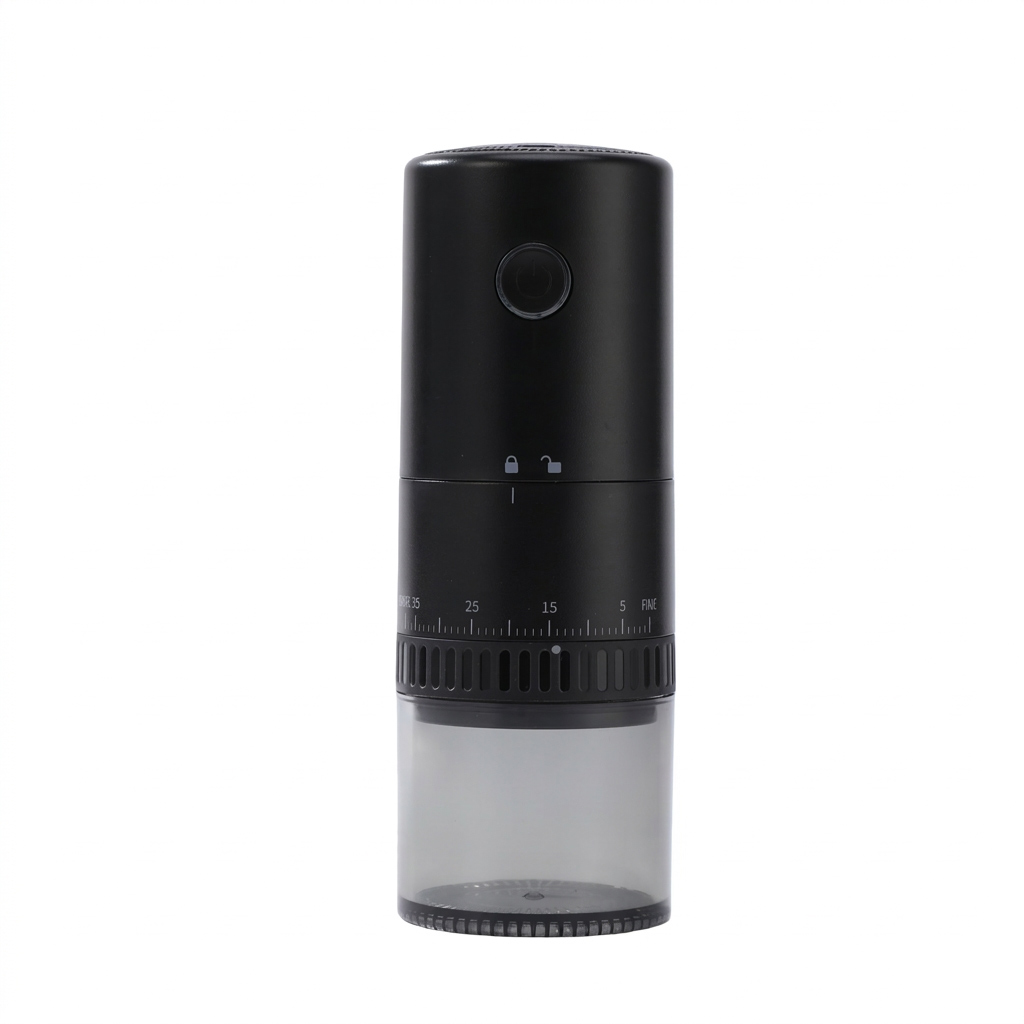
Capacity is not a single number to maximize. It is a positioning decision that must match the sales channel and the end user. A single-dose hopper of 30 to 60 g fits home baristas who weigh each shot and want zero retention. A home multi-cup unit usually carries 120 to 200 g so a small family can grind for several cups without refilling. Light-commercial models for cafés and juice bars run 250 to 400 g to survive a morning rush, while office and self-service stations often spec 300 to 500 g so staff refill less than once per day.
When you set the tier, confirm the declared capacity against the usable capacity. The printed number on a catalog is frequently the brim-full volume, not the amount that flows cleanly to the burr. Require the supplier to state both brim capacity and recommended working capacity, and tie the working number to your listing copy so the advertised figure survives a competitor or platform audit.

Bean Flow and Bridging: Taper, Outlet Diameter, Inner-Wall Finish
Bridging, sometimes called arching or rat-holing, happens when beans lock against each other and stop moving toward the burr, leaving the user tapping the hopper to restart flow. Three geometry factors control it. First, the wall taper: a steep, cone-shaped funnel below the straight section keeps beans moving by reducing the horizontal cross-section gradually, while a near-vertical wall lets beans form a stable arch at the outlet. Second, the outlet bore diameter must clear the largest bean in your blend with margin; for robusta and dark oily beans a minimum outlet of 22 to 26 mm is a common starting point, and below 18 mm bridging risk climbs sharply. Third, the inner-wall roughness matters because a polished surface lets beans slide, while a matte or molded-finish wall adds friction that supports an arch.
For buyers, the practical test is a cold, dry bean-flow check on the production sample: fill to working capacity with the largest bean in your SKU mix, run the grinder empty of motor load or at low speed, and record the time to empty and any stall event. Repeat with the smallest bean to confirm no premature dumping. Document the outlet diameter and taper angle on the spec sheet so a tooling change later does not silently alter flow.
Static and Retention: Why Dark Roasts, Fine Grinds and Dry Air Worsen It
Static charge builds when beans and ground particles rub against the hopper wall and the burr throat, then cling to surfaces instead of falling into the portafilter. Dark, oily roasts shed more surface oil films that actually reduce static in some cases, but they also leave residues that attract fines; the worst combination for retention is a light, dry, very fresh roast ground very fine in a low-humidity room. Low ambient humidity below 30 percent lets charge accumulate with no path to ground, so grinder showrooms in heated winter climates often show worse clumping than humid warehouses.
Structurally, you reduce static two ways: material choice and surface treatment. A anti-static coating or conductive additive in the hopper polymer bleeds charge away, and a slightly textured but low-friction inner finish reduces the violent rubbing that generates charge. Mechanically, a slower feed and a narrower outlet bore keep beans from free-falling and tumbling, which cuts the rubbing that creates the charge in the first place.
Tip: Always request a static and retention measurement on three consecutive grinds at your target fineness, because a hopper that passes once can still dump fines inconsistently once the wall film builds up after the first shot.
Hopper Material Selection: AS/SAN/PS/PC/Glass/Stainless Steel
Material choice trades transparency, oil resistance, impact strength, food-contact status and cost. AS and SAN are clear, rigid and reasonably oil-resistant, making them the default for mid-range hoppers, though SAN resists crazing better under detergent cycles. PS is cheap and clear but brittle and prone to cracking on drop, so it suits only budget single-dose cups. PC is tough and clear but faces rising scrutiny on bisphenol content in food contact and costs more, so confirm the regulatory posture for your destination market before specifying it. Glass reads premium and is inert but shatters in transit and adds weight and carton cost. Stainless steel is durable and odor-free but hides the bean level and costs the most per unit.
For most private-label programs the sensible default is SAN for the transparent body with a stainless or ABS collar at the burr interface, balancing clarity, dishwasher tolerance and landed cost. The table below lists the trade-offs buyers should weigh when issuing an RFQ.
- AS/SAN: high clarity, good oil resistance, moderate cost, standard food-contact grades available.
- PS: lowest cost, clear, brittle on drop, limited detergent resistance.
- PC: high impact, clear, higher cost, watch bisphenol regulation per market.
- Glass: premium feel, inert, heavy, fragile, higher freight and breakage risk.
- Stainless steel: durable, odor-free, opaque, highest unit cost.
Single-Dose vs Bulk-Hopper Product Lines: Positioning and Inventory
Running both a single-dose line and a bulk-hopper line lets a distributor cover specialty home baristas and volume family buyers without cannibalizing margin, but it changes inventory math. Single-dose hoppers are smaller, cheaper to mold and easier to stock, and they pair well with travel and gift SKUs. Bulk hoppers need larger molds, more carton volume and a slower turn, so they belong in the café-supply and office channels where refill frequency is the selling point.
From a warehouse view, keep the two lines on separate safety-stock formulas: single-dose demand is spiky around promotions and holidays, while bulk demand is steadier but tied to café opening cycles. Specifying a shared burr housing between the two lines protects you if one mold needs maintenance, because you can shift hopper production without redesigning the grinder core.
Hopper-to-Burr Alignment: Why Big Capacity Does Not Mean Stable Output
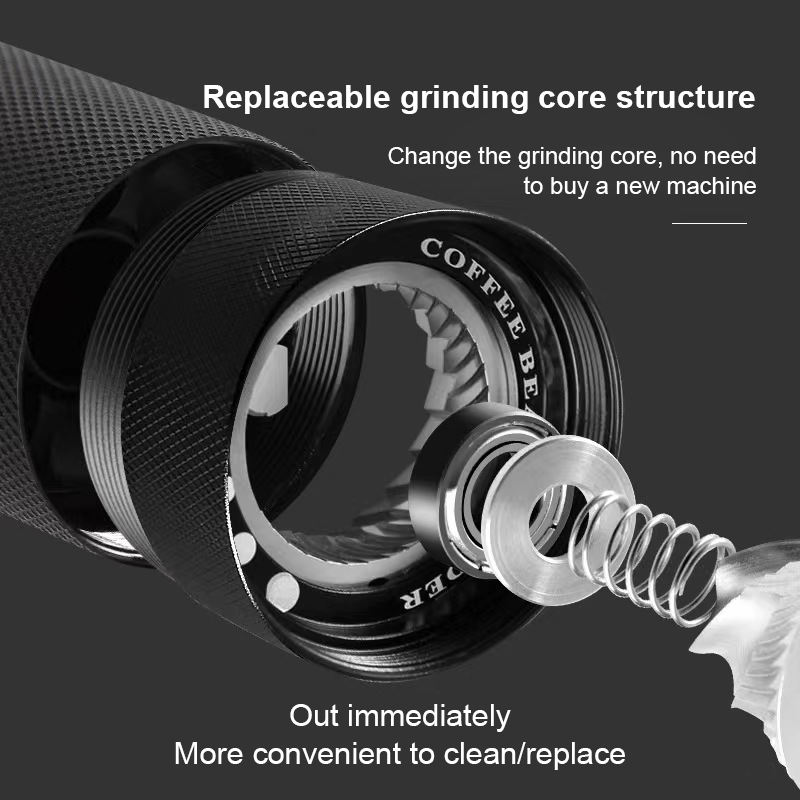
A common buyer mistake is to assume a larger hopper means more consistent grinding. Capacity and grind stability are independent. What actually stabilizes output is how the hopper throat meets the burr entrance: a centered, gap-free transition keeps a constant bean column on the burr, while a misaligned collar lets beans enter off-axis, causing momentary burr starvation and particle-size swings. A 0.5 mm offset at the collar can shift extraction enough that a café complains of sour shots on Monday and bitter shots on Tuesday from the same setting.
Specify the concentricity tolerance between hopper outlet and burr center, and ask for a pilot-run measurement using a translucent collar so you can see the bean column. The bean-flow geometry at the throat, not the liter count up top, is what your end user tastes in the cup.
Removable, Washable, Sealed: Moisture Lids and Odor Control
Oils from coffee and spices migrate into polymer over time, so a hopper that held chili last week can taint a light roast this week unless it is removable and washable. A tool-free release, a wide mouth for brush access and a dishwasher-safe rating shorten cleaning time for the end user and reduce return complaints. For spice and pepper programs especially, an airtight lid with a moisture barrier gasket prevents clumping in humid markets and keeps volatile oils from escaping into adjacent stock in a warehouse.
Odor control is also a spec, not a hope. Require a low-odor-grade polymer and a post-mold cure cycle, then verify with a sealed-container sniff test at the inspection stage. If the hopper will ship nested inside the grinder carton, a light dust cap over the outlet keeps transit debris out of the burr path.
Pre-Shipment Hopper Inspection: Drop, Light Transmission, Gap, Odor, Food Contact
The hopper is the component most likely to fail in ways a finished-goods photo will not reveal, so build a dedicated check into your QC plan. Cover at least these items before the container is booked.
- Drop test: free-fall the assembled hopper from 0.8 to 1.0 m onto concrete on three orientations; record cracks or collar deformation.
- Light transmission: measure clarity against an approved golden sample; reject cloudiness, flow marks or sink marks on the wall.
- Assembly gap: check the seam between hopper and burr collar with a feeler gauge; specify maximum allowable gap, commonly 0.3 mm.
- Odor: sealed-bag sniff by two inspectors after 24 hours at 40 degrees Celsius; reject any plastic or chemical smell.
- Food contact: confirm the material certificate, FDA or EU 10/2011 or LFGB declaration, and lot-traceable test report are attached to the batch file.
RFQ and Spec Sheet Checklist for Buyers
When you issue an RFQ, do not leave the hopper to a single line item. Use the checklist below so suppliers quote against the same baseline and you can compare offers objectively.
- Capacity tolerance: declare brim and working capacity with plus or minus 5 percent acceptance band.
- Outlet bore: specify minimum and maximum diameter in millimeters for your bean mix.
- Material grade: name the polymer and grade, for example SAN clear food-contact, with supplier and lot traceability.
- Food-contact statement: require market-specific declaration and third-party test report reference.
- Packaging method: state whether hopper ships nested, sleeved, or in a separate carton, and the unit per export carton.
- Finish spec: define inner-wall roughness target and acceptable anti-static treatment.
- Concentricity: set the hopper-to-burr alignment tolerance and the inspection method.
Frequently Asked Questions
Q: Does a bigger hopper always mean more retention?
A: Not directly. Retention is driven more by outlet geometry, wall finish and static than by total volume. A well-tapered 400 g hopper can retain less than a poorly finished 150 g cup if the smaller one has a rough wall and a tight bore.
Q: Which material is safest for a spice and pepper line that also runs coffee?
A: SAN with a verified food-contact grade and a dishwasher-safe rating is the pragmatic choice, paired with a removable design so flavors do not cross over. Stainless is best where budget allows and opacity is acceptable.
Q: How do I stop bridging in a cold, dry warehouse before sale?
A: Specify a steeper taper, a larger outlet bore matched to your largest bean, and a polished inner wall, then validate with a cold bean-flow test on production samples rather than relying on the catalog drawing.
Q: What is the single most overlooked hopper spec in an RFQ?
A: Concentricity between the hopper outlet and the burr center. Buyers list capacity and material but skip alignment, and that gap is what produces inconsistent grind size in the field.