

 +86 15268683708


News




0102030405
Coffee and pepper grinders
Coffee Grinder OEM Private Label: A Customization Guide for Distributors and Brand Owners
2026-09-09
Why Private Label Coffee Grinders Win on Amazon and Retail Shelves
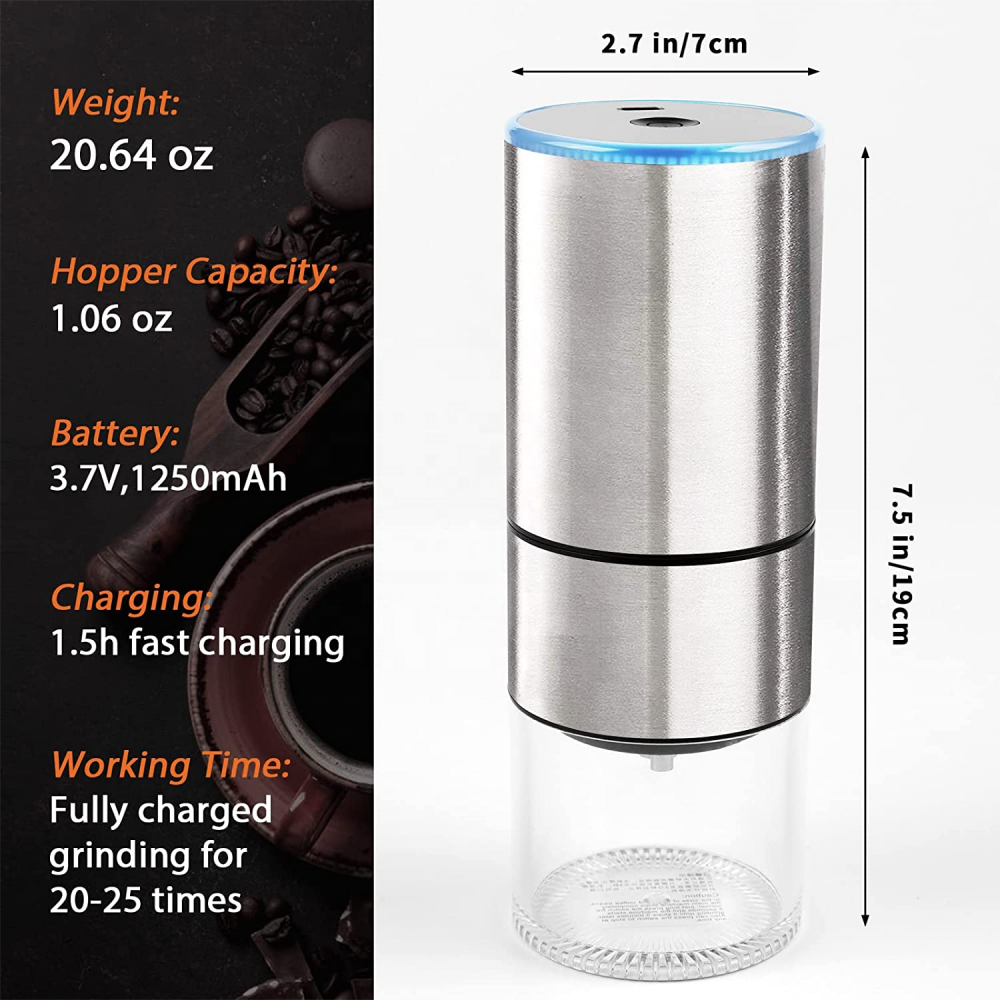
Walk into any kitchenware aisle or scroll a coffee accessories category on Amazon and the pattern is obvious: dozens of near-identical white label coffee equipment listings compete on price alone, and the only thing separating a $19 unit from a $39 unit is the sticker on the box. For distributors and brand owners, that race to the bottom is the problem private label solves. When you control the color, logo, packaging, and accessory bundle, you stop selling a commodity and start selling a recognizable product. A retail brand in Germany or a coffee subscription box in the US can launch a grinder that looks nothing like the generic units flooding the market, and that visual ownership is what protects margin once the honeymoon of a new listing fades.
Where Customization Actually Starts: The MOQ Conversation
Most importers ask about unit price first and MOQ second, but for coffee grinder customization the two are tied together. A standard motor and burr platform can be shared across many clients, which keeps the base MOQ low. The custom layers stack on top: a custom color typically needs a 500-1000 piece batch per color because the injection molding shop charges for a matched resin run; logo printing often starts around 300-500 pieces because the screen or laser template is fixed cost; custom packaging usually carries the highest MOQ because printing a carton in small runs is expensive per unit. Distributors who plan two or three colors up front, rather than one, usually get a better blended price and a more flexible inventory mix.
Logo Printing Methods Compared
The logo is the single cheapest way to claim a product, but the method changes both the look and the durability. Silk screen is the workhorse for flat plastic surfaces: cheap, fast, and good for simple one- or two-color marks, though it can wear on a body that gets handled daily. Laser engraving burns the logo into metal or coated plastic and never rubs off, which is why it is the default for premium private label grinder programs aimed at cafés. UV printing handles full-color and gradient logos but costs more per piece. Water transfer and hot stamping are niche: water transfer wraps a patterned graphic around curved bodies, while hot stamping gives a metallic gold or silver foil that reads as luxury on a gift box set. Match the method to the retail price point, not the other way around.
Color Customization: Pantone Match vs Standard Color Numbers
Color is where brand identity lives, and it is also where mismatches quietly ruin a launch. A "forest green" described in words will come back in three different shades from three factories. The fix is a Pantone reference: you supply a Pantone code, the molding shop matches the masterbatch to it, and the first shot off the tool is compared under standardized light before mass production. Standard factory color numbers are cheaper and faster but only safe when your brand does not depend on an exact hue. For a distributor building a house brand, eating the cost of a Pantone match on the first order prevents the far more expensive problem of two production runs that do not match each other six months apart.
Packaging Options That Change How the Product Sells
The box is the first thing a customer touches, and for B2B buyers it is also the thing retailers judge. A standard color carton is the baseline and the cheapest. A gift box with a window or magnetic closure pushes the unit into the premium gift channel, useful for holiday peaks. A handle box (carry box) performs well in physical retail because shoppers can grab and go. The often-overlooked item is the manual: a coffee grinder OEM program that ships multilingual booklets (English, German, French, Spanish, Japanese) saves a distributor from reprinting every time they enter a new market. Decide the packaging tier before quoting, because it drives both MOQ and the carton size that feeds into shipping cost.
Accessory Kits That Justify a Higher Price
A bare grinder competes on price. A grinder with a considered accessory bundle competes on value. The common add-ons are a cleaning brush, a dosing scoop, a USB-C cable, a spare burr set, and for cordless units a spare battery. These items are low cost in volume but let a brand owner list a "complete starter kit" at a meaningful premium. For spice grinders and pepper mills aimed at Amazon FBA sellers, a small silicone mat or a set of labeled jars turns a single SKU into a bundling play. The key is to define the kit at the quotation stage so the factory can source the accessories in the same PO and pack them inline rather than you handling repacking abroad.
SKU Coding, Batch Numbers, and Anti-Counterfeit Marks
Once you run multiple colors and kits, traceability stops being optional. A clean system uses a base model code plus a color suffix plus a kit suffix, printed both on the carton and on the unit label. Batch numbers and production dates let you isolate a quality issue to a single run instead of recalling everything. For brands worried about copycats, a serialized QR or a holographic sticker on the box is a low-cost deterrent that also helps warranty handling. Distributors supplying chain stores will be asked for exactly this paperwork, so building the coding scheme into the grinder logo printing and carton artwork from day one saves a painful rework later.
Private Mold Development Timeline
Customization has a clock, and buyers who ignore it miss selling seasons. A standard private label run on an existing tool normally needs 7 to 15 days for sampling and confirmation, then 30 to 45 days for mass production, plus transit. If you open a new mold for a fully unique shape, add 25 to 40 days for tooling and T1/T2 sample rounds. The mistake importers make is requesting "just one small change" after the sample is approved, which can reset the line. Lock the color, logo, packaging, and kit in a signed specification sheet before production starts, and the factory can move without ambiguity.
Cross-Border Shipping and Amazon FNSKU Prep
The last mile of customization is how the goods arrive at the warehouse. For multi-color orders, request mixed packing by color with separate inner cartons and a clear packing list, so your 3PL is not opening master cartons to sort SKUs. If you sell on Amazon, provide the FNSKU label artwork and ask the factory to apply it, or at minimum to print scannable carton labels, to avoid double handling at the prep center. For white label coffee equipment headed to FBA, confirm the carton dimensions and weight stay inside Amazon's tier limits before tooling the box, because an oversize carton quietly eats the margin you built with the custom design.

Common Customization Mistakes That Cost Margin
The recurring errors are predictable. Buyers approve a logo by phone photo and then reject the production sample for color shift. They skip the Pantone match to save a few dollars and end up with two non-matching reorders. They bundle accessories the factory cannot source in time and slip the ship window. They design a beautiful box that costs more to freight than the product inside. None of these are engineering problems; they are planning gaps. Treat customization as a spec document, not a conversation, and most of the risk disappears before the first unit is molded.
FAQ: Coffee Grinder OEM and Private Label
What is the typical MOQ for a private label coffee grinder?
For an existing tool with your logo and color, expect roughly 300 to 1000 pieces depending on the customization layer, with packaging usually setting the upper bound. Fully new molds start in the several-thousands range.
Which logo method is most durable for daily-use grinders?
Laser engraving is the most durable because it is physically burned into the surface and will not peel or fade. Silk screen is fine for lighter-use retail units where cost matters more than lifespan.
Can I match an exact brand color across reorder batches?
Yes, if you supply a Pantone code and the factory matches the masterbatch and verifies under standard light. Without a Pantone reference, color drift between batches is likely.
How long does a custom private label order take?
Sampling runs 7 to 15 days and mass production 30 to 45 days on an existing tool, before ocean or air transit. New molds add roughly a month of tooling and sample rounds.
Do you support multilingual manuals and retail-ready packaging?
Most OEM suppliers can print multilingual booklets and produce gift boxes, handle boxes, or standard cartons. Define the language set and box type at quotation so they are priced and tooled correctly.
Can accessories be bundled inline at the factory?
Yes. Cleaning brushes, scoops, spare burrs, cables, and batteries can be sourced by the factory and packed in the same carton, which is cheaper and cleaner than repacking abroad.
Will the factory apply Amazon FNSKU labels?
Many factories can apply FNSKU or print scannable carton labels if you supply the artwork before production. Confirm this in the PO to avoid prep-center handling fees later.
Related Pages
- Wholesale Coffee Set Buying Guide for Retail Brands
- Best Pepper Grinder Styles for Amazon FBA Sellers
- Why Coffee Shops Prefer Adjustable Grind Settings
- Coffee Grinder Burr Coating Types Compared
Tip: Lock the signed specification sheet—color code, logo method, packaging tier, and kit list—before production starts, because a late "small change" can reset the whole line and blow your ship window.
Ready to source a private label coffee grinder built around your brand's color, logo, and packaging?