

 +86 15268683708



News
0102030405
Coffee and pepper grinders
Prosumer and Commercial Espresso Grinders: Sourcing Guide for Wholesalers
2026-10-20
The global surge in home barista culture and specialty coffee shops has created strong commercial demand for prosumer and commercial-grade espresso grinders. For electrical appliance wholesalers, hospitality distributors, and specialty kitchen retailers, carrying heavy-duty, high-capacity countertop coffee grinders bridges the profitable gap between entry-level portable grinders and high-cost industrial espresso equipment.
When importing motorized 110V/220V espresso grinders for North American and European markets, wholesale buyers must carefully assess motor thermal stability, timed dosing precision, anti-static chute design, and regional electrical safety certifications.
1. Key Engineering Benchmarks for Commercial-Grade Grinders
Unlike consumer portable grinders, commercial and prosumer grinders operate under continuous duty cycles and handle heavy oily dark roasts. Sourcing teams must evaluate:
Heavy-Duty Motor & Thermal Management
- AC Induction vs. High-Torque DC Motors: Look for low-RPM, high-torque motors (rated for 250W–400W+) equipped with thermal overload protection switches to prevent bean-scorching during peak morning rushes.
- Cooling Chutes & Aluminum Housings: Die-cast aluminum alloy body construction acts as a passive heatsink, keeping internal chamber temperatures below critical thresholds during consecutive grinding cycles.
Dosing Consistency & Timer Controls
- Electronic Portafilter Activation: Instant-grind activation microswitches triggered directly by portafilter insertion.
- Precision Timers / Micro-Dosing Dials: Digital LCD or analog dial timing accurate to 0.1-second increments, enabling repeatability within ±0.3g per double shot.
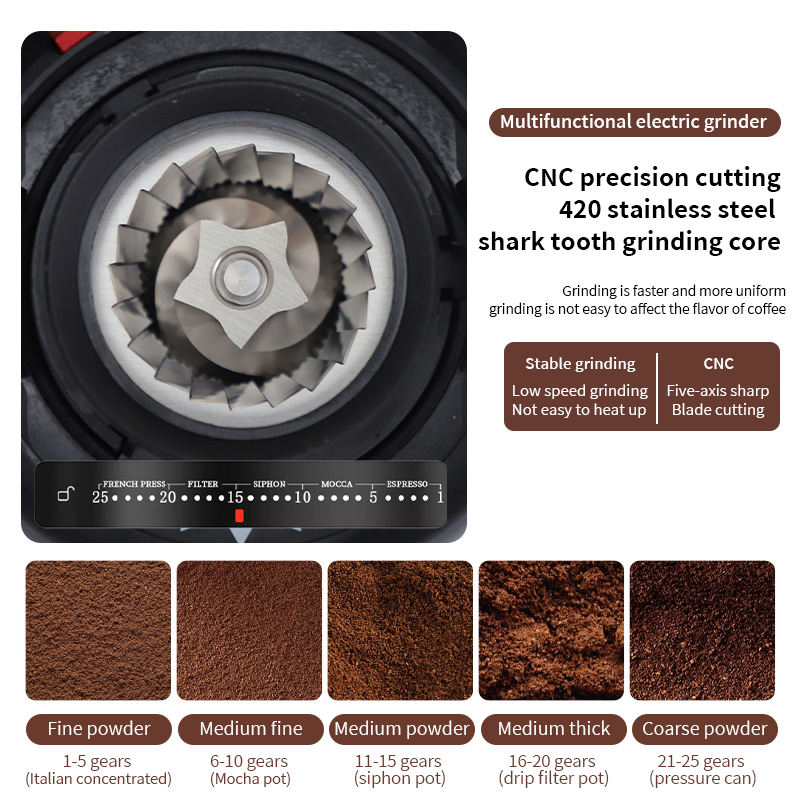
A proven commercial workhorse in this category is the 220V Home Use Commercial Espresso Coffee Grinder, designed for commercial cafes and demanding prosumers alike.
2. Retail Assortment Planning for Commercial & Prosumer Grinders
Distributors should tier their product catalog according to end-user volume and environment:
[Retail Assortment Matrix]
├── Entry Commercial (220V / Timed Dosing) ──> Small Bakeries, Boutique Offices, B&Bs
├── Prosumer Specialty (Stepless / Scale Integration) ──> Home Baristas, D2C Specialty Roasters
└── Compact Multi-Brew All-in-One ──> Executive Suites, Lifestyle Kitchen Boutiques
For retail buyers building out an entire beverage category, pair heavy-duty countertop grinders with compact units like our All-in-One Grinding & Brewing Coffee Makers or entry-level units featured in our Ceramic vs. Stainless Steel Burr Guide.
3. Compliance and Electrical Certification by Market
Commercial kitchen appliances must pass rigorous electrical safety testing before entering Western distribution channels:
- European Union: CE-LVD, CE-EMC, RoHS, ERP eco-design, and GS (Geprüfte Sicherheit) compliance documentation.
- North America: UL 763 / CSA C22.2 No. 195 compliance or ETL certification with grounded 3-prong industrial plugs.
- Food Safety: NSF / FDA material certifications verifying that bean hoppers, burrs, and discharge chutes release zero hazardous contaminants.
For detailed packaging compliance and pallet drop-test standards, refer to our Small Kitchen Appliance Packaging & Compliance Guide.
Partner with Blossom for Commercial Appliance OEM/ODM
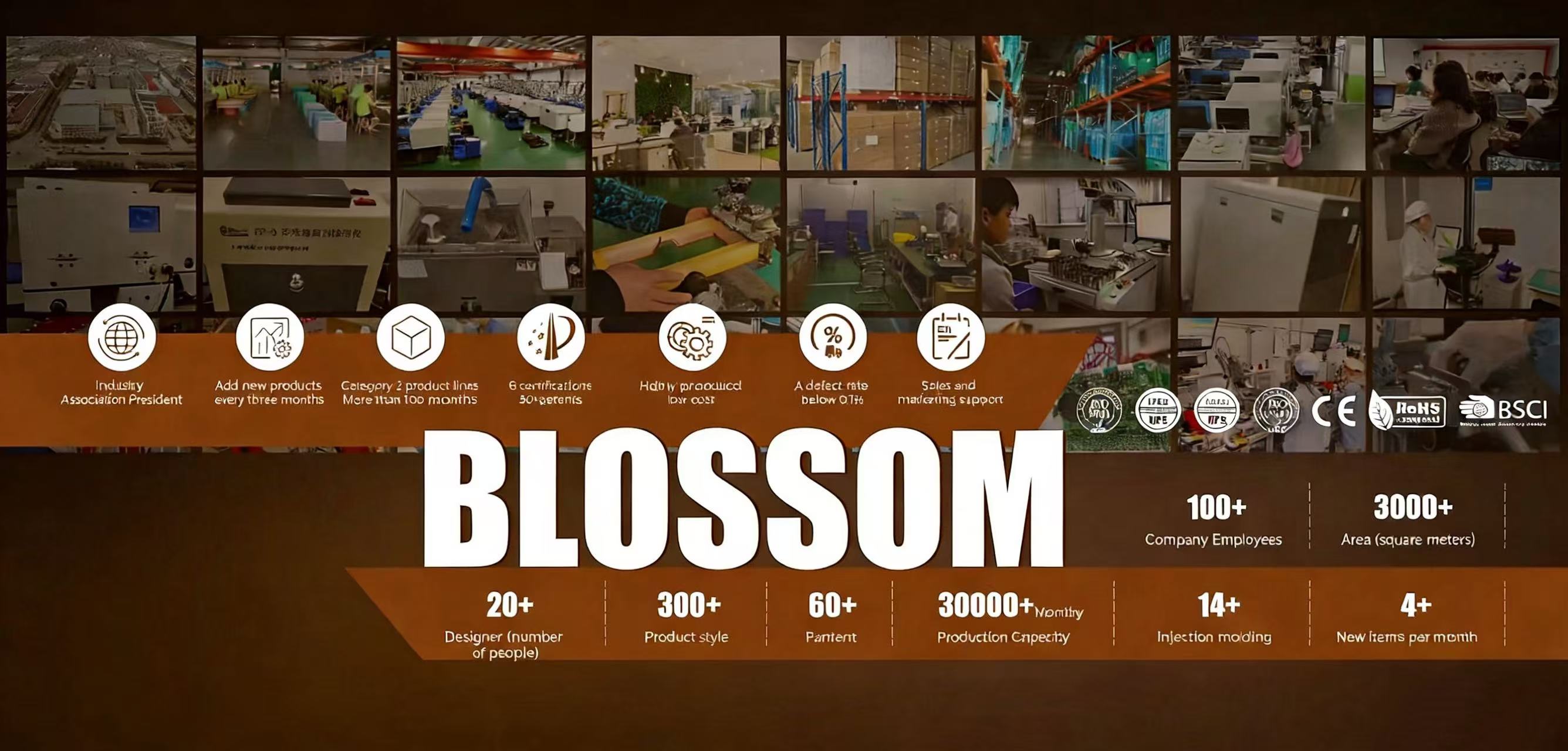
Blossom manufactures an extensive lineup of electric and manual coffee equipment with comprehensive electrical test reports, mature tooling capabilities, and custom packaging support.
- Browse our complete Coffee Machine & Grinder Product Range.
- Explore our Coffee Grinder with Built-In Scale for precision micro-roasting.
- Request OEM technical specifications and bulk export quotations on our Contact Us Page.