

 +86 15268683708


News


0102030405
Coffee and pepper grinders
How to Write an RFQ for Coffee and Spice Grinders: Spec Sheets, Drawings and Sample Requests
2026-09-29
Introduction
For importers, Amazon FBA sellers and private-label brand owners, the request for quotation (RFQ) is the single most important document in the entire sourcing process. A vague email that simply says "please quote your best coffee grinder" almost always produces a pile of offers that cannot be compared side by side, because every supplier fills in the missing details with their own assumptions. When you source electric coffee grinders and spice grinders from a manufacturing base such as Jinhua or Ningbo, the gap between a well-structured RFQ and a loosely worded one shows up directly in the quality of the samples you receive and the number of revision rounds you endure. This guide explains how procurement teams should prepare and write an RFQ built specifically for grinding equipment, which modules absolutely must be present, how to attach drawings and reference samples so a factory quotes exactly what you need, and how to read supplier replies to judge real factory capability before you ever place a deposit.
Pre-RFQ Preparation: Market Positioning, Price Band and Annual Volume
Before you contact a single factory, lock down three internal numbers that will shape every line of your RFQ. First, define the target market with precision rather than a broad region. A grinder destined for a German specialty coffee roaster carries different voltage, plug, certification and even burr geometry expectations than one shipped to a US big-box retailer or a Middle East hospitality distributor. Write the exact sales channel and the end user profile at the top of your internal brief.
Second, set a realistic price band before asking for quotes. Many first-time buyers anchor on a single number such as "under 15 USD", but a workable approach is to state a target landed cost and a walk-away ceiling. For a 200-watt conical burr grinder with a 250-gram bean hopper, a credible FOB Ningbo target in 2026 typically lands between 11.50 and 14.80 USD depending on burr material and motor brand; stating both the goal and the ceiling lets suppliers propose the right configuration instead of silently downgrading components to hit an impossible floor.
Third, estimate your annual volume honestly. Suppliers tier their pricing around clear breakpoints: 3,000 units, 10,000 units, 30,000 units and 100,000 units per SKU per year. If you project 8,000 units in year one but expect 40,000 by year two, say so. Factories allocate tooling time and raw-material contracts differently for a buyer they believe will scale, and your RFQ should signal that trajectory. Include the expected monthly build rate, the peak season months, and whether the volume splits across multiple color variants or a single SKU.
Finally, prepare a one-page competitor or benchmark reference. Note two or three models already sold in your target market, their retail price, and the features customers complain about in reviews. This context turns your RFQ from a generic wish list into a sourcing brief a good factory can actually engineering against.
RFQ Essential Modules: Spec Sheet, Target Price, MOQ and Lead Time
A complete grinder RFQ is built from discrete modules, each filled with measurable values rather than adjectives. The product specification table is the backbone. At minimum it should state the burr set diameter (for example 38 mm, 40 mm or 58 mm conical, or 50 mm flat), the motor rated power (150 W, 200 W or 250 W), the input voltage and frequency (110-120V 60Hz for North America, 220-240V 50Hz for Europe and most of Asia), the bean hopper or chamber capacity (in grams or milliliters), the housing material (ABS, PC, or aluminum alloy), and the net weight. Where a value is fixed, write the fixed number; where you are open, write a range with your preferred value first.
The target price module must state currency, trade term and incoterm clearly. Write "Target FOB Ningbo 12.80 USD, ceiling 14.20 USD, EXW acceptable if tooling included" so there is no ambiguity about who pays for inland freight. The MOQ module should separate the first trial order MOQ from the repeat order MOQ; many factories accept 500 to 1,000 units for a confirmed custom order but quote their best unit price only above 5,000 units, and your RFQ should invite both numbers.
Lead time belongs in its own line with two figures: the sampling lead time (typically 7 to 15 working days for a modified existing tool, 20 to 35 for a new mold) and the mass-production lead time after sample approval (commonly 25 to 45 days for 5,000 to 20,000 units). State your required in-port or in-warehouse date, then let the supplier tell you whether that date is achievable. A good RFQ also asks for the supplier's current production booking status so you understand whether your slot competes with peak-season orders from larger accounts.
Close the module section with packaging and carton requirements, payment terms you can accept, and the warranty period you expect. Bundling these into the same document prevents the endless back-and-forth that stretches a two-week quotation cycle into two months.
Tip: Always require suppliers to return a completed copy of your RFQ template rather than a free-form quote, because a filled-in spec sheet signed by both sides is the only document you can legally hold a factory to when a 20,000-unit shipment arrives with the wrong burr diameter or an uncertified motor.
Technical Drawings and Reference Samples: How to Send Them
Drawings and reference samples remove the single largest source of quotation error: differing mental pictures of the same product. For custom or modified grinders, attach a 2D dimension drawing in PDF plus a step or IGES file when you have one, even a rough one. Mark the critical dimensions in millimeters and call out the tolerances that matter, such as the burr seat concentricity, the hopper seal gap, and the switch actuation force. If you cannot produce a CAD file, send photos of a benchmark unit with a ruler and annotate the features you want changed.
Reference samples work best when you ship the actual competitor product you admire, with a short note on what to copy and what to improve. Suppliers in the Jinhua cluster are used to receiving "golden samples" by courier; budget about 60 to 120 USD in express freight for a 2-kilogram parcel from the US or EU to China and ask the factory to confirm receipt with a photo. When you cannot ship a physical unit, a short video walking around the product while you point out the housing texture, the knob feel and the grind-settings click stops is a strong substitute.
Protect your position by stating in the RFQ that all drawings and samples you provide remain your property and may not be used for other customers or reverse-engineered for third parties. This clause costs nothing to write and signals to a professional factory that you understand intellectual property hygiene, which itself improves the quality of the reply.
Packaging, Manuals and Labeling Requirements in the RFQ
Packaging is where many first-time importers lose money after the price is agreed, because carton specs were never pinned down. Your RFQ should specify the gift box dimensions and material (for example 300 x 180 x 260 mm, 350 gsm CCNB with matte lamination), the export carton pack quantity (6 or 12 units), the pallet configuration, and whether you require mailer-ready or retail-ready packaging. If you sell on Amazon, state the FNSKU label placement and the six-sided scan label requirement up front so the factory quotes the right carton printing.
Instruction manuals are a frequent compliance failure point. State the required languages (English plus German and French for the EU, English plus Japanese for that market), the page count, and the mandatory content blocks such as safety warnings, descaling steps, and burr-cleaning instructions. For spice grinders that contact food, the manual must carry the correct food-contact statement and care instructions to avoid bacterial growth in residue.
Labeling requirements deserve their own subsection in the RFQ. Specify the model number format, the rated label with voltage and wattage, the importer of record name and address for the destination market, and any QR code or batch-code printing on the rating label. Writing these into the RFQ means the supplier prices the label plate and the manual print run correctly the first time instead of re-quoting after tooling has started.
Certification Clauses: CE, FCC, ETL, RoHS and Food-Contact Materials
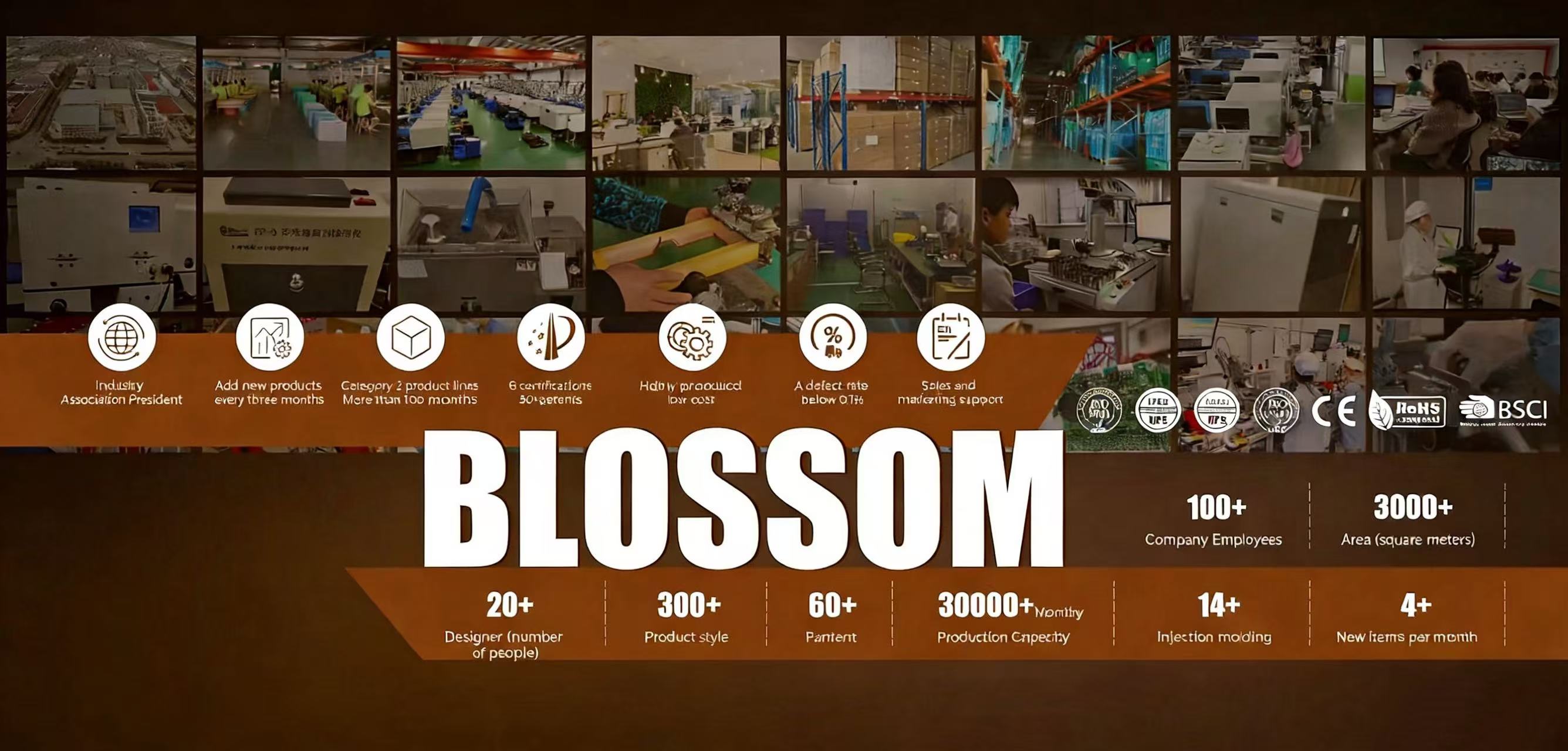
Compliance cannot be an afterthought added after the price is locked, because certification changes both the bill of materials and the test budget. Your RFQ should name the exact marks required for each destination: CE and RoHS for the European Union, FCC for the United States wireless or electronic emission scope, ETL or UL for North American electrical safety, and KC for South Korea when relevant. Ask the supplier to confirm whether the existing tool already carries the certificate or whether a new model variation triggers a fresh test, and who pays for the retest.
For grinders, food-contact material compliance is as important as the electrical mark. The bean hopper, the burr chamber and any gasket that touches coffee or spice must meet the relevant food-contact regulation, such as EU 10/2011 or US FDA standards. Request the material declaration and, for stainless burrs, the grade certificate (for example 420 or 440C stainless). State in the RFQ that certificates must be provided before the pre-production sample ships, not after mass production begins.
A practical clause reads: "Supplier shall provide valid CE-RoHS test report and food-contact material declaration for all parts touching product; certificates issued within 24 months preferred; supplier bears cost of initial certification for standard configuration, buyer bears cost of buyer-requested variation." This single sentence prevents the most common surprise: a factory quoting a low price on an uncertified variant and only disclosing the compliance gap at deposit time.
Sample Request Strategy: Confirmation, Pre-Production and Customer-Experience Samples
Sampling is not one event but a sequence, and your RFQ should request the right sample at the right stage. The pre-production sample is built from the actual mass-production tooling and materials before the full run starts; it is the reference against which the whole order is judged, so it must match the final burr, motor and housing exactly. Budget a sample charge of 30 to 80 USD per unit plus freight, and negotiate that this fee is deducted from the first bulk order when volume passes an agreed threshold.
The confirmation sample, sometimes called the golden or approved sample, is the one you physically sign off and return or photograph with a dated acceptance note; both parties keep it as the quality benchmark. The customer-experience sample is a unit you send to a trusted end user, a barista or a focus-group tester to validate grind consistency and noise, because laboratory specs alone do not predict shelf success. Requesting all three in the RFQ, each with its own purpose and acceptance criterion, tells a factory you run a disciplined development process.
Specify in the RFQ how many samples you need of each type and the maximum acceptable deviation from the drawing, such as plus or minus 0.3 mm on housing seams and plus or minus 3 percent on no-load motor speed. Suppliers that push back on providing a pre-production sample, or that offer only a hand-assembled prototype, reveal a capability limit you want to know about before committing tooling money.
Comparing Supplier Quotes: Beyond Unit Price
Once replies come in, resist the reflex to rank by the lowest number. Build a comparison sheet with the same columns for every supplier: unit price at your stated volume, tooling or mold fee, sample charge, payment terms, certification cost responsibility, warranty length, and confirmed lead time. A quote that is 0.60 USD cheaper per unit but demands 50 percent deposit against 30 percent from a peer, or offers six months warranty against twelve, may cost more over the product lifecycle once returns and cash-flow pressure are counted.
Payment terms deserve close reading. Common structures are 30 percent deposit and 70 percent against bill of lading copy, or 30/70 with the balance against inspection report. A supplier asking for 50 percent or full upfront on a first order is either cash-constrained or signalling low trust in the relationship; neither is automatically disqualifying, but it must be weighted against the price advantage. Warranty clauses should state the free-replacement percentage for defective units within the first year and the method of claim settlement, because a vague "we guarantee quality" line protects the factory, not you.
Also compare the hidden variables: does the quote include export carton and manual printing, or are those extra lines you will discover later? Does it cover the destination port or only FOB? Does the lead time assume your materials are approved or start from contract signing? The supplier whose quote is transparent on these points is usually the one whose mass production will be transparent too.
Common RFQ Mistakes and How to Avoid Them
The first mistake is sending one generic RFQ to twenty factories and hoping the market prices itself. You waste your own time reading inconsistent replies and you teach suppliers you are uninformed, which quietly raises the risk of corner-cutting. A better method is to shortlist six to eight credible factories and send a tight, detailed RFQ, then focus your energy on the three or four that reply with substance.
The second mistake is omitting the certification scope, which we covered above, and the third is forgetting to state the annual volume trajectory, which leads factories to quote a one-off price instead of a scalable partnership price. The fourth is vague packaging language such as "nice retail box", which invites the cheapest option rather than the one your channel requires. The fifth is failing to ask for a priced bill of materials breakdown, so you cannot tell whether a low quote reflects efficient engineering or simply a smaller motor.
Avoid the mistake of negotiating only on price after quotes arrive. If a supplier is 4 percent above your target but offers a 15-day faster lead time and a certified existing tool, that supplier may protect more revenue during your peak season than the cheaper bidder who misses the ship window. Write your decision criteria into the RFQ itself so internal stakeholders cannot later argue the comparison was unfair.
RFQ Follow-Up and Negotiation Rhythm
A professional RFQ process has a timeline, not an open-ended wait. Send the RFQ, then follow up once at 3 business days to confirm receipt and answer clarifying questions. Give suppliers 7 to 10 working days for a first quote on a modified existing tool. After quotes arrive, run one structured clarification round, then a single focused negotiation on the top two or three suppliers. Dragging ten rounds of micro-negotiation signals indecision and erodes the factory's pricing discipline.
Keep a lead-time buffer of at least two weeks between the supplier's committed ready date and your must-arrive date, because ocean freight, customs hold and trucking delays all consume schedule. Your RFQ follow-up emails should reference the specific line items, not generic "any update", so the factory knows you are tracking the burr specification and the carton print separately. This rhythm keeps your RFQ from stalling in a supplier's inbox behind larger accounts.
Screening Suppliers Through RFQ Reply Quality
The RFQ reply itself is the first and cheapest factory audit you will ever run. A strong reply arrives on time, addresses every module you listed, asks intelligent clarifying questions about your target market, and includes a preliminary drawing or a photo of a similar existing tool. A weak reply ignores half the spec table, quotes a single lump sum with no breakdown, and copies a generic company introduction instead of engaging your requirements. Use a RFQ reply matrix to score each supplier on completeness, technical depth, certification clarity and commercial terms, then let the score drive your shortlist rather than gut feeling.
Pay attention to how a factory handles the parts they cannot meet. A candid supplier will write "our standard burr is 38 mm; 40 mm requires a new seat, plus 10 days and 800 USD tooling" while a evasive one will simply say "no problem" and surface the gap after your deposit. The first reply, even if less convenient, is the more valuable signal of a partner you can trust through a 20,000-unit production run.
Frequently Asked Questions
How detailed should the spec sheet in my RFQ be?
Your spec sheet should list every parameter that affects cost or compliance as a concrete number, not a description. Include burr diameter, motor wattage, voltage and frequency, capacity, housing material, net weight, carton pack, and the required certifications. The more measurable values you provide, the more comparable the quotes you receive, and the less room suppliers have to quietly substitute cheaper components.
Should I send a physical reference sample or just drawings?
Whenever possible send both. A physical golden sample removes ambiguity about texture, weight and feel that drawings cannot convey, while drawings pin down the dimensions a factory must hold in production. If freight cost is a concern, a well-annotated video plus clear photos is an acceptable substitute for the first quotation round, with a physical sample reserved for the pre-production stage.
How many suppliers should I invite to quote on one RFQ?
Shortlist six to eight credible factories rather than blasting twenty. This range gives you genuine price and capability contrast without burying you in inconsistent replies. Focus your negotiation energy on the three or four that demonstrate technical depth and transparent commercial terms, and disqualify any supplier that cannot answer the certification or lead-time questions in your RFQ.
Who should pay for certification when the grinder is customized?
For a standard configuration the supplier normally carries the initial certificate cost, but a buyer-requested variation that triggers a fresh test should be paid by the buyer, and this split must be written into the RFQ before quotes are accepted. Asking the question explicitly prevents the common surprise where a low quote quietly excludes compliance for your specific market.
What is the difference between a confirmation sample and a pre-production sample?
The confirmation sample is the unit you formally accept and keep as the quality benchmark for the whole order, while the pre-production sample is built from the actual mass-production tooling and materials before the full run begins. Both matter, but the pre-production sample is the one that proves the factory can repeat the approved design at volume, so it deserves the stricter acceptance criteria in your RFQ.
Related Pages
- Why Commercial Coffee Shops Prefer Burr Coffee Grinders
- Coffee Grinder Burr Coating Types Compared
- Wholesale Coffee Set Buying Guide for Retail Brands
- Best Pepper Grinder Styles for Amazon FBA Sellers
Ready to source coffee and spice grinders with a professional RFQ? Contact the Jinhua Blossom team to receive a structured quotation template and a certified sample built from our existing 38 mm and 58 mm burr platforms.