

 +86 15268683708


Industry News






0102030405
Coffee and pepper grinders
Manual vs. Electric Coffee Grinder: Which One Fits Your Daily Routine?
2026-09-07
Manual vs. Electric Coffee Grinder: Which One Fits Your Daily Routine?
The best grinder is the one you will use consistently. When comparing a manual vs. electric coffee grinder, most people focus first on grinding performance. In daily life, convenience, noise, counter space, portability, and cleanup may matter just as much.
A manual grinder uses a hand crank and does not need a power outlet. An electric grinder uses a motor to grind beans with the press of a button. Both can produce good coffee when the burrs are well designed and the grind size is adjusted correctly.
Manual coffee grinders: control, quiet, and portable
A manual coffee grinder is a strong fit for people who enjoy a slower ritual, brew one or two cups at a time, or frequently travel. It is quiet, easy to pack, and useful in places without a reliable outlet.
Manual grinders are also appealing for small kitchens. They can be stored in a drawer and brought out only when needed. For camping, hotel rooms, and office coffee corners, portability can outweigh the extra effort.
The trade-off is time and physical work. Grinding for espresso-fine settings can take longer than grinding for a pour-over, especially if you prepare several cups.
Explore Blossom’s manual coffee grinder collection if you want to compare compact and adjustable hand-grinder formats.
Electric coffee grinders: speed and repeatability
An electric burr grinder is usually better for busy mornings, households with multiple coffee drinkers, or anyone who changes between brewing methods. Press a button, grind the beans, and continue with the rest of the routine.
Electric models can also make dose preparation more repeatable when the grinder offers clear adjustment steps and a stable operating process. This is helpful if you are learning espresso or trying to reproduce a pour-over recipe.
The trade-offs are a larger footprint, motor noise, and the need for a suitable power supply. You will also want to clean the burr chamber and grounds container regularly.
See Blossom’s electric coffee grinder range for countertop options. The home-use electric grinder guide also explains the features that affect everyday usability.
Side-by-side comparison
Practical example: two coffee routines, two good choices
Routine A: the early commuter. One person brews a single pour-over at 6:30 a.m. in a small apartment. They value quiet operation and do not mind spending a few minutes preparing coffee. A manual grinder may be the better match.
Routine B: the shared kitchen. Two people prepare different drinks before work, and one switches between drip coffee and espresso on weekends. An electric burr grinder is likely more convenient because it reduces effort and speeds up preparation.
Neither choice is objectively better. The correct answer comes from matching the grinder to the routine you actually have—not the routine you wish you had.
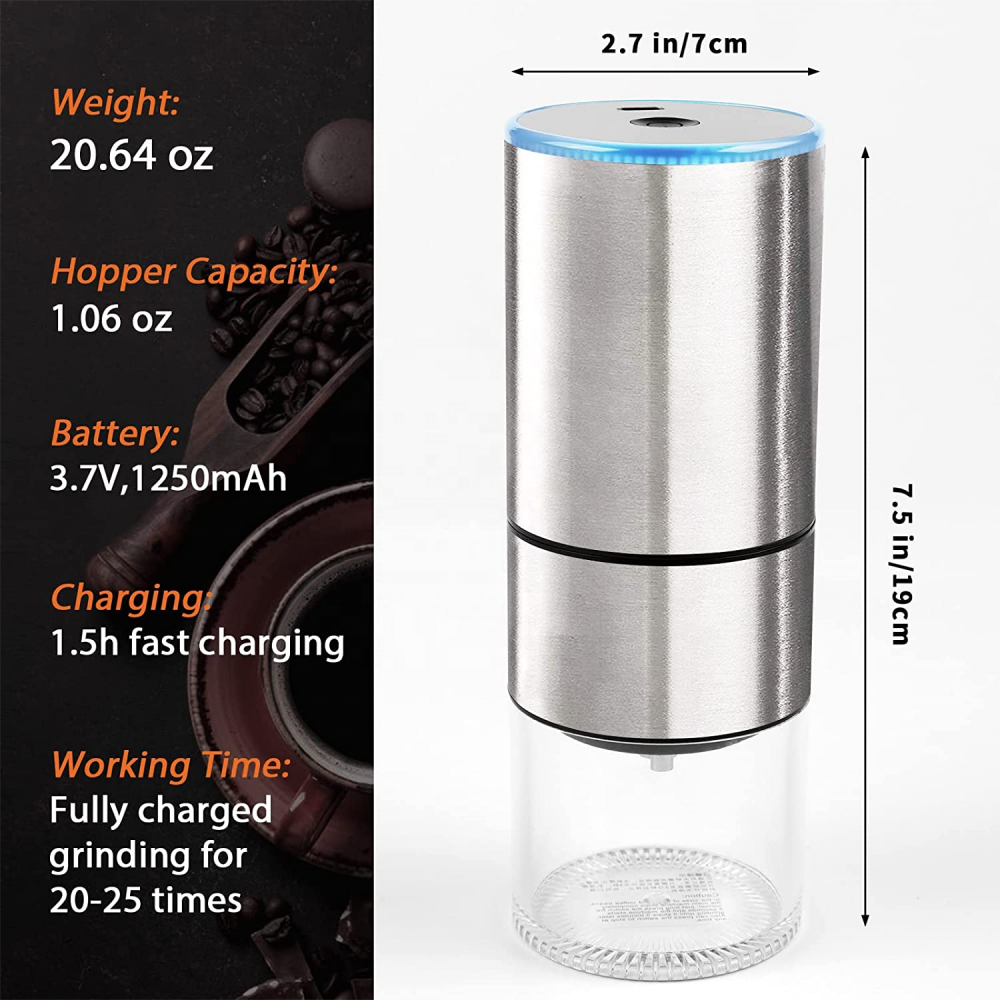
What about a rechargeable electric grinder?
A rechargeable model can bridge the gap between the two formats. It may be useful for travel, office use, or small kitchens where a power cord is inconvenient. Check battery capacity, charging method, cleaning access, and whether the grinder can handle your preferred grind range.
For specialty coffee users who want a compact option, Blossom’s specialty electric grinder guide discusses portable and countertop categories.
How to choose in five questions
- Do you usually make one cup or several cups?
- Do you need to grind before other people wake up?
- Do you travel, camp, or brew away from an outlet?
- Are you willing to spend a few extra minutes hand-grinding?
- Do you switch between espresso, pour-over, drip, and French press?
Choose manual if quietness, portability, and the ritual are your top priorities. Choose electric if speed, ease, and serving more than one person matter most.
For many coffee drinkers, owning one format first and adding the other later is more practical than searching for a single grinder that does everything. Once your choice is made, Day 4 covers an issue many apartment dwellers care about: how to choose a quiet coffee grinder.
FAQ
Is a manual coffee grinder worth it?
Yes, if you value portability, quiet operation, and a hands-on brewing routine. It may be less convenient for multiple cups or frequent espresso preparation.
Are electric coffee grinders noisy?
Noise varies by motor, burr design, housing, and how the grinder sits on the counter. Look for user reviews and a design intended for home use.
Which is better for travel: manual or electric?
A manual grinder is usually simpler for travel because it does not need charging. A rechargeable electric model can be convenient when speed matters.
Previous: Coffee Grind Size Chart · Next: How to Choose a Quiet Coffee Grinder