

 +86 15268683708


News




0102030405
Coffee and pepper grinders
Milk Frother and Juice Cup Wholesale: A Cross-Selling Guide for Coffee Equipment Distributors
2026-09-07
Why Coffee Gear Importers Are Adding Frothers and Juice Cups to the Catalog
Importers who only sell coffee grinders leave money on the table. A buyer who orders 500 grinders a quarter will also order milk frothers, portable juice cups and travel tumblers if those products sit on the same proforma. The cross-sell works because the customer relationship, the freight lane and the certification paperwork are already done, so the second SKU is almost pure margin. The challenge is choosing models that match your brand positioning and the markets you already serve. This guide explains how to add a frother and juice cup line without doubling your QC workload.

What Coffee Equipment Buyers Actually Want in a Milk Frother
The wholesale market for milk frothers is split into two clear segments. The entry tier is a handheld battery unit with a single whisk, sold mostly through Amazon, supermarket chains and gift sets. The premium tier is a countertop electric frother with hot and cold settings, a magnetic drive, a stainless-steel pitcher and a power base. Cafés and serious home baristas buy the premium tier because it makes true microfoam. Decide early which tier matches your distribution channel, because the price, MOQ and packaging differ sharply. Selling a premium frother in a discount channel creates a return problem; selling an entry frother in a specialty café channel underwhelms the buyer.
Juice Cups, Smoothie Cups and Personal Blenders
The portable cup category covers three product types. A personal juice cup is a single-serve cup with a blade assembly, used for smoothies, protein shakes and baby food. A portable blender is a larger rechargeable unit that crushes ice and frozen fruit. A tumbler-style juicer is a cup with a manual or USB rechargable whisk for salad dressings and light mixes. Each has its own MOQ, packaging and target buyer. Importer demand is strong for personal juice cups in 300–600 ml sizes because they fit car cup holders, which is what end users want. Confirm the cup is BPA-free and that the motor base accepts common charger cables before you commit.
MOQ, Lead Time and Pricing Benchmarks
For handheld frothers, expect an MOQ of 1,000 to 2,000 pieces per SKU and a per-unit price around USD 2 to 4 at that volume, depending on the finish. For premium electric frothers, the MOQ climbs to 500 to 1,000 units because the tool room setup for the pitcher and base is more involved, with per-unit price in the USD 12 to 25 range. For personal juice cups, 500 pieces is a common starting point with prices from USD 4 to 9. Lead time is 25 to 40 days for stock tooling and 45 to 60 days if you want a custom color, logo or retail box. Build these numbers into your landed-cost sheet before you quote, because freight and duties often double the FOB price to a wholesale price.
Certifications You Should Not Skip
Any frother or juice cup that plugs in or carries a lithium battery is treated as an electrical appliance in most markets. For the EU you will need CE, EMC, LVD and RoHS, plus the new battery safety regulation for any unit that ships with a rechargeable pack. For the US, FCC, UL or ETL applies, and California requires Proposition 65 compliance for any food-contact plastic. Australia needs RCM and Canada needs CSA or cUL. Always request the actual certificate numbers, not just a verbal claim, and keep them with your customs file. A missing certificate can hold a container at the port for weeks.
Packaging Design and Retail Box Options
Packaging is the single biggest lever for entry-tier frothers. A printed gift box lets you sell the same SKU into holiday markets, corporate gifting and supermarket promos. A windowed kraft box with a bilingual spec sheet works for eco-positioned retailers. A clamshell with a back-card keeps the unit price low for mass-market and discount channels. Decide on the retail box before you order tooling, because the inner tray and printing plates change with each format. A factory that offers in-house box design and printing saves you the cost of a third-party packager and keeps lead time short.
Bundling Strategy: How to Lift Order Value
The highest-margin move in this category is bundling. A grinder and frother combo sells well for home barista gift sets. A juice cup with a recipe booklet lifts AOV in the health and fitness channel. A travel tumbler with a portable frother is a strong airport-retail SKU. Build at least two bundles per quarter and refresh the artwork twice a year so repeat buyers have a reason to reorder. Use the same factory for all three items to consolidate the QC visit and the shipping container.
Common Sourcing Mistakes
The most common mistake is treating the frother as a commodity. Two units at the same price can have very different motor life, and a weak motor burns out within a month and floods the Amazon review section with one-star comments. A second mistake is ignoring the battery; lithium cells vary widely, and a cell with no name and no UN38.3 test report will fail at customs. The third mistake is over-stocking one color; matte black sells, but rose gold, sage and cream have become a meaningful share of the order book. Always order at least three colorways per SKU and monitor reorders before committing the rest of the production run.
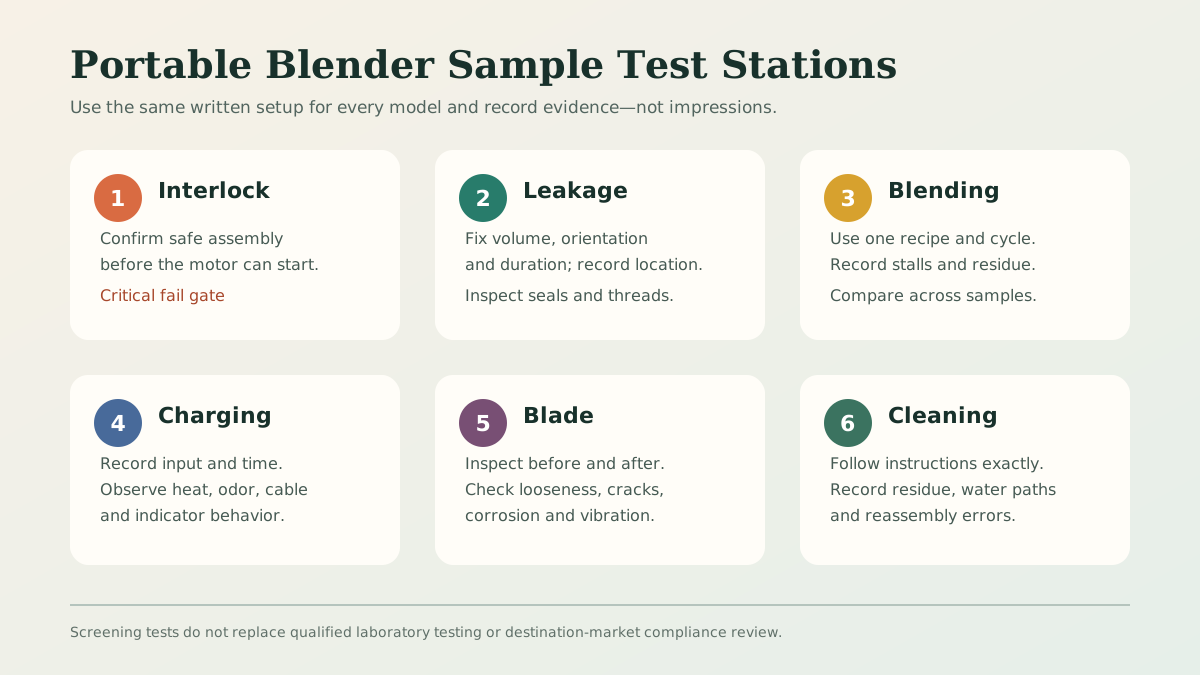
Tip: Ask the supplier for a one-week continuous-run test on the frother motor before you ship. Frothers that pass a 30-second demo can still fail after a few hundred cycles, and a return at the Amazon warehouse is far more expensive than a bench test in the factory.
How to Structure Your First Order
Start with two SKUs: one frother and one juice cup, each in a neutral color and a clean retail box. Place a 500-piece trial order per SKU so you can validate packaging, manuals and certifications without tying up working capital. Once the trial sells through, place a full production run of 2,000 to 5,000 pieces with a custom color and logo. This two-step approach keeps risk low and gives the factory time to dial in your artwork. Most importers who skip the trial end up rewriting the manual after the first return, which costs more than a 500-piece run.
Margin and Pricing Targets for Distributors
Distributor margins in this category typically run 35 to 55 percent off wholesale depending on the channel. Online retail runs lower because of marketplace fees, while specialty café and gift shop channels run higher. Build a landed-cost sheet that includes FOB price, freight, duty, certification cost and packaging, then back into a target retail price. If the math does not clear 30 percent at the planned retail, drop the SKU. The frother and juice cup markets are competitive enough that a thin margin will not survive a competitor's price cut.
Frequently Asked Questions
What is a sensible MOQ for a first frother order?
For entry frothers, an MOQ of 1,000 to 2,000 pieces is standard, and many factories accept 500 pieces for a paid trial. Premium electric frothers usually start at 500 to 1,000 units. Start small to validate the market before scaling up.
Do portable juice cups require a battery test report?
Yes. Any unit with a rechargeable lithium cell must pass UN38.3 for air freight, plus the regional safety mark for the destination market. The supplier should provide the report and the cell spec sheet, and you should keep these with your shipping documents.
What certifications apply to handheld milk frothers?
For the EU you need CE, EMC, LVD and RoHS; for the US you need FCC and UL/ETL; for Canada and Australia you need CSA/cUL and RCM. Battery safety adds another layer under the new EU battery regulation. Always request the certificate numbers, not just claims.
How do I differentiate my frother from Amazon commodity units?
Focus on branding, packaging and a premium color rather than price. A custom retail box, a bilingual manual and a recognizable colorway will carry a higher price point than a generic black unit. Some distributors also offer a two-year warranty as a differentiator.
Should I source frothers and juice cups from the same factory as my grinders?
If the factory has the tooling and engineering capacity for both, yes. Sharing a vendor consolidates QC and freight, which lowers per-unit cost. If not, source frothers from a specialist and keep the two relationships separate. A specialist often produces a better unit at a lower cost than a generalist who treats the frother as a sideline.
What colorways are selling best in 2026?
Matte black and brushed stainless remain the volume leaders, but sage green, dusty rose, cream and terracotta are gaining share in the lifestyle and gift channel. Order at least three colorways per SKU so you do not run out of the trending one while sitting on slow movers.
How long does production take from PO to shipment?
For stock tooling, plan 25 to 40 days. For a new color or a custom logo, plan 45 to 60 days. Add another 10 to 15 days if you are commissioning a custom retail box. Build these numbers into your sales forecast so you do not run out of stock during peak season.
What is the best way to bundle a frother with my existing grinder line?
Create a grinder plus frother gift set with a printed sleeve and a recipe card. The set carries a higher AOV than the individual units and works well in the holiday and corporate gifting channel. Use the same factory so the QC visit covers both items in one trip, and ensure the box dimensions fit a standard 40HQ pallet to keep freight efficient.
Can I private label a frother with a low MOQ?
Yes, several factories offer private label runs from 500 pieces, usually with a screen-printed logo on the handle and a custom box. The unit cost is slightly higher than a stock-color run, but the brand control is worth it if you sell into specialty retail. Always ask for a printed proof before production so colors and font weights match your brand book.
How do I handle defective units on arrival?
Agree on a defect allowance of 1 to 2 percent in the purchase contract, and require the factory to replace defective units in the next production run. Photograph and log every defect with a serial number, and share the data with the supplier so the root cause can be fixed. A clear defect policy protects both parties and keeps the relationship productive.
Related Pages
- Why Commercial Coffee Shops Prefer Burr Coffee Grinders
- Coffee Grinder Burr Coating Types Compared
- Wholesale Coffee Set Buying Guide for Retail Brands
- Best Pepper Grinder Styles for Amazon FBA Sellers
- Why Coffee Shops Prefer Adjustable Grind Settings
Ready to source milk frothers and portable juice cups alongside your grinder line?