

 +86 15268683708



News

0102030405
Coffee and pepper grinders
Portable Electric Coffee Grinders for Travel Retail
2026-10-26
Portable Electric Coffee Grinders for Travel Retail
This specification guide is written for importers, travel-retail buyers, gift-channel buyers and private-label brand owners who are evaluating compact, battery-powered electric coffee grinders for channels where counter space, shipping weight and shelf appeal matter more than cafe-grade throughput. The portable segment is growing because it serves three distinct buyers at once: the traveler who wants fresh grounds in a hotel room, the gift buyer who wants a tidy boxed unit, and the off-grid or in-car user who wants coffee without mains power. Understanding the commercial meaning of "portable" is the first step before quoting MOQ, tooling or certification, and it prevents the common mistake of sourcing a unit that looks right in a photo but fails in the field.
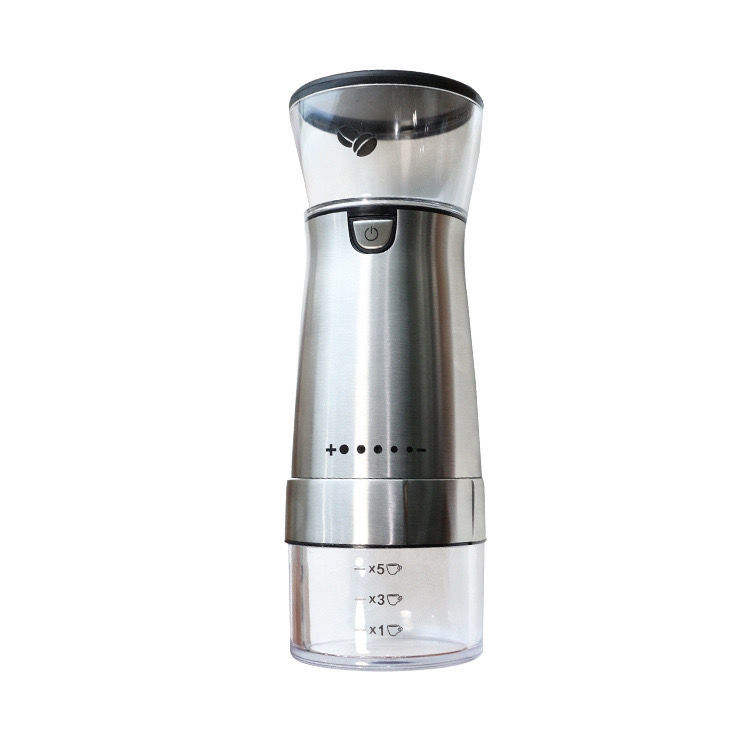
What "Portable" Means Commercially: USB-C, Cell Packs and Car Adapters
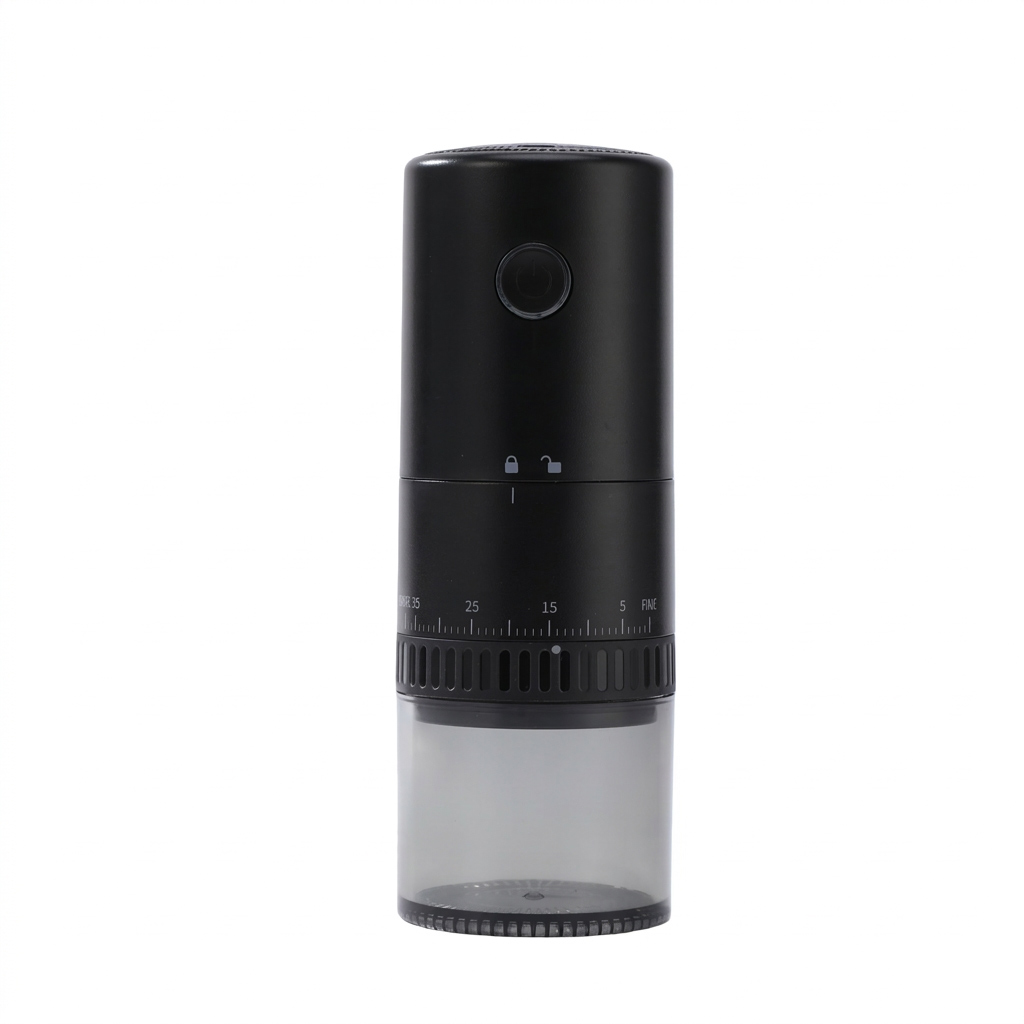
The word portable hides three different product architectures, and each suits a different sales channel. USB-C rechargeable grinders are the default for travel-retail and gift channels because a single cable charges the unit, the internal cell stays sealed, and the package ships without loose batteries. They are ideal for airport duty-free, hotel mini-bars and premium gift sets where the end user never opens the battery compartment and simply plugs in a cable they already own.
Removable 18650 or 21700 cell packs appeal to outdoor, expedition and overland users who already own compatible cells. This format lets a buyer carry spares and swap a dead cell in seconds, which is valuable for camping and truck-stop channels but complicates retail because loose cells need separate certification and carton labeling. The 12V car-adapter grinder is a narrow but loyal niche sold through automotive and RV distribution, where the unit runs off the cigarette socket rather than a battery at all and rarely leaves the vehicle.
When you brief a factory, decide the channel first and let the power architecture follow. A gift buyer wants USB-C and a sealed pack; an outdoor brand wants a removable cell; an automotive accessory buyer wants 12V. Mixing these in one SKU creates a unit that is worse at everything, and it also multiplies the certification files you must keep on file for each market you ship into.
Burr vs Blade vs Conical Burr in Small Formats
Small electric grinders almost always use either a blade, a flat burr, or a conical burr. Blade units are cheapest and lightest but produce an inconsistent particle size that is acceptable only for coarse French-press use and poor for anything requiring an even extraction. Flat burrs in compact sizes give better consistency than blades but generate more heat and need tighter motor control to avoid scorching the grounds during a longer grind.
Conical burrs are the honest choice for buyers who want repeatable grind quality in a small body. They shatter beans with less heat and slower RPM, which protects aromatic oils and keeps the cup tasting clean. Be candid in positioning: these portable units are well suited to French press, pour-over and moka pot, but they are not true espresso grinders. Espresso demands a fine, uniform particle and tight dose control that a pocket-sized battery unit cannot reliably deliver. Set this expectation with buyers up front to avoid returns, negative reviews and chargebacks that erode margin after the goods have landed.
Battery Math Buyers Should Demand
Battery claims on portable grinders are where suppliers inflate numbers, so ask for measured data rather than marketing. Require the rated cell capacity in mAh and the energy in Wh per full charge, the grams of beans ground per charge at a defined grind setting, the full charge time from empty, and the cell certification relevant to air freight. UN38.3 certified cells and IEC 62133 documentation are the two documents your freight forwarder and airline will ask for, and without them your shipment can be held at the cargo terminal while you pay daily storage.
A practical acceptance test is to define a standard: grind 18 grams of medium-roast beans at the pour-over setting and record how many such cycles a fully charged unit completes before the motor bogs or the indicator turns red. Ask the factory to state that number in writing and to supply the underlying test report with batch dates. Treat any supplier who only quotes "grinds 30 cups" without defining cup size, bean weight or roast level as not yet qualified, because the figure is not comparable across factories and cannot anchor your listing copy.
Tip: Never accept loose, uncertified 18650 cells in a consolidated air shipment; insist on UN38.3 test summaries and IEC 62133 for every cell batch, or your goods will be stopped at cargo screening and you will absorb the storage and return cost.
Motor Specification Basics
Motor specs on a data sheet are easy to misread, so learn the four numbers that actually predict field performance. Rated wattage is the sustained power the motor can deliver, while peak wattage is a brief surge that tells you almost nothing about real grinding. No-load RPM is measured with no beans in the chamber; loaded RPM under a full chamber is the number that matters for grind time, heat and consistency, and it is the figure most suppliers omit.
Stall protection stops the motor when a hard or oily bean jams the burr, preventing burn-out and protecting the cell from a deep discharge spike. The duty cycle in a 30-second grind matters because a unit that runs 30 seconds and then needs 90 seconds to cool cannot serve a busy demo counter or a hotel breakfast rush. Ask for the loaded RPM curve and the stall-current threshold, and request that both appear in the engineering file you keep for compliance and for future rebids.
Grind Adjustment Mechanism
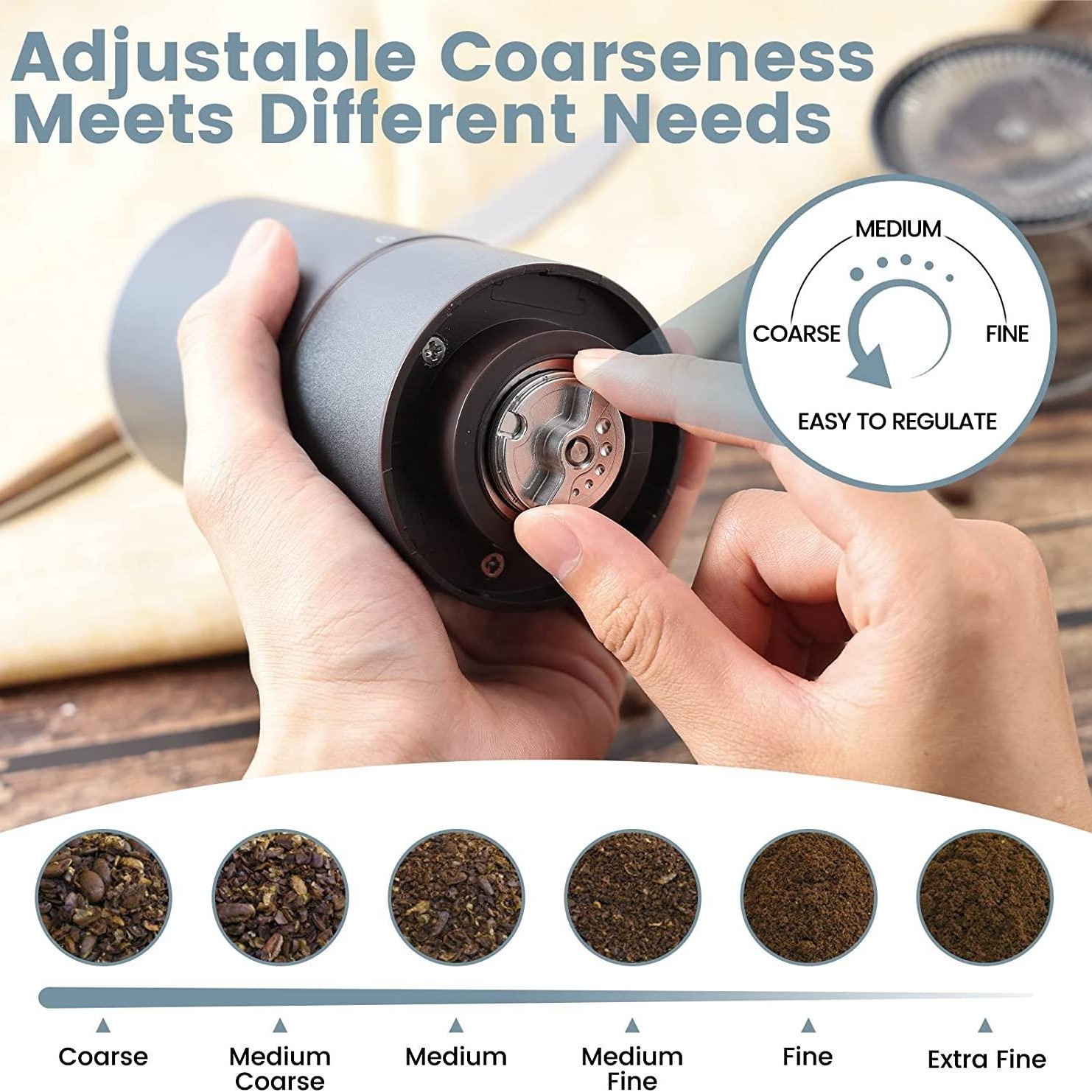
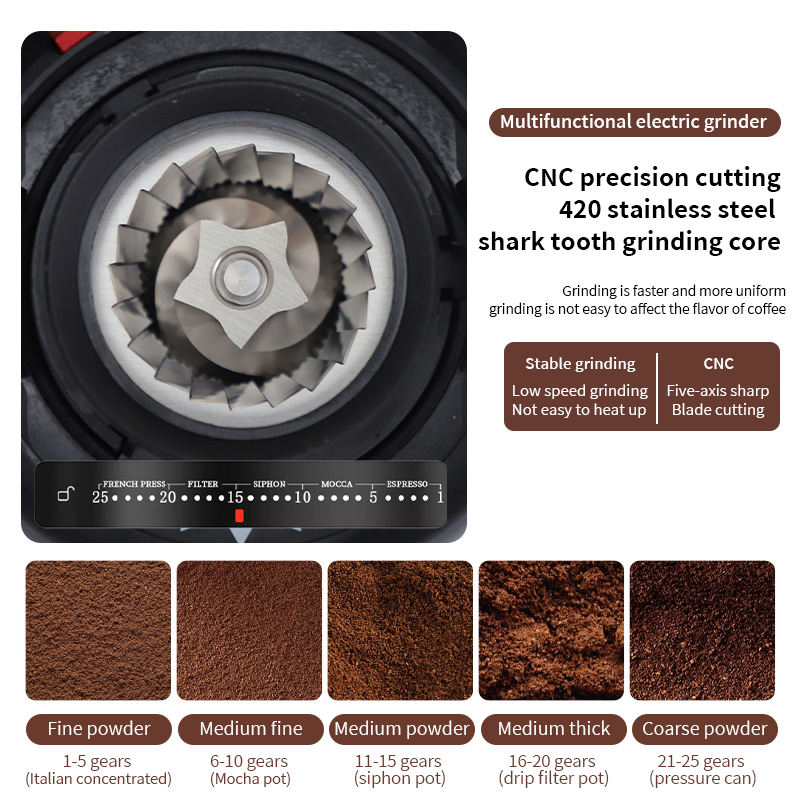
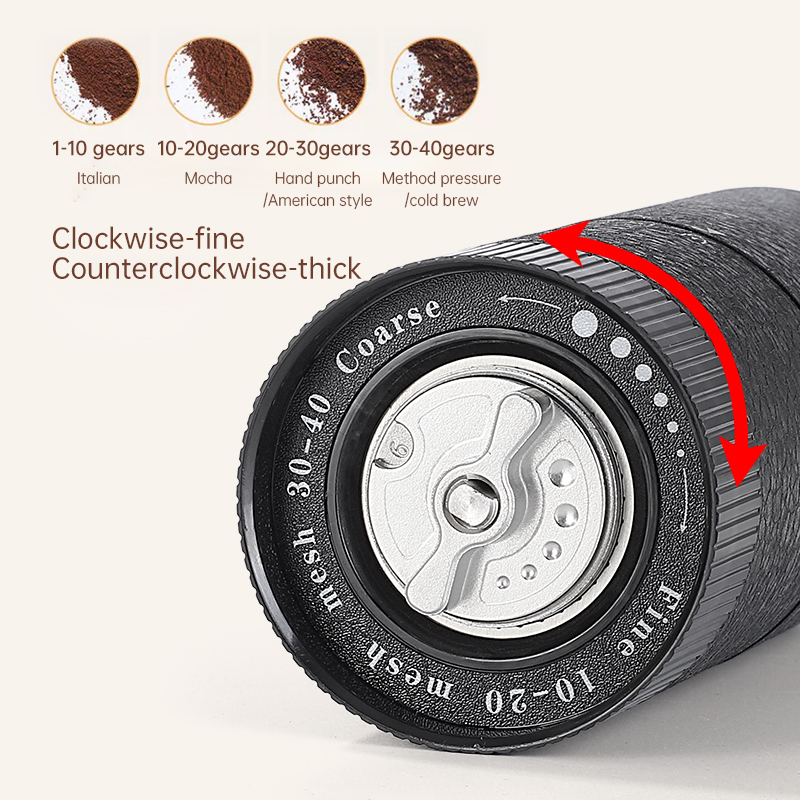
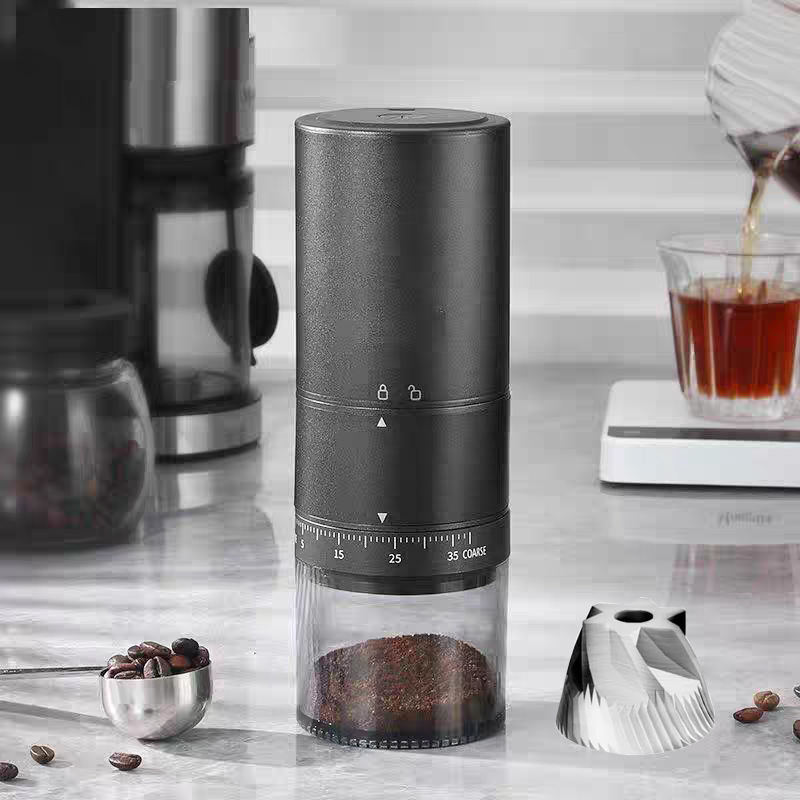
The adjustment design is the difference between a unit buyers keep and one they return. Stepped grind adjustment uses fixed detents that are easy for a gift buyer to understand and reproduce, which lowers support calls and makes the product feel predictable. Stepless adjustment gives finer control for enthusiasts but is harder to set consistently without a reference mark, raising the risk of "it tastes different every time" complaints that drive one-star ratings.
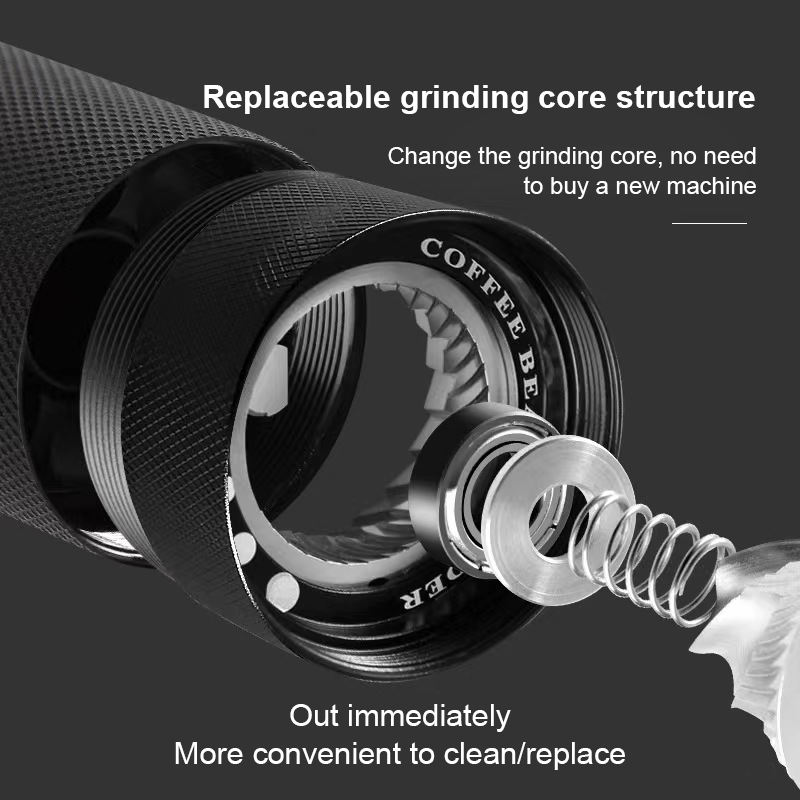
Retention is the coffee left inside the grinder after a dose, and in small formats it can be a meaningful fraction of an 18-gram serving. Designs with a removable burr carrier and a clear throat are easier to brush out, which extends repeat purchases because the user can keep the unit clean and the next dose accurate. When comparing samples, weigh the retention after a standard grind and decide your maximum acceptable grams, then write that limit into the purchase specification so inspection has a pass-fail line.
Durability and Field-Failure Modes
Portable units fail in predictable ways, and your test protocol should target each one before you commit to a production run. Drop testing from a defined height onto a hard surface exposes weak housings and loose battery contacts that appear only after the unit is shipped and shelved. Dust ingress around the switch and hopper causes intermittent power, so specify an ingress check after a measured sand or talc exposure. Hopper thread wear from repeated removal shows up after a few dozen cycles, and switch life is a function of actuation count, not just how the button feels on the sample.
Write a protocol that records drop height, number of switch cycles to failure, torque needed to seat the hopper before and after wear testing, and whether the unit powers on after a dust challenge. Suppliers respect a written protocol because it removes ambiguity about what "durable" means, and it gives you comparable data across two or three candidate factories so the buying decision rests on measured behavior rather than a sales pitch. Keep the raw reports so your quality team can re-verify on later shipments.
Retail-Ready Presentation
For travel-retail and gift channels, the box is part of the product and a quiet driver of conversion. A gift-ready retail box should hold the grinder, a travel pouch, the correct regional plug or a USB-C cable set, and a multilingual manual that meets the destination market's language rules. EU-bound sets need the manual in the local language of the member state, while US-bound sets can consolidate English and avoid the cost of extra print plates.
Specify the pouch material and closure so the unit does not rattle in transit, and confirm the carton fits a master pack that your 3PL can pick without custom dividers or hand packing. A clean, printed inner tray that shows the grinder through a window improves shelf conversion and reduces the damage rate versus a loose-fill pack that lets the unit shift. Ask for a flat sample of the printed carton and a packed master case before committing to the full run, because reprinting after production is slow and expensive.
Price Ladder and Trial-Order Logic
The price ladder on a portable grinder is driven by how tooling cost is spread across volume, not by a fixed formula. The method is to separate one-time costs, such as tooling amortization for molds and fixtures, from recurring costs such as cells, burrs, housing plastic and labor. At a low trial quantity the one-time cost is divided across few units, so the effective piece price is high; as the order climbs the amortization per unit falls and the price steps down along defined volume breaks that you negotiate in writing.
Build your trial order around the smallest quantity that still proves three things: the factory can hold the spec, the battery math is real, and the retail pack survives freight. Use that validated data to negotiate the next break with confidence. The disciplined approach is to treat the first order as a paid sample run whose true output is not product alone but a tested, documented specification you can rebid with multiple suppliers, which keeps leverage on your side as volume grows.
Buyer Checklist
What to confirm before placing a portable grinder order
- Define the power architecture first: USB-C sealed pack for gift and travel retail, removable cell for outdoor, 12V for automotive channels.
- Request written battery data: mAh, Wh per charge, grams per charge, charge time, and UN38.3 plus IEC 62133 certificates.
- Confirm the burr type and set honest positioning: French press, pour-over and moka are in scope; true espresso is not.
- Obtain motor numbers: rated wattage, loaded RPM, stall protection and the 30-second duty cycle.
- Choose stepped versus stepless adjustment based on your buyer's tolerance for setup complexity.
- Write a durability protocol covering drop height, switch cycles, dust ingress and hopper thread wear.
- Approve the retail box, pouch, plug or USB-C set, and multilingual manual before the production run.
Frequently Asked Questions
Can a portable electric grinder make true espresso?
Most pocket-sized battery units cannot hold the fine, uniform particle and tight dose that espresso requires. They are best positioned for French press, pour-over and moka pot brewing, and honest listing copy prevents returns and bad reviews that hurt a new product launch.
How should I verify the battery claims a factory gives me?
Ask for measured data rather than marketing phrases: mAh, Wh per charge, grams ground per charge at a set grind, and charge time, backed by a test report. Insist on UN38.3 and IEC 62133 paperwork so the cells clear air-freight screening without a hold at the cargo terminal.
Which adjustment type is safer for a gift-channel buyer?
Stepped adjustment with clear detents is easier for a casual user to repeat, which lowers support calls and returns. Stepless suits enthusiasts who want fine control but accept more setup effort and a slightly higher chance of an inconsistent dose.
What durability tests matter most for travel retail?
Drop testing, dust ingress around the switch and hopper, hopper thread wear after repeated removal, and switch actuation life cover the failure modes that actually appear in the field. A written protocol makes results comparable across suppliers and gives inspection a clear pass-fail standard.
How do I structure a first trial order?
Size it to the smallest quantity that still proves spec hold, real battery math and freight-survivable packaging. Treat the run as a paid validation whose output is a tested specification you can rebid at a lower volume break with more than one factory.