

 +86 15268683708


News






0102030405
Coffee and pepper grinders
Production QC Inspection Checkpoints for Coffee and Spice Grinders: A B2B Sourcing Handbook for Distributors
2026-09-14
Production QC Inspection Checkpoints for Coffee and Spice Grinders: A B2B Sourcing Handbook for Distributors
A container of electric coffee grinders that passes a single pre-shipment sample check can still arrive at your warehouse with a 7% functional failure rate. That gap is not bad luck. It is the difference between a factory that treats quality control as a final gate and a factory that treats it as a continuous string of checkpoints running from the loading dock to the finished carton. For distributors, importers and Amazon FBA sellers, the real risk on a small kitchen appliance program is rarely the hero unit a supplier sends to your office. It is the 4,000th unit built at 10 p.m. on a Friday when the line lead is tired and the incoming resin batch ran slightly off spec.
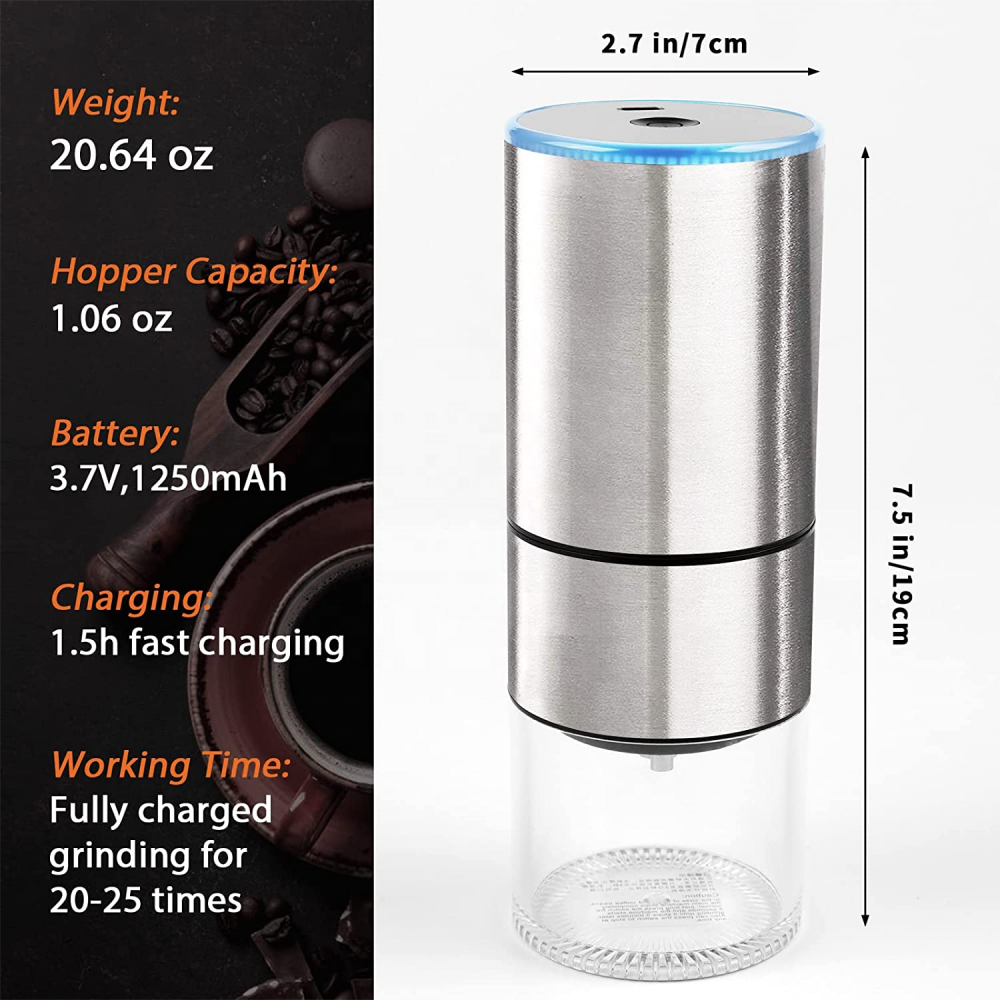
This handbook lays out a practical, four-phase inspection framework you can hand to a third-party inspection company or to your own sourcing team. It focuses on the products Jinhua Blossom Technology builds for overseas buyers: electric coffee grinders, pepper and spice grinders, milk frothers and portable juice cups. The checkpoints below are written to be copied into a purchase order appendix, not admired and forgotten.

Phase 1: Incoming Material and Component Inspection
Most grinder failures trace back to a component that was never tested at the supplier level. By the time a defective burr or a weak motor reaches the assembly line, it is already part of your cost. The first checkpoint belongs at incoming material inspection, before a single unit is assembled.
Plastic housings and food-contact parts
Request the material declaration for every plastic that touches food: the bean hopper, the grinder cup, the frother jug and the juice cup body. Confirm the grade is certified for food contact in your destination market, whether that is FDA, EU 10/2011 or LFGB. Pull five random housings from each production lot and check wall thickness at the thinnest section with a caliper; a housing that is 0.3 mm under spec will crack at the screw boss during transit, not in the showroom. Inspect the mating surfaces for flash, sink marks and gate vestige that a line worker may have trimmed by hand and left rough.
Motor and burr incoming checks
Electric grinders live or die on two components. For the motor, verify the supplier's coil resistance band and the brush grade on brushed units; ask for the batch test report rather than a generic certificate. For burrs, whether conical or flat, the single most important incoming check is burr alignment tolerance. A burr that is 0.05 mm off true will still cut, but it will throw fines, heat the bean and complain loudly under load. A distributor should insist on a sample cut test on the first articles of every new burr batch before mass production begins.
Phase 2: In-Line Assembly Checkpoints
In-line checks happen while the line is running. They catch process drift before it becomes a defect population. A good factory builds these into the standard work instruction; a weak one treats them as optional. Your job is to make them contractual.
Torque and fit of grinding mechanisms
On pepper and spice grinders, the adjuster nut torque determines whether the unit ships as coarse or fine and stays that way. Spot-check the adjuster with a preset torque driver on a rolling sample of one unit per 200 off the line. On electric coffee grinders, confirm the burr carrier seats with the specified gap and that the anti-rotation pin is present; a missing pin is a silent killer that lets the inner burr rotate and shred alignment within a week of use.
Electrical safety at the bench
Each electrical sub-assembly should pass a bench hipot and ground continuity check before the housing is closed. This is cheaper to do open than to discover as a leakage failure after the ultrasonic weld has sealed the shell. Record no-load current draw for a sample of motors at this stage; a motor drawing 15% over the nominal no-load current is a motor that will run hot, trip protection or die young in the field.
Phase 3: Finished-Unit Functional Testing
Finished-unit testing is what most buyers already know about, but the depth varies wildly. A distributor program needs more than "it turns on." It needs quantified, repeatable criteria.
Grind consistency and motor load
Run a measured dose of standard medium-roast beans through a sample set and capture the grind with a sieve stack or a comparable particle analysis. The metric that matters is grind particle consistency: the spread between the 10th and 90th percentile particle sizes should sit within the band your private label promises. Under a controlled load test, log motor temperature at the two-minute mark and the stall current; both predict real-world lifespan better than any boast about wattage on a listing page.
Noise, vibration and thermal behavior
Noise is a return-driver on Amazon and a complaint-driver in kitchens. Measure decibel level at 30 cm under load and set a hard ceiling in your spec, not a vague "low noise" claim. Feel for handle vibration that suggests an unbalanced burr or a loose impeller on the frother. On milk frothers and juice cups, verify the seal holds under a tilt test so the carton does not arrive soaked. Let units cool and cycle them three times; intermittent thermal cutouts rarely show on a single run.
Phase 4: Packaging and Drop-Test Verification
The product can be perfect and still arrive as scrap if the pack fails. The final checkpoint is drop-test protocol, run on the fully packed carton, not the bare unit. Use the standard corner, edge and face drops from the height your shipping mode demands; sea freight stacked four high needs a tougher pack than air. Confirm the inner tray holds the unit without rattle, that the manual and the correct plug are inside, and that the carton barcode scans to the right ASIN or SKU. A mislabeled carton is a warehouse outage, not a minor typo.
Tip: Tip: schedule at least one unannounced in-line inspection midway through the production run rather than relying solely on a final audit, because process drift is easiest to correct before the lot is complete.

Building an Inspector-Friendly Specification Sheet
None of the above works if your inspector is guessing at the pass-fail line. Write a one-page spec that travels with every order and lists the measurable limits: burr alignment tolerance, no-load current draw, decibel ceiling, drop height, carton dimensions and the acceptable quality limit you will enforce. Speaking of limits, the acceptable quality limit you set should differ by defect class. Critical electrical and food-safety defects get zero tolerance. Major functional defects might sit at 1.5 to 2.5 AQL depending on your margin for returns. Minor cosmetic items can run higher, but agree the number in writing before production, not during the dispute.
Buyers who build a tight spec sheet also tend to read the deeper sourcing material we publish. Our piece on why commercial coffee shops prefer burr coffee grinders explains the burr-vs-blade tradeoff that drives so many of these in-line checks, and the wholesale coffee set buying guide for retail brands shows how inspection criteria change when you bundle several SKUs into one program.
Common Defect Patterns and How to Catch Them Early
Certain failures repeat across small appliance lines, and knowing the signature helps you point the inspector at the right station. A short list:
- Loose burr carrier causing coarse drift after the first week of use, caught by the in-line adjuster torque check.
- Hand-trimmed plastic flash left sharp, caught by the incoming housing visual audit.
- Motor over-current from a wrong brush grade, caught at the bench no-load current draw step.
- Seal weep on frothers and juice cups, caught by the tilt and three-cycle thermal test.
- Wrong plug or manual in the carton, caught only if the drop-test carton is opened and scanned.
Each of these is cheap to fix at its own checkpoint and expensive to fix as a returned container. The pattern is consistent: defects you can name in advance are defects you can prevent on the line.
FAQ
How many units should a third-party inspector sample per order?
Follow the standard ANSI/ASQ Z1.4 sampling plan indexed to your order quantity and chosen AQL. For a 5,000-unit coffee grinder order at 2.5 AQL, that typically means inspecting around 200 units from randomized cartons, with additional destructive checks pulling from a separate reserve so you are not auditing the very units you ship.
Should I inspect at the factory or after the goods reach my warehouse?
Both serve different purposes. In-line and pre-shipment inspection at the factory stops bad lots before they are paid for and loaded. A receiving audit at your own warehouse confirms the supplier did not swap stock or that transit damage did not occur. Most distributor programs run factory inspection as the primary gate and keep a lighter receiving check for verification.
What documents should the manufacturer provide with each lot?
Request a production lot record, the incoming material certificates for food-contact plastics, the motor and burr batch test reports, the in-line hipot and current-draw logs, and the finished-unit functional test summary. Jinhua Blossom Technology maintains these records per production batch so a distributor can trace a field failure back to its source component.
How do I handle a lot that fails the drop test but passes function?
Treat packaging failure as a line-stopping issue, not a cosmetic one. A unit that survives the bench but not the boat is still a return. Require the factory to re-pack with revised inner cushioning and re-run the drop test on a fresh sample before you release balance payment.
Do spice grinders need the same electrical checks as coffee grinders?
Only the motorized models do. Manual pepper and spice grinders skip the electrical bench entirely and instead need tighter focus on adjuster torque, burr or mechanism fit, and the food-grade status of the grinding parts. The inspection sheet should flag which checkpoints apply per SKU so the inspector is not running irrelevant tests.
Can inspection criteria stay fixed across reorders?
They should, with one exception. When a supplier changes a component source, a resin grade or a burr batch, the relevant incoming checkpoints must be re-validated even if the model number is unchanged. Component substitutions are the most common cause of a previously clean program suddenly failing, so write "any BOM change triggers re-validation" into the contract.