

 +86 15268683708


Industry News






0102030405
Coffee and pepper grinders
How to Choose a Quiet Coffee Grinder for an Apartment or Early-Morning Routine
2026-09-08
How to Choose a Quiet Coffee Grinder for an Apartment or Early-Morning Routine
A quiet coffee grinder can make the difference between a relaxing morning ritual and a kitchen that wakes the whole household. This matters especially in apartments, shared homes, open-plan kitchens, and homes where one person starts work earlier than everyone else.
No electric grinder is completely silent. Grinding beans creates mechanical sound by nature. The goal is to reduce sharp, disruptive noise while keeping the grind consistent enough for good coffee.
What causes grinder noise?
Several parts of the grinding process contribute to sound:
- The motor turning under load
- Beans moving through the burrs
- Vibration traveling through the body
- The grounds container rattling against the housing
- The grinder transferring vibration into a hard countertop
A grinder may sound louder when it is empty, sitting on a hollow surface, or processing very dark, dense, or oily beans. The room’s acoustics matter too.
Manual vs. electric: which is quieter?
A manual coffee grinder is usually the quietest option because it has no motor. The main sound comes from the hand crank and beans passing through the burrs. This makes it attractive for very early mornings, hotel rooms, and shared spaces.
An electric grinder is faster, so some people accept a brief burst of sound in exchange for convenience. If you prepare several cups, the total noise exposure may still be lower than hand-grinding each dose.
The right choice depends on how much coffee you make and when you make it. Day 3’s manual vs. electric grinder guide can help you compare the full routine rather than noise alone.
Features to look for in a quieter electric grinder
1. A stable, low-vibration body
A solid housing can help prevent rattling. Look for a grinder that sits firmly on the counter and has feet that reduce movement.
2. Controlled motor operation
A slower, more controlled motor may produce a less aggressive sound than a high-speed motor. The manufacturer’s product information should explain the intended operating style; do not assume that a lower number always means a quieter grinder.
3. A secure grounds container
A loose container can create a surprising amount of noise. A well-fitting container is easier to remove and less likely to rattle during operation.
4. A burr system suited to your routine
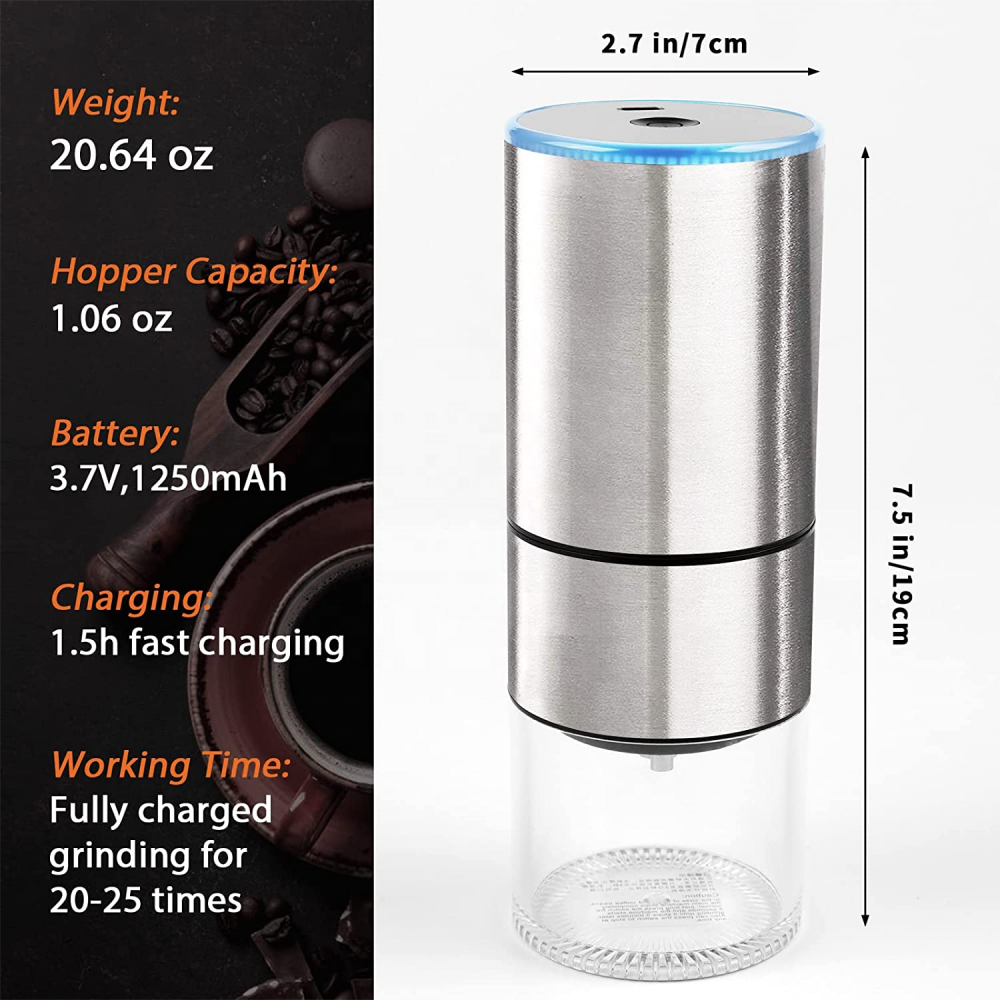
Burr type, bean feed, and motor design all affect sound. For general home use, a conical burr format can be a practical starting point because it can cover several brew methods in a compact appliance. Compare the product details in Blossom’s electric grinder category rather than choosing on appearance alone.
Five simple ways to reduce noise at home
Use a stable, soft base
Place the grinder on a firm silicone mat or folded kitchen towel designed to stay flat. This can reduce vibration transfer to the counter. Keep vents uncovered and make sure the grinder remains stable.
Keep the grinder close to the counter’s solid support
A hollow cabinet or thin shelf can amplify vibration. If possible, use a solid worktop and keep the grinder away from a wall that echoes sound.
Grind the correct dose
Avoid running the grinder much longer than necessary. Measuring beans before grinding can reduce operating time and make the result more repeatable.
Clean the burr chamber
Coffee dust and oil can affect how beans move through the grinder. A clean chamber supports smoother operation and helps prevent old flavors from entering a fresh brew. Follow the product manual and never introduce water into electrical parts.
Consider a manual grinder for the first cup
If the household’s main issue is one early-morning cup, a manual grinder may solve the noise problem without changing the rest of the setup.
Practical example: the apartment coffee routine
An illustrative scenario:
A renter in a small apartment shares a wall with a neighbor and needs to leave home before 7 a.m. They first choose a high-speed grinder because it is quick, but the sharp vibration is disruptive. They then try three changes: moving the grinder to a solid counter, placing it on a stable mat, and grinding a pre-measured dose. The noise becomes shorter and less resonant. On days when the household is still asleep, they use a manual grinder instead.
The lesson is to solve the actual source of noise before replacing a product. Sound duration, vibration, and placement can matter as much as the motor itself.
Quiet does not mean low performance
A quiet coffee grinder still needs to produce grounds suitable for your brew method. Check the grind range, adjustment clarity, cleaning access, and dose workflow. A very quiet grinder that cannot reach your espresso or French press setting is not a good match.
For specialty coffee drinkers, see Best Electric Coffee Grinders for Specialty Coffee and compare the format with your preferred brewing method.
Next, use the grind setting to solve the most common taste problem in home coffee: why your coffee tastes bitter or sour.
FAQ
What is the quietest type of coffee grinder?
Manual grinders are generally quieter because they do not use a motor. Among electric models, sound varies by motor, burr system, housing, and counter placement.
How can I make my electric grinder quieter?
Use a stable surface, reduce vibration transfer, measure the dose in advance, clean the grinder, and avoid running it longer than necessary.
Does a conical burr grinder make less noise?
Not always. Noise depends on the complete design, including the motor, burrs, housing, and container. Treat burr shape as one factor, not a guarantee.
Series links: Previous: Manual vs. Electric Coffee Grinder · Next: Why Coffee Tastes Bitter or Sour